



403
Sorry!!
Error! We're sorry, but the page you were looking for doesn't exist.
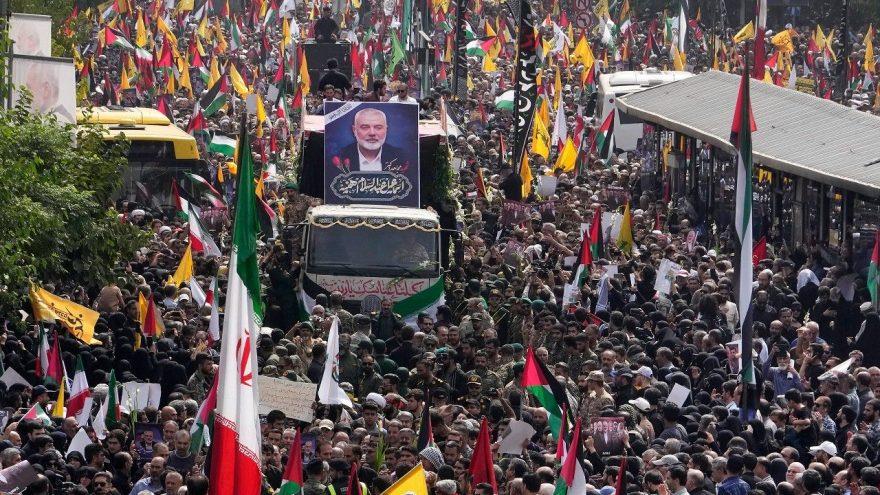
Middle East Prepares For Escalation As Diplomatic Efforts Persist
(MENAFN- Khaama Press) The possibility of retaliatory attacks by Iran and Hezbollah against Israel, met with reciprocal measures by Tel Aviv, has placed the Middle East in a precarious state of instability. Concurrently, global efforts to manage the escalation have intensified.
Most recently, President Biden expressed hope that Iran would refrain from potential retaliatory attacks on Israel, while Jordan's Foreign Minister made an unannounced trip to Tehran yesterday to dissuade Iran from attacking Israel, yet no signs of progress in these efforts have been reported.
International media, citing their sources, have reported Iran's attack on Israel as“imminent,” with Axios claiming yesterday that Iran's attacks against Israel may likely commence today, August 5th. Secretary of State Antony Blinken also hinted at the likelihood of Iran beginning attacks against Israel today.
On the other hand, Hezbollah, the Lebanon-based paramilitary group supported by Iran, has also pledged to launch extensive attacks against Israel. The group unexpectedly fired at least 50 rockets towards northern Israeli territories late Sunday, most of which were intercepted and destroyed by Israel's air defense.
All evidence points to the Middle East being on the brink of a new and broader conflict. This situation has raised widespread international concerns, leading to the cancellation of a significant portion of flights from Iran and nearly all flights from Lebanon and Israel due to the unstable situation.
European, Oceanian, American, British, and Canadian countries have issued warnings in recent days advising their citizens in Lebanon and Israel to“leave with any available ticket” from these countries or to consider shelters if they prefer to stay, given the potential for a prolonged period of instability.
The level of instability in the Middle East and the urgency of altering the situation have severely constrained diplomatic efforts and rendered their effectiveness seemingly impossible. Despite the seeming impossibility of controlling conditions through diplomatic channels, Jordan's Foreign Minister, Ayman Safadi, undertook an unprecedented and unexpected trip to Tehran yesterday to meet with Iran's President Masoud Pezeshkian.
In this meeting, concerns of countries about the widening scope of war were conveyed to the Iranian side, yet it remains unclear whether Iran will respond to diplomatic efforts or proceed with its own military response against Israel.
Meanwhile, the Middle East stands at a critical juncture, with diplomatic maneuvers struggling to contain a potentially catastrophic escalation. The next steps taken by all parties involved will be pivotal in determining whether peace can be restored or if the region will spiral further into conflict.
ShareFacebook Twitter WhatsApp Email Print Telegram
Legal Disclaimer:
MENAFN provides the
information “as is” without warranty of any kind. We do not accept
any responsibility or liability for the accuracy, content, images,
videos, licenses, completeness, legality, or reliability of the information
contained in this article. If you have any complaints or copyright
issues related to this article, kindly contact the provider above.
Most popular stories
Market Research

More Story






Comments
No comment