










403
Sorry!!
Error! We're sorry, but the page you were looking for doesn't exist.
Putin's Ukraine Deal Talk: Mostly Smoke, No Mirrors
(MENAFN- Asia Times)
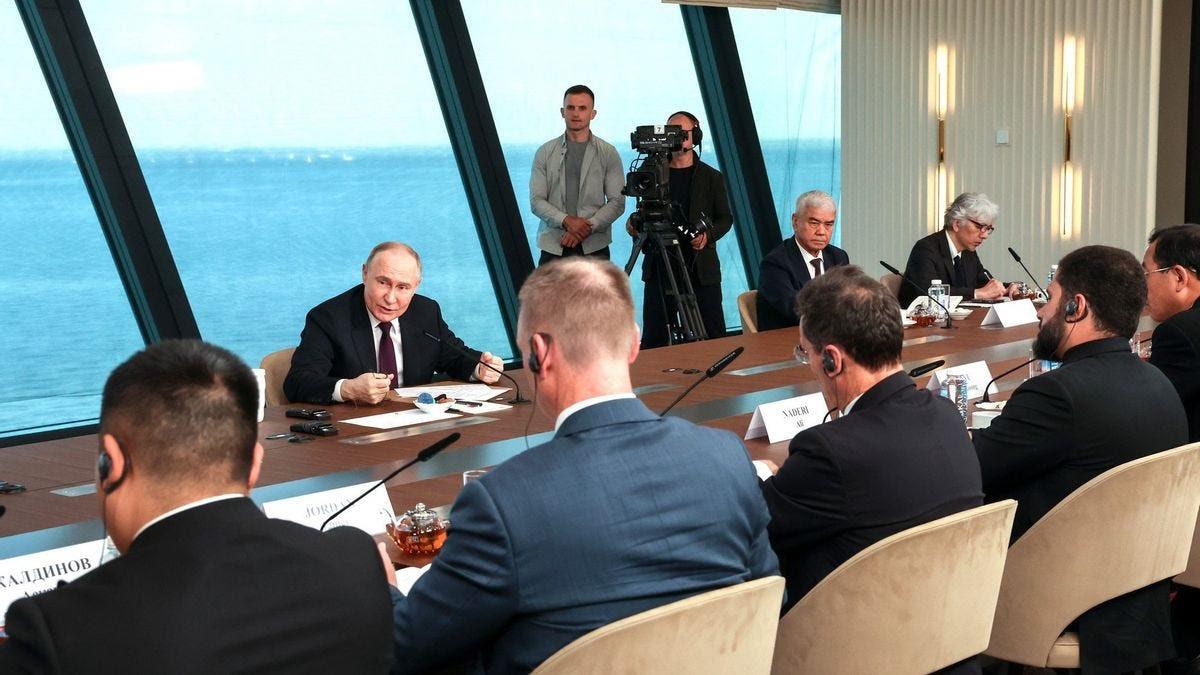
President Vladimir Putin says that it might be possible to reach a deal with Ukraine based on the failed Istanbul Communique and taking into account recent territorial changes in Ukraine. The Istanbul Communique was dead by April, 2022. Could the deal be revived? Was Putin serious in suggesting it as a basis for a settlement with Ukraine?
Ukraine and Russia holding peace talks in Istanbul, March 2022. Photo: Wikimedia Commons
We know a great deal more about the Istanbul Communique now. It was achieved at the time when Russia pulled its forces back from an attempt to surround Kiev, and when Russia had suffered early setbacks in its war with Ukraine. Both sides were ready to implement the deal, which required face-to-face further negotiations between Putin and Zelensky and a range of agreements on territorial issues that the talks in Belarus and Istanbul had not resolved. Ukraine was persuaded to pull out of the deal, however, when its western allies, principally the UK and US, made it clear they opposed it.
Ukraine and Russia holding peace talks in Istanbul, March 2022. Photo: Wikimedia Commons
The essence of the Istanbul deal was to make Ukraine a neutral state without any NATO presence in the country. Compensation for Ukraine's neutralization was to be given in the form of security guarantees by Russia, by members of the UN Security Council and by others including Israel, Turkey, Poland, Italy, Germany and Canada.
Reportedly the security provisions were far more precise than Article V of the NATO Treaty, and (depending on the final form of an agreement) would have allowed each guarantor state to take action in Kiev's defense independently without requiring the assent of others. For its part Ukraine would make its army much smaller with far fewer weapons and no long range weapons.

Legal Disclaimer:
MENAFN provides the
information “as is” without warranty of any kind. We do not accept
any responsibility or liability for the accuracy, content, images,
videos, licenses, completeness, legality, or reliability of the information
contained in this article. If you have any complaints or copyright
issues related to this article, kindly contact the provider above.
Most popular stories
Market Research

More Story


Comments
No comment