





403
Sorry!!
Error! We're sorry, but the page you were looking for doesn't exist.
Dermocosmetics Market Size, Share, Growth, Analysis, 2034
| Company | Timeline | Funding/Investment (USD) | Details |
|---|---|---|---|
| Debut Biotechnology | August 2025 | USD 20 Million | Secured investment to expand its AI-powered ingredient discovery platform focused on skin longevity and biotech-derived dermocosmetic ingredients. |
| CHOSEN Skincare | June 2025 | USD 5 Million | Funding secured to support expansion of dermatologist-led skincare products and scale market presence. |
| Wonderskin | May 2025 | USD 50 Million | Raised funding led by Insight Partners to accelerate innovation in science-backed beauty and dermocosmetic technologies. |
| Market Metric | Details & Data (2025-2034) |
|---|---|
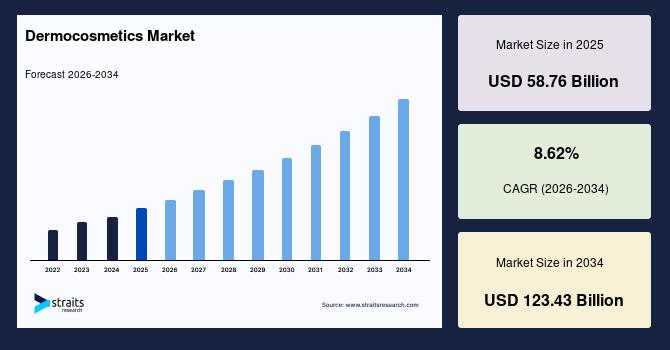
| 2025 Market Valuation | USD 58.76 Billion |
| Estimated 2026 Value | USD 63.72 Billion |
| Projected 2034 Value | USD 123.43 Billion |
| CAGR (2026-2034) | 8.62% |
| Study Period | 2022-2034 |
| Dominant Region | North America |
| Fastest Growing Region | Asia Pacific |
| Key Market Players | L'Oréal Groupe (France), Pierre Fabre Laboratories (France), Galderma (Switzerland), Beiersdorf AG (Germany), Kenvue Inc. (US) |
Download Free Sample Report to Get Detailed Insights.
Dermocosmetics Market Dynamics Market DriversIncreasing Prevalence of Skin Disorders and Growing Consumer Preference for Pharmacy-dispensed Skincare Drives Dermocosmetics Market
The increasing prevalence of skin disoraders such as acne, eczema, rosacea, and atopic dermatitis is driving demand for clinically proven dermocosmetic products. According to the World Health Organization, skin diseases affect nearly 1.8 billion people globally at any given time. Consumers are increasingly seeking dermatologist-recommended solutions that provide both therapeutic and cosmetic benefits. For example, Galderma continues to expand its Cetaphil portfolio for sensitive and eczema-prone skin, supporting dermocosmetics market growth.
A key dermocosmetics market driver is the growing consumer preference for clinically validated and pharmacy-dispensed skincare products supported by dermatological testing and scientific evidence. Rising concerns regarding ingredient safety, skin sensitivity, and product efficacy are encouraging purchases through pharmacies and dermatologist channels. For example, brands such as Eucerin, Bioderma, and Avène have expanded pharmacy-exclusive and dermatologist-recommended product portfolios globally. The growing trust in medicalized skincare solutions is driving dermocosmetics market growth by positioning these products between traditional cosmetics and pharmaceutical treatments.
Market RestraintsLong Product Development and Premium Pricing of Dermatologist-recommended Products Restrain Market
A key dermocosmetics market restraint is the lengthy product development and clinical validation process required for scientifically backed formulations. Companies must conduct extensive safety, efficacy, and dermatological testing before commercialization, particularly for products targeting sensitive skin or specific skin concerns. These extended development timelines increase R&D costs and delay market entry. Smaller manufacturers often face difficulties allocating sufficient resources, limiting innovation and product launches.
Another market restraint is the premium pricing associated with dermatologist-recommended and clinically tested skincare products. Advanced formulations containing specialized active ingredients, clinical validation studies, and stringent quality standards often result in higher retail prices compared to conventional skincare products. This limits accessibility among price-sensitive consumers, particularly in emerging markets. As a result, manufacturers face challenges in expanding mass-market penetration while maintaining product efficacy and premium brand positioning.
Market OpportunitiesExpansion of Weight Management Therapies and Development of Oncology-supportive Dermocosmetics Offer Growth Opportunities to Market Players
A key dermocosmetics market growth opportunity stems from the rising use of GLP-1 weight management therapies targeting treatment-related skin concerns such as dryness, reduced elasticity, facial volume loss, and impaired barrier function. Manufacturers are developing specialized formulations focused on skin resilience and recovery. Various medical skincare brands, including Alastin Skincare expanded physician-dispensed products addressing aesthetic concerns, are increasingly observed among patients undergoing GLP-1-based weight loss treatments.
Rising focus on supportive skin care during cancer treatment is creating opportunities for oncology-specific dermocosmetics. Patients undergoing chemotherapy, radiotherapy, and targeted therapies frequently experience skin dryness, sensitivity, and barrier disruption requiring specialized formulations. Companies are increasingly collaborating with oncology centers to develop clinically adapted products. For example, La Roche-Posay's oncology skincare programs continue expanding globally through partnerships with hospitals and cancer support organizations, supporting demand for highly specialized dermocosmetic solutions.
Market ChallengesClinical Substantiation & Claim Verification and Balancing Medical Credibility Challenges Dermocosmetics Market Growth
Demonstrating scientifically validated efficacy remains a major challenge in the dermocosmetics market. Brands increasingly promote claims related to barrier repair, microbiome balance, pigmentation reduction, and skin aging, requiring robust clinical evidence to maintain credibility. Regulatory scrutiny is also increasing across multiple regions. European skincare manufacturers faced intensified review of product efficacy claims under evolving cosmetic compliance frameworks, increasing pressure for stronger clinical substantiation and transparent consumer communication.
Maintaining medical-grade positioning while expanding consumer accessibility remains a significant challenge for dermocosmetics manufacturers. Products require dermatologist trust, scientific validation, and premium formulations, yet consumers increasingly expect affordability and widespread availability. Expanding beyond pharmacies and dermatology clinics into mainstream retail channels can dilute professional credibility. Companies must continuously balance clinical reputation, pricing strategies, distribution expansion, and consumer education while preserving the therapeutic perception that differentiates dermocosmetics from traditional skincare products.
Dermocosmetics Regional Outlook North America Dermocosmetics MarketNorth America: Market Dominance Led by Mass Retail Expansion of Clinical Skincare and High Demand for Sensitive Skincare Products
The North America dermocosmetics market accounted for the largest regional share of 32.59% in 2025, driven by dermatologist-led product selection, pharmacy-beauty convergence, and mass retail expansion of clinical skincare. Acne affects up to 50 million Americans annually, creating steady demand for non-prescription acne and barrier-care products. Walmart's 2026 rollout of La Roche-Posay across 1,460 US stores shows how advanced dermocosmetics are moving from specialist channels into mainstream retail access and pharmacist-guided skincare education programs nationwide.
US Dermocosmetics MarketThe dermocosmetics market in the US was valued at USD 17.05 billion in 2025, driven by high dermatology consultation culture, acne-focused OTC regimens, and broad retail access to physician-recommended brands. The American Academy of Dermatology identifies acne as the country's most common skin condition, affecting up to 50 million people yearly. CeraVe, Cetaphil, La Roche-Posay, and Differin benefit from dermatologist visibility across pharmacies, Ulta Beauty, Amazon, and Walmart, supporting repeat purchases among sensitive-skin consumers.
Canada Dermocosmetics MarketThe dermocosmetics market in Canada was valued at USD 2.11 billion in 2025. The growth is driven by pharmacy-led beauty retail, bilingual product education, and high demand for sensitive-skin, rosacea, psoriasis, and eczema care. The Canadian Dermatology Association notes 20% of Canadians live with acne, 1 million have psoriasis, and 2 million have rosacea. Shoppers Drug Mart and Pharmaprix stock Eucerin and Bioderma, strengthening dermocosmetic access through trusted pharmacy channels and loyalty-driven online replenishment models nationally.
Asia Pacific Dermocosmetics MarketAsia Pacific: Fastest Growth Driven by Expanding Dermatology Care Infrastructure and Rising Consultation through Teledermatology Platforms
The Asia Pacific dermocosmetics market is expected to grow at a CAGR of 10.79% during the forecast period, showcasing fastest regional growth. Growth is driven by expanding dermatology care infrastructure, increasing prevalence of pollution-related skin concerns, and rising consumer preference for clinically validated skincare products. Growing adoption of dermatologist-recommended formulations and increasing accessibility through pharmacies, beauty specialty retailers, and digital health platforms are supporting market expansion. Rapid urbanization and heightened awareness of preventive skin health are further accelerating demand for dermocosmetics across the region.
China Dermocosmetics MarketThe China dermocosmetics market was valued at USD 3.51 billion in 2025, supported by increasing demand for sensitive-skin and barrier-repair products, rising dermatology consultations, and expansion of pharmacy-led skincare retail. Consumers are increasingly seeking clinically proven solutions for skin concerns linked to air pollution, intensive skincare routines, and environmental stressors. For example, Winona, developed by Botanee Group, has gained strong traction through dermatologist-backed sensitive-skin formulations specifically designed for Chinese skin types, reflecting growing demand for localized dermocosmetic innovation.
India Dermocosmetics MarketThe India dermocosmetics market was valued at USD 1.86 billion in 2025, supported by increasing awareness of acne, pigmentation, and sensitive-skin conditions among younger consumers and urban populations. According to the Internet and Mobile Association of India (IAMAI), digital adoption continues to expand rapidly, increasing exposure to dermatologist-led skincare education and science-backed beauty content. Rising consultation through teledermatology platforms and growing pharmacy availability of brands such as Bioderma, Cetaphil, and Sebamed are accelerating adoption of clinically validated skincare products across the country.
Japan Dermocosmetics MarketThe Japan dermocosmetics market was valued at USD 2.30 billion in 2025, supported by strong consumer focus on skin barrier protection, aging prevention, and long-term skin health maintenance. The country's mature dermatology and pharmacy ecosystem supports adoption of clinically tested skincare products. Growing demand for low-irritation, functional formulations designed for sensitive and aging skin is driving market growth. For example, Shiseido's d program and Curél by Kao continue expanding products focused on ceramide care and sensitive skin management, supporting demand for therapeutic skincare solutions.
Dermocosmetics Market Segmentation Analysis By TypeBased on type, the skincare segment is projected to grow at a CAGR of 9.26% during the forecast period, driven by increasing adoption of microbiome-supporting formulations, rising demand for post-aesthetic procedure recovery products, and growing integration of longevity-focused actives targeting cellular aging pathways. Expansion of dermatologist-prescribed maintenance skincare for chronic conditions such as rosacea and eczema further supports segment growth.
The hair care segment is expected to grow at a CAGR of around 10.04% during the forecast period, owing to increasing demand for scalp microbiome-balancing formulations, growing prevalence of pollution-induced scalp disorders, and rising adoption of dermatologist-recommended products targeting hair thinning and scalp sensitivity. Development of trichology-based dermocosmetics combining scalp health management with cosmetic benefits is further accelerating segment expansion.
By GenderIn 2025, male segment is projected to grow at a CAGR of 49.47% in the dermocosmetics market, by gender. This is due to increasing demand for dermocosmetics addressing beard-area skin irritation, rising incidence of androgen-related scalp concerns, and growing acceptance of clinically validated anti-aging products among men. Expansion of dermatologist-led male skin health programs is further strengthening segment-specific product adoption.
The female segment is expected to grow at a CAGR of 10.33% during the forecast period, driven by rising demand for dermocosmetics targeting hormonal pigmentation disorders, growing adoption of peri-menopausal and menopausal skincare solutions, and rising utilization of post-procedure skincare following aesthetic dermatology treatments. Expanding focus on preventive skin aging management further supports long-term segment growth.
By Distribution ChannelBy distribution channel, retail stores accounted for a share of 32.70% in 2025 due to growing availability of pharmacy-grade dermocosmetics within organized retail formats, increasing use of in-store skin analysis technologies, and strong consumer preference for physical product evaluation before purchase. Expansion of dedicated dermocosmetic sections within premium beauty retailers further supports segment demand.
The specialty clinics segment is expected to grow at a CAGR of 10.46% during the forecast period, driven by integration of dermocosmetics into aesthetic treatment protocols, rising dermatologist-led recommendation practices, and growing demand for procedure-specific skincare solutions. Expansion of clinic-exclusive product ranges and personalized treatment-linked skincare regimens is further accelerating segment growth.
Competitive LandscapeThe dermocosmetics market competitive landscape is characterized by the presence of multinational skincare companies, dermatologist-led brands, pharmacy-based specialists, and emerging science-driven innovators. Leading players compete through clinical research, dermatologist endorsements, proprietary active ingredients, and extensive pharmacy and healthcare distribution networks. Emerging brands focus on targeted skin concerns, transparency, and evidence-based formulations. The dermocosmetics market ecosystem is evolving through growing collaboration among skincare manufacturers, dermatologists, aesthetic clinics, biotechnology firms, and digital health technology providers.
List of Key and Emerging Players in Dermocosmetics Market-
L'Oréal Groupe (France)
Pierre Fabre Laboratories (France)
Galderma (Switzerland)
Beiersdorf AG (Germany)
Kenvue Inc. (US)
Procter & Gamble (US)
Unilever PLC (United Kingdom)
The Estée Lauder Companies (US)
Shiseido Company Limited (Japan)
ISDIN S.A. (Spain)
NAOS (France)
Dermalogica (US)
Clarins Group (France)
Kao Corporation (Japan)
Amorepacific Corporation (South Korea)
Rohto Pharmaceutical Co., Ltd. (Japan)
Sesderma Laboratories (Spain)
Laboratoire SVR (France)
April 2026: Galderma debuted ALASTIN Signature Practices in partnership with leading aesthetic practices to support peri-procedural skincare.
April 2026: L'Oréal and Institut Pasteur announced a research partnership to advance skin health science.
September 2025: Galderma launched Cetaphil Skin Activator Hydrating & Firming line, expanding into firming-focused sensitive skin care.
Report Scope| Report Metric | Details |
|---|---|
| Market Size in 2025 | USD 58.76 Billion |
| Market Size in 2026 | USD 63.72 Billion |
| Market Size in 2034 | USD 123.43 Billion |
| CAGR | 8.62% (2026-2034) |
| Base Year for Estimation | 2025 |
| Historical Data | 2022-2024 |
| Forecast Period | 2026-2034 |
| Report Coverage | Revenue Forecast, Competitive Landscape, Growth Factors, Environment & Regulatory Landscape and Trends |
| Segments Covered | By Type, By Gender, By Distribution Channel |
| Geographies Covered | North America, Europe, APAC, Middle East and Africa, LATAM |
| Countries Covered | US, Canada, UK, Germany, France, Spain, Italy, Russia, Nordic, Benelux, China, Korea, Japan, India, Australia, Taiwan, South East Asia, UAE, Turkey, Saudi Arabia, South Africa, Egypt, Nigeria, Brazil, Mexico, Argentina, Chile, Colombia |
Download Free Sample Report to Get Detailed Insights.
Dermocosmetics Market Segments By Type-
Skincare
-
Acne Treatment
Anti-aging
Sun Protection
Others
-
Hair Restoration
Anti Dandruff
Others
-
Male
Female
-
Specialty Clinics
Retail Stores
E-commerce
Others
-
North America
Europe
APAC
Middle East and Africa
LATAM

Legal Disclaimer:
MENAFN provides the
information “as is” without warranty of any kind. We do not accept
any responsibility or liability for the accuracy, content, images,
videos, licenses, completeness, legality, or reliability of the information
contained in this article. If you have any complaints or copyright
issues related to this article, kindly contact the provider above.
Most popular stories
Market Research

More Story








Comments
No comment