




403
Sorry!!
Error! We're sorry, but the page you were looking for doesn't exist.
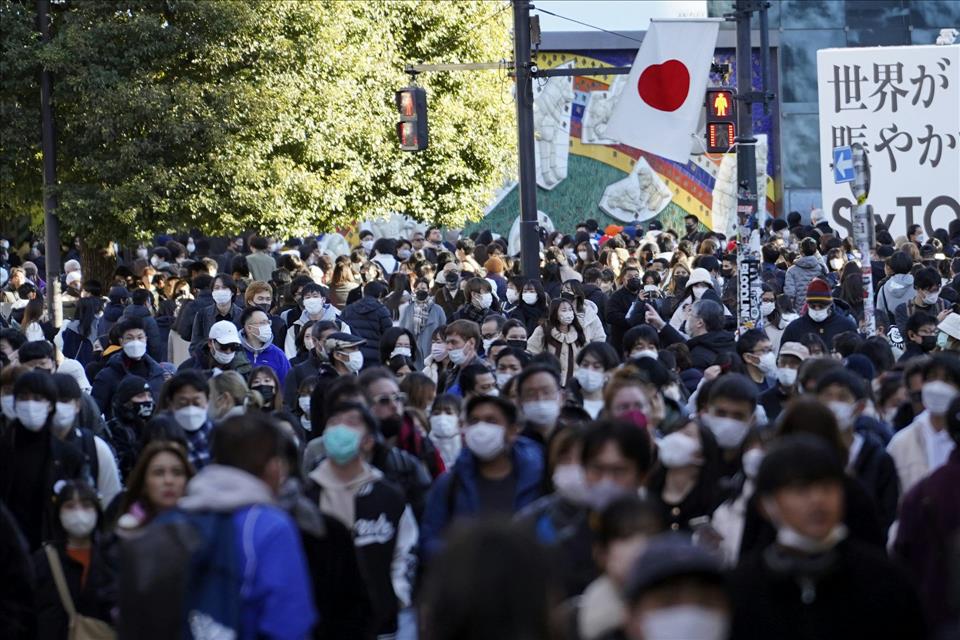
As Japan's Popularity Booms, A New Survey Shows Strong Anti-Foreigner Sentiment
Author: Peter Chai
(MENAFN- The Conversation) Japan is experiencing historically high numbers of foreigners. Its population is shrinking, and its workforce is ageing, driving foreign labour to historic levels.

In addition, the number of international tourists has also reached record highs, reshaping everyday life across the country. In fact, Japan now rivals, and sometimes outstrips, Bali as Australians' favourite holiday destination.
Yet, despite the expansion of channels for migrant labour and settlement over the past two decades, successive governments have avoided describing the country as an immigration society. They have also been reluctant to adopt broader frameworks for immigrant integration and social inclusion.
However, given the recent surge, questions about foreigners have moved from a policy footnote to a genuinely contested issue. So what do the Japanese people really think?
Generational differencesA nationally representative survey of 1,500 Japanese adults was conducted immediately after the lower house election in February 2026. It revealed striking findings on how the Japanese public views foreigners.
Nearly two thirds of respondents support both tighter regulations on foreign land purchases and the expectation that foreigners follow Japanese rules and customs. These restrictive views hold across gender, education and income groups. The major exception is age: younger generations tend to express more tolerant views toward foreigners.
The recent influx of foreigners – as workers and tourists – appears to be prompting a change in attitude among Japanese people.
The 2025 upper house election marked a turning point. Sanseito, a nationalist party that made immigration restriction its central platform, achieved a strong result, claiming 14 seats on a“Japanese first” platform.
This result signalled that explicitly anti-immigrant positions could attract meaningful public support. This in turn placed pressure on mainstream parties to address the issue more directly.
That momentum carried into the 2026 lower house election. The Liberal Democratic Party (LDP), under Prime Minister Sanae Takaichi, won a landslide victory while tightening its stance on immigration policies. This included raising the requirements for permanent residency and naturalisation, and tightening regulations on foreign land purchases.
Against this political backdrop, understanding how Japanese citizens view foreigners and what identities and values shape those views has become increasingly important.
The post-election survey provides timely evidence on these questions.
My analysis of the data finds a broad consensus on foreigners among most demographics. When asked whether Japan should strengthen regulations on land purchases by foreign nationals and foreign capital, 66.5% of respondents either agreed or somewhat agreed.
When asked whether foreign nationals should place the highest priority on following Japanese rules, etiquette and customs, 62.9% agreed or somewhat agreed. Less than 7% disagree on either item.
It is notable these numbers hold across demographic groups. University and high school graduates express similarly restrictive views; men and women hold nearly identical attitudes; and higher-income respondents are no more tolerant than those on lower incomes.
However, as mentioned, the one important exception to this consensus is age. Younger Japanese are measurably more tolerant of foreigners than their older counterparts. This suggests attitudes toward foreigners in Japan may be slowly shifting.
Party politics play a roleParty support does structure anti-foreigner attitudes to some degree. Sanseito voters record the most restrictive views on both questions. Centrist Reform Alliance voters are the least restrictive. However, party supporters differ only in the intensity of restrictive attitudes, not whether they endorse them.
The survey also included questions measuring traditional values, which capture deference to authority and social norms, and authoritarian values, which capture acceptance of force and coercion.
Traditional values show little variation by age, gender, education or income. In contrast, authoritarian values vary by age, with young people actually showing more authoritarian values. This resonates with a survey of junior high school students in the Tokyo metropolitan area, where the proportion agreeing that“people who break the rules should be punished strictly” rose from 59% in 2018 to 79% in 2025.
At the same time, LDP voters score highest on both measures. This is consistent with the party's longstanding position as the vehicle of conservative values in postwar Japanese politics.
Both traditional and authoritarian values correlate significantly with anti-foreigner attitudes. Respondents who are more sceptical of authority, less committed to social norms, and less accepting of force tend to hold more tolerant views toward foreigners.
A changing JapanMy analysis reveals a society where restrictive attitudes toward foreigners are widespread, generationally inflected, and grounded in traditional and authoritarian values. This reflects a tension that Japanese policymakers and the public have struggled to resolve: the economic case for accepting more foreign workers is clear, yet it sits uneasily alongside deep-rooted ideas of cultural cohesion and ethnic homogeneity.
Future research could sharpen this picture by distinguishing among Japanese people's views of foreign tourists, short-term workers and long-term residents.
How the Japanese public views its growing foreign population will continue to matter in future Japanese elections. Similarly, how the government responds will offer an important test case for neighbouring East Asian societies grappling with similar tensions.
Institution:Waseda University

Legal Disclaimer:
MENAFN provides the
information “as is” without warranty of any kind. We do not accept
any responsibility or liability for the accuracy, content, images,
videos, licenses, completeness, legality, or reliability of the information
contained in this article. If you have any complaints or copyright
issues related to this article, kindly contact the provider above.
Most popular stories
Market Research

More Story






Comments
No comment