




403
Sorry!!
Error! We're sorry, but the page you were looking for doesn't exist.
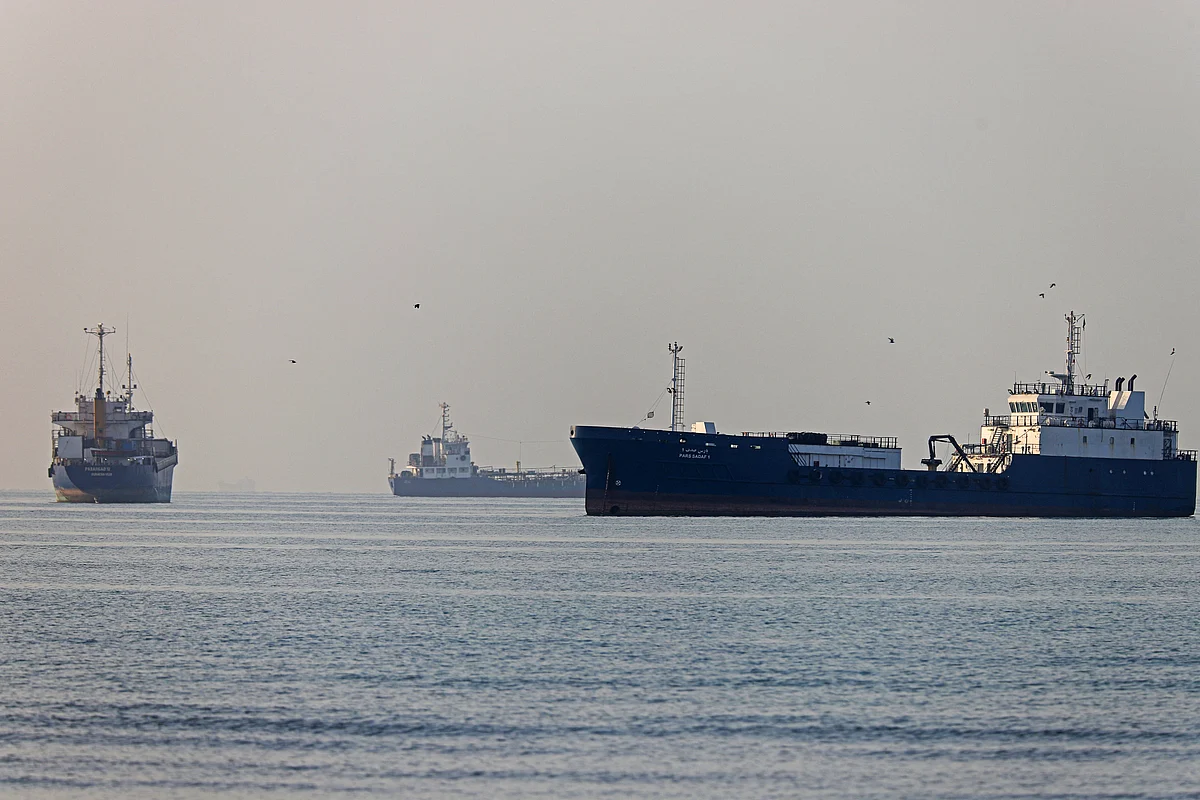
Commentary: Why Strait Of Hormuz Has No Alternative Despite New Red Sea Links
(MENAFN- Khaleej Times) The author is president of UAE Safety and Emergency Security Association and professor of sustainable development at the American University of Sharjah. He is former UAE Minister of Climate Change and Environment and former Minister of Infrastructure. He authored two books on climate change that influenced academic and international reforms.
Whenever regional tensions rise, a familiar debate resurfaces: The search for alternatives to the Strait of Hormuz, as if geography can be redesigned or strategic waterways replaced through political will or logistical improvisation.
Recommended For You Trump says no more Israel troops going to Beirut; Hezbollah agrees to stop shootingIn recent weeks, this discussion has gained renewed momentum, fuelled by reports of expanded Arab coordination, new shipping links between Saudi Arabia, Egypt and Jordan, and logistical initiatives in the Red Sea that some have portrayed as potential bypasses to the strait.
Yet behind the noise lies a simple, immovable truth: There is-and will never be-a maritime alternative to the Strait of Hormuz.
Stay up to date with the latest news. Follow KT on WhatsApp Channels.
Maritime straits are not infrastructure projects that can be engineered or replicated. They are geological formations shaped over millions of years. The Strait of Hormuz is not merely a narrow passage; it is the meeting point of tectonic plates, with depths capable of accommodating the world's largest crude carriers. No artificial route can replicate its scale, depth or strategic position.
The Red Sea, often invoked in speculative commentary, is a deep, rocky tectonic basin. It cannot be reshaped into a new canal, nor can any feasible engineering, environmental or financial model create a maritime corridor linking it to the Gulf's energy production zones.
Guaranteed rightBeyond geology lies international law. The Strait of Hormuz is an international strait under the UN Convention on the Law of the Sea, even if some littoral states have not ratified it. Passage through it is a right guaranteed to all commercial and military vessels. The states bordering it do not possess the legal authority to close it or restrict navigation outside the framework of international law.
Any discussion of an“alternative” implicitly assumes that the strait can be bypassed or rendered optional. In reality, international law itself prevents transforming Hormuz into a permanent pressure tool, making uninterrupted navigation a global obligation rather than a regional preference.
Economically, no other maritime corridor can absorb the volumes that pass through Hormuz. The strait handles 18 to 21 million barrels of oil per day-nearly one‐third of global seaborne crude trade-alongside 30 per cent of global LNG shipments. These figures alone invalidate any notion of a maritime alternative, because no other route-whether in the Red Sea or the Indian Ocean-possesses the infrastructure, depth or capacity to handle such flows.
The Red Sea projects currently under discussion, including new shipping services between Yanbu, Aqaba and Ain Sokhna, are logistical and commercial in nature. They aim to enhance cargo movement, strengthen supply chains and support economic integration among Arab states. They have nothing to do with crude oil flows and cannot serve as substitutes for a global energy chokepoint. These are important and promising initiatives, but they operate in a completely different domain.
Amid the rising noise surrounding supposed“alternatives” to the Strait of Hormuz, a set of calm and carefully framed remarks from a senior figure in the energy sector offered a timely dose of realism. Delivered without exaggeration or alarmism, the message underscored a simple truth:“Maritime security is not a media narrative but a foundational pillar of global economic stability.”
Restoring normal conditionsAny disruption in the Strait, even if temporary, leaves a long tail of consequences for tanker movements, pricing, insurance and market confidence. Restoring normal conditions requires time, coordination and disciplined risk management. This measured intervention served as a necessary correction to a wave of speculative commentary that overstated the existence of alternatives unsupported by geography or international law.
Public discussions often suggest that shipping flows return to normal within days or a couple of weeks once a threat subsides. This may hold true for the physical reopening of the Strait, but it does not reflect the full complexity of the global energy system. The energy market is not a single pipeline that restarts instantly. It is an interconnected network of shipping routes, insurance markets, refinery schedules, LNG logistics, storage levels and market expectations.
When Hormuz is disrupted, each of these components is thrown out of alignment. Even after the Strait reopens, tankers must be repositioned, insurers must reassess risk classifications, refineries must recalibrate their output, and global inventories must be rebuilt. Market confidence-arguably the most fragile component-also takes time to recover. As a result, the physical reopening of Hormuz may take days, but the full restoration of stable flows, balanced pricing and synchronized logistics typically requires weeks to months, reflecting the depth and complexity of the global energy ecosystem.
In parallel, Iranian rhetoric has repeatedly advanced claims of a“zone of control” extending far beyond its territorial waters, reaching even the areas opposite the Port of Fujairah. Such assertions have no legal foundation and reflect domestic political messaging more than they reflect geography or sovereign rights.
Political fantasyInternational maritime law clearly defines territorial waters and exclusive economic zones, and it grants no state the authority to impose control over waters that fall within the sovereignty of another.
Portraying Fujairah's infrastructure-designed to enhance global energy security and provide an additional export route-as a challenge to the Strait is closer to political fantasy than to any credible reading of maritime law. International straits are not governed by declarations, nor reshaped by wishful thinking; they are governed by rules that cannot be circumvented.
Developing Arab ports, enhancing logistical integration and expanding pipeline networks are all important and necessary steps. They strengthen resilience, diversify trade routes and reduce exposure to localized risks. But they do not constitute alternatives to the Strait of Hormuz. What they offer is risk mitigation not replacement. Flexibility not redundancy. Economic diversification not a reconfiguration of global energy geography.
The Strait of Hormuz will remain, by virtue of geology, law and economics, an international passage that cannot be bypassed. Any discussion of a“maritime alternative” overlooks essential realities and conflates what is possible with what is desirable, what is logistical with what is geological, and what is political with what is legal.
The real debate should not revolve around finding a substitute for Hormuz-because none exists-but around reinforcing its stability, ensuring its security and safeguarding its continuity. The global economy depends on it, and the international system recognizes it as such.
ALSO READ- Commentary: Dissecting US-China relations from Taiwan Strait to Hormuz Commentary: The region needs more than an ambiguous ceasefire to end the conflict UAE ambassador warns Hormuz threats could disrupt global food, energy supplies

Legal Disclaimer:
MENAFN provides the
information “as is” without warranty of any kind. We do not accept
any responsibility or liability for the accuracy, content, images,
videos, licenses, completeness, legality, or reliability of the information
contained in this article. If you have any complaints or copyright
issues related to this article, kindly contact the provider above.
Most popular stories
Market Research

More Story








Comments
No comment