




403
Sorry!!
Error! We're sorry, but the page you were looking for doesn't exist.
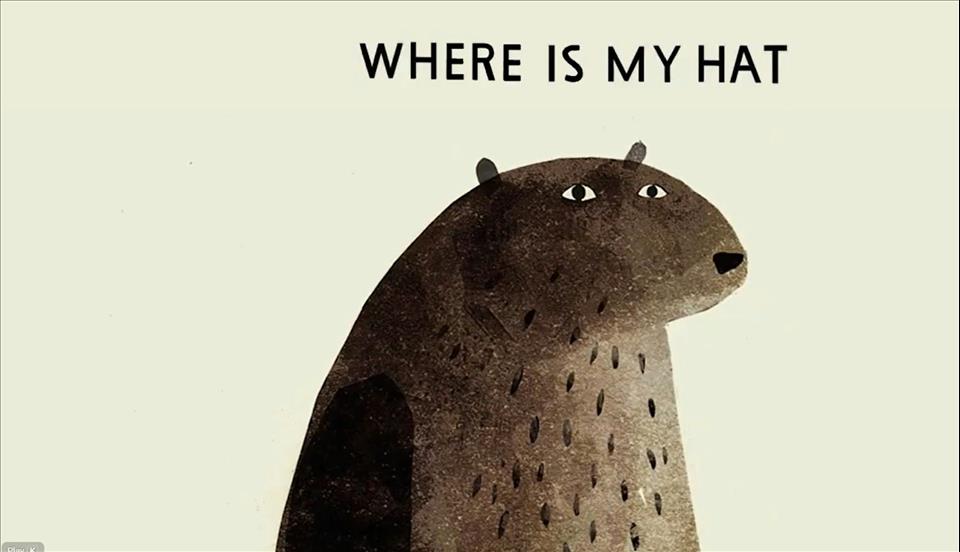
Author Jon Klassen's Prestigious Award Win Reflects A Broader Shift In Children's Literature
Author: Christophe Premat
(MENAFN- The Conversation) Canadian author and illustrator Jon Klassen has become the first Canadian creator to receive the Astrid Lindgren Memorial Award, one of the world's most prestigious distinctions in children's literature.

Klassen's award highlights how literary prizes shape the global circulation of culture. Awards influence which books are translated, taught, reviewed and remembered.
Awards recognizing children's literature help determine which visions of childhood, emotion and storytelling travel internationally and gain cultural legitimacy.
As a scholar working on cultural mediation, literary circulation and symbolic recognition, I am particularly interested in how international literary awards shape the global visibility of authors and cultural traditions.
At a moment when educators and parents are debating children's reading habits, emotional literacy and the role of screens in everyday life, Klassen's international recognition also reflects a broader shift in how children's literature is understood.
Picture books are increasingly seen not simply as educational tools or comforting bedtime stories, but as sophisticated cultural works capable of addressing uncertainty, humour, anxiety and moral ambiguity.
Global institution for children's literatureThe Astrid Lindgren Memorial Award was established by the Swedish government in 2002 after the death of Swedish author Astrid Lindgren, whose Pippi Longstocking books transformed modern children's literature.
From the beginning, the prize was conceived as an international institution devoted to promoting children's and young adult literature worldwide.
Unlike many literary awards that remain closely tied to national publishing industries, the Astrid Lindgren Memorial Award operates globally. Authors, illustrators, storytellers and reading organizations from around the world are nominated each year.
The prize has become a powerful mechanism of cultural recognition, shaping international visibility for creators and influencing translation markets and educational discussions far beyond Scandinavia.
Literary awards do not simply reward artistic quality. They also create symbolic legitimacy. Winning a major international prize often leads to increased translations, broader media attention and new forms of academic and cultural recognition.
In children's literature especially, awards help determine which stories circulate across borders and which ideas about childhood become internationally influential.
Jon Klassen's restrained narrativesKlassen's work stands out because of the unusual relationship he creates between text and image. His minimalist illustrations and restrained narratives leave space for readers to interpret what remains unsaid.
Humour emerges through silence, visual repetition and subtle emotional tension rather than explicit moral lessons.
Books such as I Want My Hat Back and This Is Not My Hat speak simultaneously to children and adults.
Young readers often focus on the humour and visual rhythm of the stories, while adult readers detect darker undertones involving guilt, power, fear or social awkwardness. Klassen's storytelling therefore operates on multiple levels at once.
This dual way of addressing readers reflects an important evolution in contemporary children's literature. Picture books are no longer expected to present simplified moral worlds in which every conflict is resolved clearly and reassuringly. Increasingly, children's literature acknowledges ambiguity, emotional complexity and even discomfort as part of the reading experience.
Klassen has discussed how children interpret stories differently from adults and how illustration can create meanings that words alone cannot fully explain.
Klassen has also reflected extensively on the interpretive richness of picture books through his long-standing collaboration with author Mac Barnett, particularly in discussions about how images and text generate layered meanings for children and adults alike.
Klassen's work demonstrates how visual storytelling invites active participation from readers, encouraging children to interpret emotional cues, silences and contradictions for themselves.
Canadian influence in children's litKlassen's success reflects the growing international visibility of Canadian children's literature over recent decades.
Canadian creators have developed strong reputations for experimentation in illustration, multicultural storytelling and emotionally nuanced narratives.
In many cases, Canadian picture books resist rigid distinctions between literature for children and literature for adults.
They often invite shared reading experiences in which humour, irony and emotional reflection circulate between generations - elements that researchers have noted are key for engagement.
Read more: Picture this: These beautiful books help children read the world
Klassen's award therefore represents not only an individual achievement, but also the international recognition of a broader literary ecosystem. It confirms that Canadian children's literature has become an influential part of global publishing and cultural exchange.
Sweden's role in global cultural mediationThe award also says something important about Sweden itself. Although the country represents a relatively small linguistic market, it occupies an influential position in the international circulation of culture through translation, publishing and literary recognition.
Cultural theorists sometimes describe countries like Sweden as occupying a “semi-peripheral” position in global literary circulation. Unlike dominant English-language publishing centres such as the United States or United Kingdom, semi-peripheral countries rely heavily on translation and cultural mediation. Yet this intermediary position can also create influence.
Sweden has built remarkable international cultural visibility through institutions such as the Nobel Prize in Literature and the Astrid Lindgren Memorial Award. These prizes allow Sweden to function as a global mediator of literary value, helping shape which authors and artistic movements gain international recognition.
Children's literature occupies a particularly important place in this cultural diplomacy. Sweden has long connected children's culture to democratic values, creativity and children's rights. By rewarding authors from different countries and traditions, the Astrid Lindgren Memorial Award reinforces Sweden's international image as a defender of literacy, cultural openness and artistic freedom.
Why literary awards still matterIn the digital age, literary awards continue to play an important role in cultural circulation. Algorithms may increasingly shape visibility online, but prizes still provide forms of symbolic authority that influence publishers, educators, translators and readers.
Klassen's recognition demonstrates that children's literature remains central to broader cultural debates about emotion, literacy and imagination. His stories show that picture books can address complex feelings without abandoning humour or accessibility.
More importantly, his award reveals how international literary institutions shape global conversations about childhood itself. Awards help decide which stories travel, which artistic styles gain prestige and which cultural values become visible across borders.
Institution:Stockholm University

Legal Disclaimer:
MENAFN provides the
information “as is” without warranty of any kind. We do not accept
any responsibility or liability for the accuracy, content, images,
videos, licenses, completeness, legality, or reliability of the information
contained in this article. If you have any complaints or copyright
issues related to this article, kindly contact the provider above.
Most popular stories
Market Research

More Story






Comments
No comment