




403
Sorry!!
Error! We're sorry, but the page you were looking for doesn't exist.

Supreme Court Verdict Today On Pleas Challenging SIR Of Electoral Rolls In Bihar
(MENAFN- Live Mint) The Supreme Court is scheduled to deliver its judgement today on a batch of petitions challenging the Special Intensive Revision (SIR) of electoral rolls in Bihar.
The pleas have claimed that the Election Commission does not have the powers under Article 326 of the Constitution, the Representation of the People Act, 1950 and the Rules made under it to carry out SIR on such a larger form.
Also Read | SIR Phase 3 schedule: Check all important dates for 16 states and 3 UTsA bench headed by Chief Justice of India Surya Kant had on January 29 reserved its verdict on the pleas.
The batch of petitions, filed in June last year following the ECI's decision to conduct the SIR exercise in Bihar and other States, includes pleas filed by election watchdog, the Association for Democratic Reforms (ADR), civil rights group People's Union for Civil Liberties (PUCL), political activist Yogendra Yadav, Trinamool Congress leader Mahua Moitra, RJD MP Manoj Jha, Congress leader K C Venugopal, among others.
The Election Commission had had last year begun the SIR exercise in Bihar followed in other states after which a batch of pleas was filed before the top court challenging the constitutional validity of the exercise.
The SIR in Bihar was conducted in the first phase of the exercise.
The petitioners sought a direction from the top court to set aside the ECI's June 24, 2025 order on the SIR exercise.
On 28 July, the Supreme Court refused to stay the EC from publishing the draft voters' list on August 1, 2025, following the SIR exercise in Bihar.
The ECI defended the SIR exercise and submitted before the top court that it was a legitimate process that had been conducted in various States.
Final arguments held in AugustThe top court had commenced final arguments in the matter on August 12 last year, when it observed that inclusion or exclusion of names in the electoral rolls falls within the constitutional remit of the Election Commission.
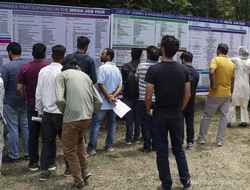
The poll authority had come out with the names of 65 lakh people who were removed from the draft electoral rolls published as part of the SIR exercise.
According to the SIR notification, voters who were not present in the 2002 or 2003 rolls had to show ancestral linkage with someone present in the rolls then.
Also Read | EC announces SIR Phase-III in 19 states, UTs: Full schedule and FAQs hereThe EC had defended the SIR exercise, maintaining that Aadhaar and voter identity cards cannot be treated as conclusive proof of citizenship.
It was alleged by the petitioners that the electoral rolls revision was an "NRC-like process " where the poll body was verifying citizenship, a power which vests in the central government.
The inclusion or exclusion of names in the electoral rolls falls within the constitutional remit of the Election Commission.Advocate Prashant Bhushan, appearing for ADR, had questioned the timeline for the completion of the exercise and the data of 65 lakh voters who were declared dead or migrated or registered in other constituencies.
SIR Phase 3 announcedEarlier this month, the Election Commission announced Phase III of the Special Intensive Revision (SIR) across 19 states and Union Territories. Phase 1 was conducted in Bihar, between June and September 2025, ahead of the 2025 state Assembly Election, while Phase II was conducted in nine states and three UTs between October 2025 and February 2026.
The poll body said that the SIR of Electoral Rolls will cover the entire country in Phase-III. This, however, won't include Himachal Pradesh, Jammu & Kashmir and Ladakh.
(With PTI inputs)

Legal Disclaimer:
MENAFN provides the
information “as is” without warranty of any kind. We do not accept
any responsibility or liability for the accuracy, content, images,
videos, licenses, completeness, legality, or reliability of the information
contained in this article. If you have any complaints or copyright
issues related to this article, kindly contact the provider above.
Most popular stories
Market Research

More Story



Comments
No comment