




403
Sorry!!
Error! We're sorry, but the page you were looking for doesn't exist.
UN Warns Gaza Recovery Efforts Hindered By Aid Restrictions, Collapse Of Services
(MENAFN- Jordan Times)
AMMAN - Seven months after the October 2025 ceasefire, Gaza remains trapped in a worsening humanitarian crisis marked by collapsing healthcare services, mass displacement, and severe shortages of essential supplies.
Although large-scale violence has declined, shortages of medical supplies, widespread displacement, and collapsing infrastructure continue to threaten the lives of civilians across the Strip, according to the United Nations Office for the Coordination of Humanitarian Affairs (OCHA) in its Humanitarian Situation Report issued on May 15.
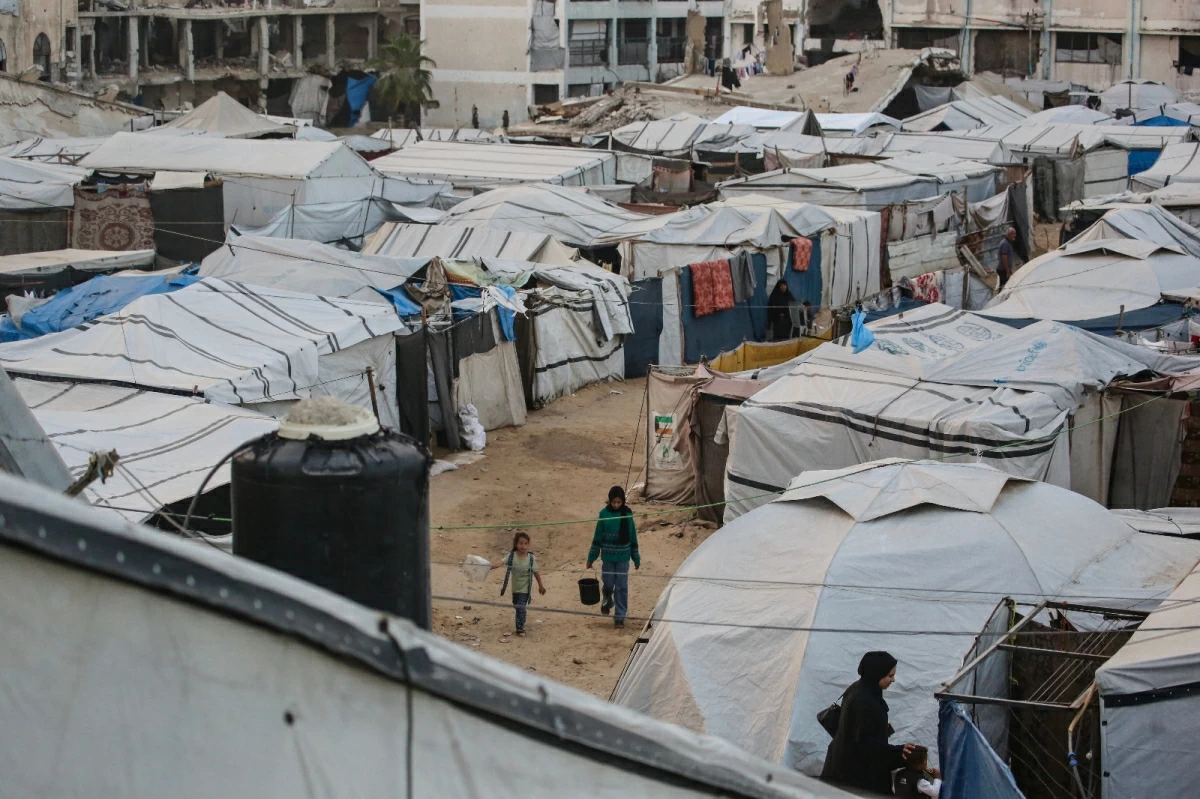
The report said that living conditions in Gaza remain dire, with the majority of the population still displaced and exposed to mounting health and environmental risks.
Reports of attacks striking residential areas also continue, while most residents are sheltering in overcrowded tents or damaged buildings.
World Health Organisation (WHO) Representative in the Occupied Palestinian Territory Renee Van de Weerdt recently returned from Gaza and delivered a briefing at the UN in Geneva on Friday.
“Nothing prepares you for Gaza,” she said, describing the scale of devastation witnessed across the strip.
Despite the ceasefire, violence has not fully subsided. According to WHO figures cited during the briefing, at least 880 Palestinians have been killed and more than 2,600 injured since October 2025.
Gaza's healthcare system remains on the brink of collapse. Barely half of the territory's hospitals are partially functional, while none are operating at full capacity.
Attacks on healthcare facilities continue, alongside severe shortages of medicines, laboratory equipment, oxygen concentrators, reagents, and orthopaedic supplies, WHO added.
Van de Weerdt stressed that many of the blocked items are not“dual-use” materials but essential medical supplies included on WHO's international lists.
She warned that without laboratory reagents, detecting outbreaks of diseases such as hantavirus becomes increasingly difficult amid overcrowding, rodent infestations, poor sanitation, and limited access to clean water.
Meanwhile, rehabilitation needs continue to grow. WHO estimates that more than 43,000 people in Gaza, including thousands of children, have suffered life-changing injuries such as amputations, spinal cord damage, severe burns, and traumatic brain injuries.
Around 5,000 amputees are still awaiting prosthetics and corrective surgeries, services that remain largely unavailable inside the enclave. Many patients also face lengthy delays in obtaining medical evacuation permits.
UNRWA, which provided roughly 40 per cent of medical consultations in Gaza before the war, is also facing major operational challenges.
Director of Health at UNRWA Akihiro Seita told the UN briefing that Israeli restrictions have significantly affected the agency's ability to import medicines and medical equipment.
Nearly 400 UNRWA staff members were killed during the war, while many surviving employees are themselves living in tents and under extremely difficult conditions.
“One staff member told me: 'I feel like I've become an orphan of the world,'” Seita said during the briefing.
Beyond the healthcare crisis, OCHA warned that Gaza's sewage systems are deteriorating due to shortages of fuel, oil, and spare parts, increasing the risk of flooding and disease outbreaks.
Although humanitarian agencies continue to distribute food assistance to hundreds of thousands of people daily, funding shortages and access restrictions continue to hamper relief operations.
Humanitarian aid deliveries also face significant bottlenecks.
In early May 2026, only around half of aid trucks arriving from Egypt were able to offload successfully at Israeli-controlled crossings, according to OCHA. While some commercial goods have entered Gaza, many critical humanitarian supplies remain restricted.
The long-term scale of destruction remains staggering. A joint Rapid Damage and Needs Assessment released in April 2026 by the European Union, the UN, and the World Bank estimated that Gaza will require $71.4 billion for recovery and reconstruction over the coming decade.
The assessment warned that human development indicators in the Strip have regressed by decades.
UN officials have repeatedly warned that delays in implementing recovery and transition plans risk trapping Gaza in a prolonged state of instability.
International agencies continue to call for unimpeded humanitarian access, protection for civilians and aid workers, the removal of unnecessary import restrictions, and Palestinian-led recovery efforts.
As summer temperatures rise and the threat of disease outbreaks grows, humanitarian organisations warn that the window for meaningful intervention is narrowing.
While the ceasefire brought an end to the most intense phase of the fighting, UN agencies stress that lasting recovery will require sustained humanitarian access, adequate funding, and long-term reconstruction efforts.

Legal Disclaimer:
MENAFN provides the
information “as is” without warranty of any kind. We do not accept
any responsibility or liability for the accuracy, content, images,
videos, licenses, completeness, legality, or reliability of the information
contained in this article. If you have any complaints or copyright
issues related to this article, kindly contact the provider above.
Most popular stories
Market Research

More Story







Comments
No comment