

Frequent Landfill Disasters In Philippines Expose Weak Oversight, Government Inaction


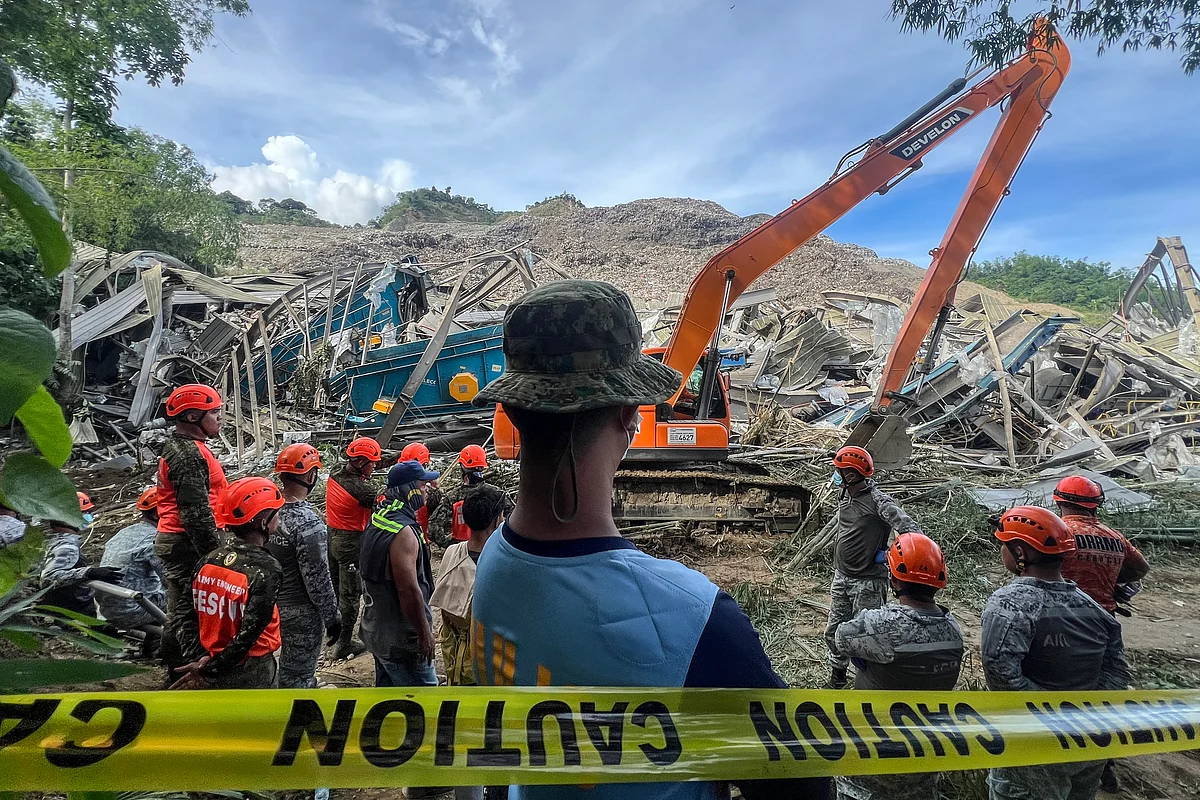
The Davao City Police Office (DCPO) identified the deceased as Cristel, 31, a trash picker while those missing were identified as Luisa, 78, and Rosita, 67, in the city's Barangay New Carmen, Tugbok District.
Recommended For You Iran weighs peace proposal, accuses US of 'excessive demands'Residents living around the Davao landfill said the mountain of garbage had begun shifting after heavy rains hit the area. They added they tried to dig canals to let water runoff safely, to no avail. Local authorities said about 100 families, all of whom are trash pickers, lost their homes in the disaster.
Stay up to date with the latest news. Follow KT on WhatsApp Channels.
The Davao landfill collapse followed similar incidents in Cebu City last January 8, killing 36; and Rodriguez, Rizal servicing Metro Manila on February 20, killing one, while two others also remain missing. The incident also followed a month-long fire in an offshore sanitary landfill in Navotas, Metro Manila, killing one resident due to toxic fumes.
Despite the passage of environmental and engineering guidelines on garbage management, the Philippines had witnessed frequent collapses due to improper landfill operations of private companies and loose monitoring of government units and agencies.
Under the country's Ecological Solid Waste Management Law passed as early as the year 2000, the Philippines still fails to segregate solid waste from households and other sources. Landfill operators dump them in landfills that ultimately become garbage mountains in due time.
Tens of thousands of trash pickers descend on the landfill and scramble for whatever could be recycled and sold to junk shops as their primary economic activity. They also build houses that eventually become communities at the bottom of the mountain of garbage.
When the landfills collapse, the pickers and their houses are buried underneath.
Poverty and government accountabilityOn July 10, 2000, the same year the solid waste management law was passed, Payatas Landfill in Quezon City collapsed, killing at least 218 people, making it the country's worse landfill tragedy. About 300 people remain missing. Some accounts say that 700 to about 1,000 were the actual casualties.
For decades, trash pickers on landfills had been the picture of poverty in the Philippines. The country even appropriated the phrase“Smokey Mountains” from the US mountain range to refer to the now closed Manila landfill that had been burning for many years. It smoke could be seen from many miles out off Manila Bay, giving its famous sunset a more reddish glow.
It is unsafe and illegal for trash pickers to be present on top of the usually unstable mounds of garbage. But private landfill operations could not prevent them from descending on the trash mountains due to their sheer number and desperation.
The private corporations that earn billions of contracts from the government to collect and operate landfills are not without fault themselves.
The solid waste law mandates them to carefully manage newly-deposited trash in specific cells, spread around to stabilize the area and compacted by heavy machinery. Such operations should prohibit the presence of trash pickers.
Landfill operators should also cover the entire site with a layer of soil daily. This is to control odors, deter pests, and prevent fires. Rainwater or liquid filtering through the trash (leachate) must be collected and treated, instead of being allowed to run off to nearby streams and rivers. Methane gas produced by decomposing waste is either vented off or captured to prevent explosions and reduce emissions.
All these do not happen regularly, due in large part to government monitors looking the other way.
No solid waste infrastructureThe Philippines generates approximately 14.6 million tons of solid waste annually, translating to roughly 61,000 metric tons daily. Nearly three decades after the Payatas trash slide, it has yet to build and operate environmentally-responsive sanitary landfills, even with technology being offered by the likes of the Japanese government.
The country's Climate Change Commission reported that out of this massive volume of garbage, about 2.7 million metric tons consist of plastic waste, making it one of the country's most pressing environmental challenges.
The Duterte family had been ruling Davao City since 1987. In the city where the latest trash slide happened, its congressman received a whopping P51 billion (Dh3 billion) between 2020 and 2022 alone, the last two years of his father's presidency. Most of these funds were almost entirely directed toward flood-control systems, roads, bridges, and other major public works. Solid waste management does not appear in the reported breakdown of these funds.
ALSO READ- Philippines flood control scandal began under Duterte, continued by Marcos, court witness claims Philippines landfill fire kills 1, chokes Metro Manila with worst air pollution in decades Earth Day: Philippines must do more than beach clean-up to reduce marine plastic pollution

Legal Disclaimer:
MENAFN provides the
information “as is” without warranty of any kind. We do not accept any
responsibility or liability for the accuracy, content, images, videos,
licenses, completeness, legality, or reliability of the information
contained in this article. If you have any complaints or copyright issues
related to this article, kindly contact the provider above.
Comments
No comment