




403
Sorry!!
Error! We're sorry, but the page you were looking for doesn't exist.
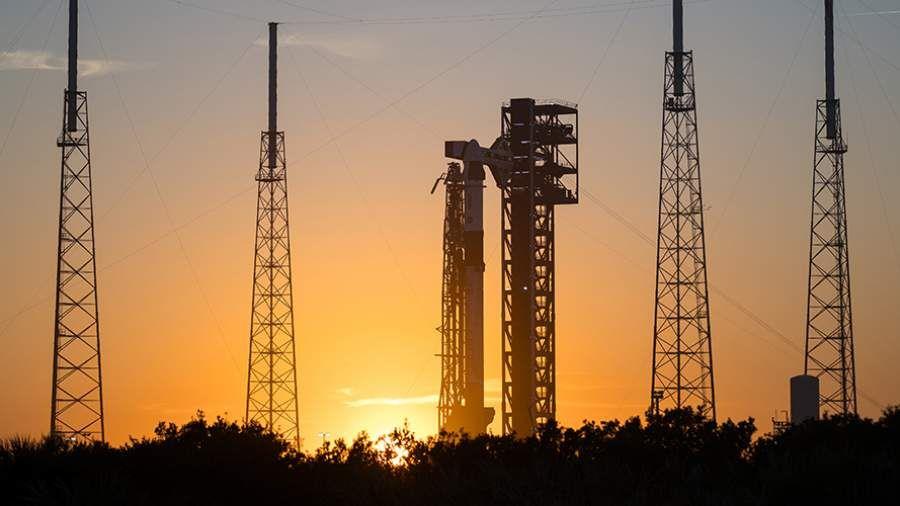
Europe And China Launched SMILE Space Mission
(MENAFN- AzerNews)
By Alimat Aliyeva
The European Space Agency (ESA), in cooperation with the Chinese Academy of Sciences (CAS), has successfully launched the Vega-C rocket carrying the SMILE spacecraft. The mission lifted off from the Kourou Space Center in French Guiana and is aimed at studying how the solar wind interacts with Earth's magnetosphere, according to Popular Science on May 19, AzerNEWS reports, citing foreign media.
The mission, officially known as Solar wind Magnetosphere Ionosphere Link Explorer (SMILE), is planned to operate for at least three years. During the next month, the spacecraft will perform 11 engine burns to enter a highly elliptical orbit passing over both the North and South Poles. Full scientific operations are expected to begin in July.
SMILE is considered a groundbreaking mission because it will become the first spacecraft to observe Earth's magnetosphere using X-ray imaging technology. The probe carries four scientific instruments, including advanced X-ray and ultraviolet cameras. One of the ultraviolet systems will be capable of continuously monitoring the aurora for up to 45 hours at a time.
Scientists hope that combining data from all onboard instruments will provide a clearer picture of how Earth responds to solar wind, charged particles, and powerful coronal mass ejections emitted by the Sun. These phenomena can trigger geomagnetic storms that disrupt satellites, communications systems, and even power grids on Earth.
Researchers emphasize that the magnetosphere acts as a natural protective shield, defending life on the planet from harmful cosmic radiation. However, many details about how this enormous magnetic system reacts to solar activity remain poorly understood. The SMILE mission is expected to help close these scientific gaps through unprecedented cooperation between European and Chinese researchers.
Interestingly, the mission comes at a time of growing scientific interest in“space weather,” which is becoming increasingly important for modern technology-dependent societies. Experts warn that a major solar storm today could potentially damage satellites, GPS navigation, aviation systems, and global internet infrastructure.
In a separate breakthrough reported by Science Daily on May 18, astrophysicists studying gravitational waves may have detected a possible sign of dark matter. Researchers identified an unusual anomaly in wave patterns that could point to interactions between massive cosmic objects and an invisible form of matter that still remains one of the greatest mysteries in modern physics.

Legal Disclaimer:
MENAFN provides the
information “as is” without warranty of any kind. We do not accept
any responsibility or liability for the accuracy, content, images,
videos, licenses, completeness, legality, or reliability of the information
contained in this article. If you have any complaints or copyright
issues related to this article, kindly contact the provider above.
Most popular stories
Market Research

More Story







Comments
No comment