




403
Sorry!!
Error! We're sorry, but the page you were looking for doesn't exist.
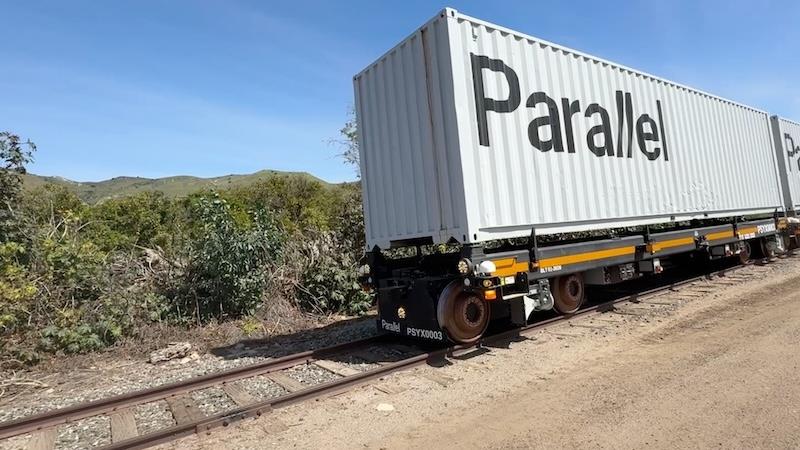
Parallel Systems Develops Autonomous Freight Trains For Logistics Industry
(MENAFN- Robotics & Automation News) Parallel Systems is developing what it describes as the world's first autonomous freight train system, as the broader logistics industry increasingly shifts toward automated and autonomous transportation technologies.
The Los Angeles-based company has raised approximately $100 million to date and is currently conducting commercial testing of its autonomous rail vehicles in Georgia in partnership with Genesee & Wyoming under oversight from the Federal Railroad Administration.
Founded in 2020 by former SpaceX engineer Matt Soule, the company is attempting to modernize freight rail using electric, autonomous, software-controlled rail vehicles designed to operate without traditional locomotives or onboard engineers.
Soule spent 13 years at SpaceX before turning his attention to freight transportation.
Autonomous rail cars operate independentlyUnlike conventional freight trains, Parallel's vehicles are designed as autonomous battery-electric rail cars, each equipped with its own motors, sensors, braking systems, cameras, lidar, and onboard computers.
According to the company, the rail vehicles can operate independently or travel in coordinated groups controlled entirely by software.
Speaking to KTLA, Soule said:“You can think of this as the Waymo of light rail.”
The system is designed to improve use of existing rail infrastructure by enabling smaller freight movements, shorter-distance routes, and more flexible logistics operations.
According to Parallel, each vehicle currently uses six cameras along with lidar sensors to monitor the surrounding environment and support autonomous operation.
The company says the vehicles also include multiple redundant braking systems designed to stop faster than conventional locomotives.
Targeting short-haul freight dominated by trucksParallel believes one of the largest opportunities lies in short-distance freight transport – particularly drayage operations linking ports, rail yards, warehouses, and distribution centers.
Soule told Benzinga the US freight transportation market generates roughly $900 billion annually, with trucking accounting for approximately $800 billion while rail represents around $80 billion.
“The railroads are very successful in the US financially,” Soule told Benzinga.“They're very profitable, but there's no top line growth.”
Parallel argues that autonomous electric rail systems could help rail operators compete more effectively with trucking on shorter freight routes that have traditionally been uneconomical for rail transport.
The company says autonomous trains could help reduce congestion around ports by transporting shipping containers inland to distribution centers, allowing truck drivers to focus on shorter last-mile deliveries.
Testing under way in GeorgiaParallel is currently testing its second-generation autonomous freight system on approximately 160 miles of rail track between the Port of Savannah and Cordele, Georgia.
While the trains operate autonomously, humans still remain involved through remote operations centers where operators can monitor the vehicles and intervene if required.
According to the company, the long-term goal is to transition human workers into supervisory monitoring roles rather than fully manual train operation.
Parallel says it plans to begin manufacturing its third-generation autonomous rail vehicles next year as it moves toward commercialization.
Logistics automation market continues expandingThe company enters a logistics sector increasingly focused on automation technologies spanning autonomous trucks, robotic warehouses, AI-powered supply chains, and self-driving delivery systems.
While autonomous trucking companies have attracted significant attention in recent years, autonomous rail freight remains a relatively underdeveloped area despite rail's advantages in energy efficiency and large-scale freight movement.
Parallel says its approach could allow rail operators to handle smaller freight volumes more economically while improving flexibility and service frequency.
The company also claims autonomous freight rail could improve efficiency for truck drivers by reducing port congestion and allowing faster turnaround times for deliveries.
“We're rapidly moving towards full commercialization,” Soule told Benzinga.“We're the only ones doing anything like this that has Federal Railroad Administration approval.”
The development reflects growing interest in autonomous transportation systems across logistics, where companies are increasingly investing in software-defined freight infrastructure designed to improve efficiency, reduce labor constraints, and increase operational flexibility.

Legal Disclaimer:
MENAFN provides the
information “as is” without warranty of any kind. We do not accept
any responsibility or liability for the accuracy, content, images,
videos, licenses, completeness, legality, or reliability of the information
contained in this article. If you have any complaints or copyright
issues related to this article, kindly contact the provider above.
Most popular stories
Market Research

More Story








Comments
No comment