





403
Sorry!!
Error! We're sorry, but the page you were looking for doesn't exist.
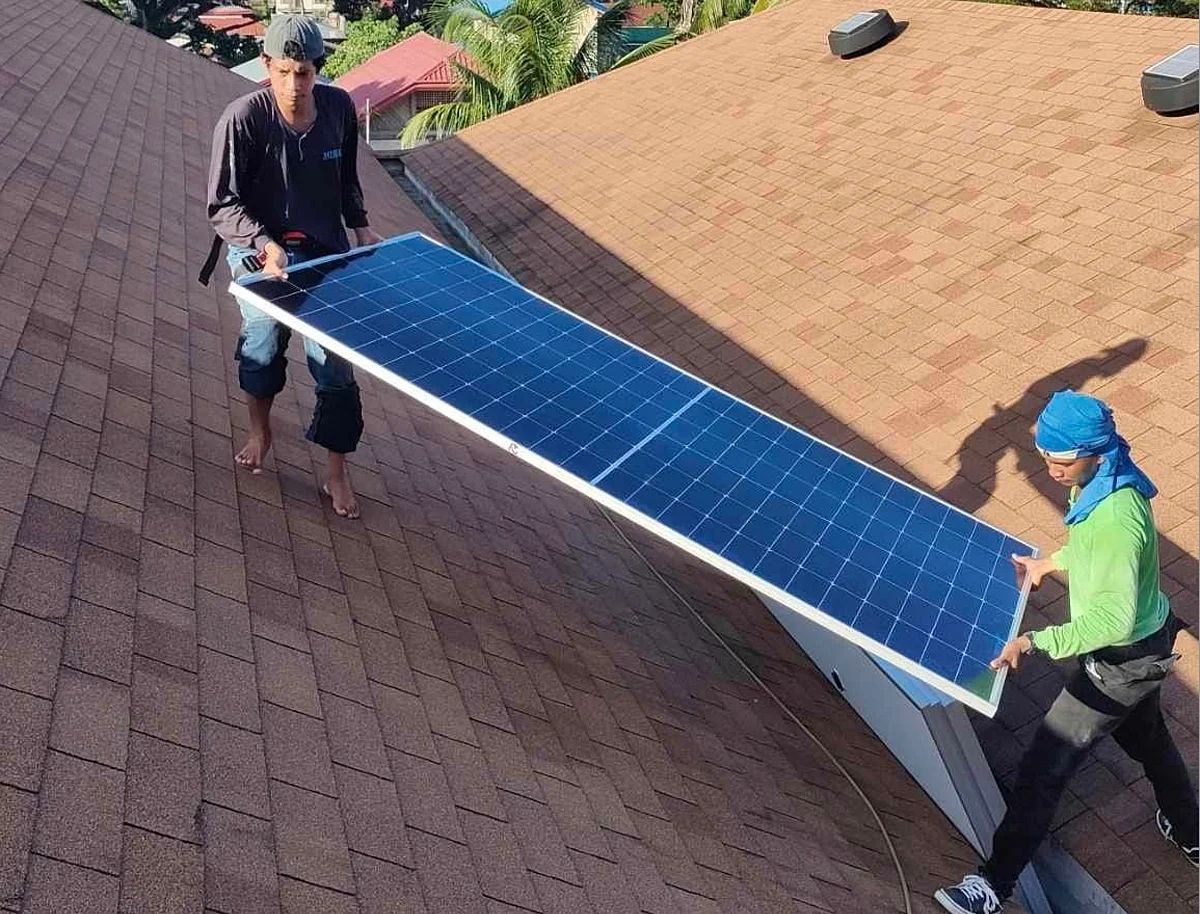
Philippines See Rooftop Solar Energy Push As People Need To Save Money
(MENAFN- Khaleej Times) A village chief in the coastal town of Casiguran in Aurora province in the Philippines made an unconventional decision. Instead of building another basketball court in his village – a popular albeit unimaginative project among politicians – he invested in an 8kW solar-powered electricity station with internet connectivity.
Today, the station powers Barangay Dibet's village hall, child development center, streetlights, and serves as an emergency charging and communication center whenever typhoons and power outages hit.
Recommended For You Can NRIs carry gold coins, bars duty-free from UAE after India hikes import duty?Village chief Jesus Cezar said their solar power station is more useful as fuel for diesel-powered generators has become too expensive due to the Middle East war.
Dibet's decision follows earlier attempts at solar-power generation by other villages, especially after extreme weather events in the disaster prone country.
In Su-luan, Eastern Samar after supertyphoon Yolanda in 2013, a community women's organisation began using solar emergency kits for lighting, charging, and medical needs. With the assistance of renewable energy advocates, the initiative grew into a cooperative and eventually into a mini-ice plant serving fisher folk, extending storage life for their catch and building community livelihood.
Solar energy as cheaper and cleaner alternative to the largely fossil fuel-generated electricity in the country had been growing year after year. It is making Philippine authorities sit up and take notice, inspiring progressive lawmakers under the Makabayan Coalition to propose legislation for a million rooftop solar installations. Their proposal had been ignored.
Barriers to solar energyBut not all are supportive of the drive for solar-powered electrification. The country's biggest electricity distributor, the Manila Electric Co. (Meralco) is pushing for stricter regulations on the installation of rooftop solar panels to prevent improper setups that may result in fire.
While claiming it does not mean to get in the way of consumers having a cheaper source of power, Meralco expressed fears that fires may be caused by defective installations.“It's primarily a safety issue,” Meralco spokesperson Joe Zaldarriaga said earlier.“One wrong installation may result in fire,” he said, without citing specific incidents or numbers.
Zaldarriaga said there have been reports of fires caused by the solar panel installations that didn't follow safety standards. He flagged“guerrilla installations” that have no permit and safety inspections from the local governments.
The biggest stumbling block to a nationwide drive towards solar power generation in the Philippines, however, is government's refusal to take on the project itself. Instead, it has passed on the responsibility to a private enterprise called“Solar ng Bayan” Project.
The franchise for the biggest solar electricity generation project in the Philippines had been given to an ally of the Rodrigo Duterte government in 2019 to produced 25,000 megawatts annually. Representative Leandro Leviste failed to deliver, instead selling off parts of his business to other private business to build enough number of solar farms to meet a substantial part of the country's energy requirements.
Leviste is now being ordered to pay the government P24 billion in penalties for his under-delivery and for selling off parts of the project without government permission.
Observers said that Filipinos would have been better prepared to meet the adverse effects of the Middle East war had the Philippine been more proactive in building and operating solar farms.
Encouragement, not regulationConsumer group Power for People Coalition (P4P) is opposing suggestions of greater government regulations for increasingly affordable solar power systems in households. The group said enough safeguards are already implemented by local government building and electricity codes, as well as inspections by the Bureau of Fire Protection.
“If that will be detrimental, we will definitely go to court to make sure electric consumers are protected,” P4P convenor Gerry Arances said.
The Institute for Climate and Sustainable Cities (ICSC) noted calls to tighten regulations on so-called“guerilla” solar installations risks framing the issue too narrowly.
“The challenge is not only about enforcement. It is fundamentally about access, affordability, and transparency in the energy system. As interest in rooftop solar continues to grow among Filipino households and businesses, the response should be to enable informed and responsible adoption, not constrain it.,” ICSC said.
While acknowledging some safety concerns are legitimate-such as backfeed, voltage fluctuations, and lack of protection coordination-enforcement alone is insufficient, it said.“There must be a simpler, faster, and more affordable pathway for households and businesses to regularise and integrate their systems into the grid,” the group added.
ALSO READ- Filipinos endure double whammy: Power cuts amid sweltering summer heat Power cuts hit millions in the Philippines due to 'major grid disruptions' Major city in Philippines declares 'state of energy emergency' due to soaring fuel prices

Legal Disclaimer:
MENAFN provides the
information “as is” without warranty of any kind. We do not accept
any responsibility or liability for the accuracy, content, images,
videos, licenses, completeness, legality, or reliability of the information
contained in this article. If you have any complaints or copyright
issues related to this article, kindly contact the provider above.
Most popular stories
Market Research

More Story




Comments
No comment