




403
Sorry!!
Error! We're sorry, but the page you were looking for doesn't exist.
Strict Board Exams Expose Deeper Problems In Pakistan's Education System
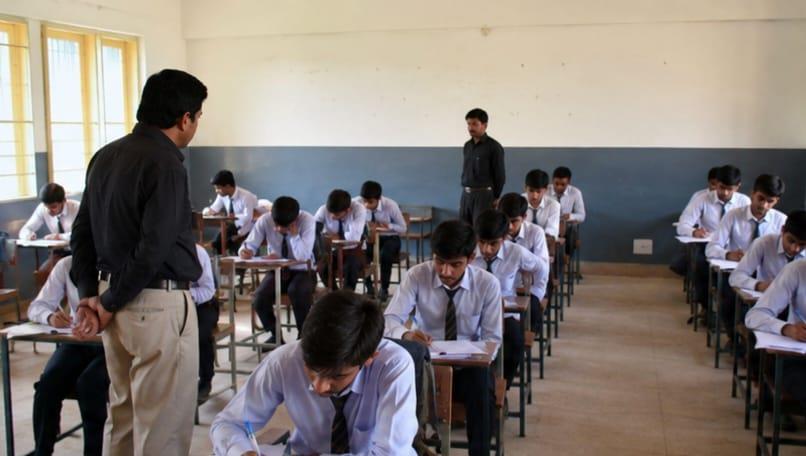
(MENAFN- Tribal News Network) The recent board examinations for grades 9, 10, FA and FSc revealed far more than just an assessment process; they exposed the broader realities of our education system. Serving as an invigilator during these exams provided a firsthand view of the strengths and weaknesses deeply rooted within the system.
This year, extraordinary measures were introduced to ensure transparency and eliminate cheating. Strict monitoring was enforced in examination halls, and for the first time, BS graduates were appointed as invigilators.
According to the Swat Board, the initiative aimed to promote merit, discourage favoritism, and improve the overall standard of education.
At first glance, these reforms appeared to be a positive development. However, the situation inside examination halls revealed several harsh truths. As cheating was completely curbed, the performance of students - particularly those from government schools - dropped noticeably.
Many students remained seated for the entire duration of the paper yet struggled to write meaningful answers. Some even submitted blank answer sheets. This was not merely the result of strict supervision, but a reflection of a system where students often lack proper academic preparation.
A deeper look shows that the issue extends far beyond examination halls. The teaching system in government schools appears weak overall.
According to female students from government schools, they attend school daily from 7am to 2:30pm, and teachers are generally present, yet regular and effective classes are often not conducted. The situation is particularly alarming in science subjects.
In some schools, subject specialists are completely absent, while in others, classes are irregular despite the presence of teachers. As a result, students spend the entire academic year in school but remain deprived of basic concepts and understanding.
Also Read: Branded Dreams, Borrowed Pressure: How Youth Are Losing Themselves in the Race for Status
Students also reported that they rarely face regular tests throughout the year, nor is the syllabus fully covered. Consequently, when strict examination conditions are enforced and cheating is prevented, solving questions becomes extremely difficult for them.
Government teachers, however, present a different perspective. According to them, students in public schools often face little academic pressure from either their families or educational institutions.
Teachers say that when they attempt to enforce discipline or encourage students to focus on studies, they are sometimes advised by the administration to adopt a softer approach.
They further argue that many parents, since they are receiving free education for their children, tend not to monitor academic performance closely. The same parents, however, become highly concerned about tests, studies, and overall progress when their children attend private schools.
Some teachers also point out that when students do not attend classes regularly outside examination periods, completing the syllabus becomes a serious challenge.
On the other hand, students from private schools appeared relatively better prepared. It is true that private institutions often seek leniency during examinations, and many private school students are accustomed to relying on cheating. However, even under strict monitoring and without cheating, they continued attempting questions based on their own understanding and concepts.
The primary reason is that private schools generally complete the syllabus on time, conduct regular tests, and keep students under consistent academic pressure throughout the year.
Another major development this year was the introduction of the e-marking system. Under this system, students were required to answer questions according to a specific pattern and structure. Government school students were largely unfamiliar with this format.
They not only struggled to solve questions but also demonstrated weaknesses in answer presentation. In contrast, private school students were comparatively familiar with the pattern because similar examination methods had already been practiced in their institutions, enabling them to perform relatively better.
It is also important to acknowledge that not every parent can afford private schooling. Due to economic hardships, many families have no option but to rely on government schools. In such circumstances, a weak public education system directly harms students who are already disadvantaged by limited resources.
According to education experts, the issue is not merely about cheating; it is about the entire educational structure. If students are not provided proper teaching, guidance, and assessment throughout the year, expecting strong performance in examinations is unrealistic. Therefore, immediate reforms are necessary.
Regular monthly test systems should be introduced in government schools, complete syllabus coverage must be ensured, shortages of science teachers should be addressed, and effective monitoring of teachers' performance should be implemented.
Unnecessary holidays should be minimized, and a more serious academic environment must be created. At the same time, students should be encouraged to value learning rather than relying on cheating.
The recent examinations delivered a clear message: when cheating is eliminated, the true level of academic performance becomes visible. The need of the hour is to accept this reality and strengthen the foundations of the education system so that in the coming years, students can not only sit exams without cheating but also succeed through genuine knowledge and understanding.

Legal Disclaimer:
MENAFN provides the
information “as is” without warranty of any kind. We do not accept
any responsibility or liability for the accuracy, content, images,
videos, licenses, completeness, legality, or reliability of the information
contained in this article. If you have any complaints or copyright
issues related to this article, kindly contact the provider above.
Most popular stories
Market Research

More Story






Comments
No comment