

403
Sorry!!
Error! We're sorry, but the page you were looking for doesn't exist.
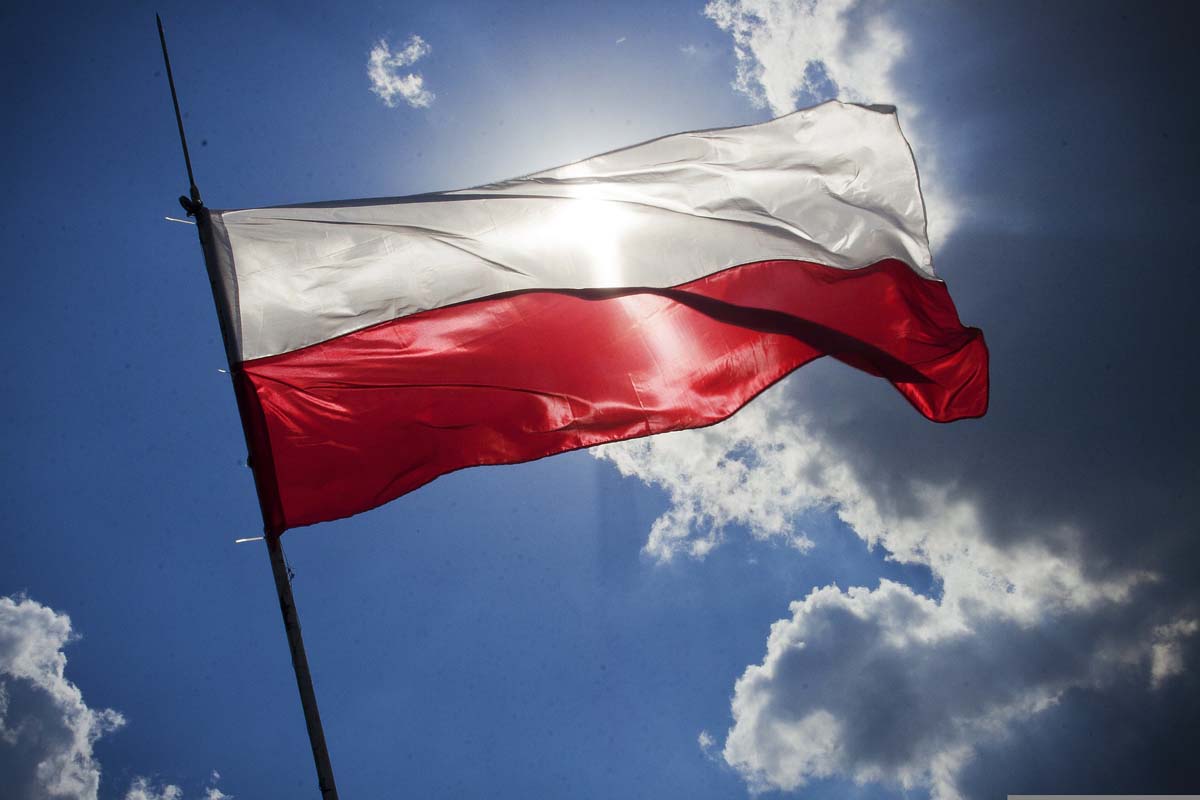
Poland's FM Warns of 'Great Storm' as Geopolitical Order Fractures


(MENAFN) Polish Foreign Minister Radoslaw Sikorski sounded a stark alarm Wednesday, telling an international audience that the world is sliding into an era of compounding crises — one he described as the early signs of a historic geopolitical rupture.
Addressing the 12th International Maritime Congress in the northwestern city of Szczecin, Sikorski warned that scenarios once dismissed as far-fetched were rapidly becoming the new normal.
"We live in times of polycrisis. Dark clouds are coming from several directions at once," Sikorski said. "Phenomena until recently considered impossible or extremely unlikely are becoming reality – armed conflicts, maritime blockades and trade wars."
The minister identified a sweeping arc of maritime instability — spanning the Strait of Hormuz, the Red Sea, the Black Sea, and the Baltic Sea — and argued that conflicts unfolding thousands of miles away are already exerting a direct impact on European trade and security.
"Distance has little meaning," Sikorski said. "It is no surprise the world's attention is focused on the Strait of Hormuz. But these are not the only waters falling victim to intensifying rivalry."
Turning to Europe's own backyard, Sikorski accused Russia of systematically targeting undersea infrastructure, jamming GPS signals, and deploying a so-called "shadow fleet" of deteriorating vessels that he said poses compounding environmental and security hazards across the Baltic. He pushed back firmly against any characterization of the Baltic as a safely secured "internal NATO sea," warning such framing dangerously underestimates the threats already present.
"We are seeing the beginnings of a great storm in international relations," Sikorski said. "During storms, the crew must work hand in hand."
Sikorski also drew a direct line between security deterioration and the return of economic nationalism, noting that tariffs — once virtually absent from conversations among allied nations — had forced their way back onto the international agenda.
Poland has responded to the changed security environment with one of NATO's most aggressive defense buildups. Since Russia's full-scale invasion of Ukraine in 2022, Warsaw has ramped defense spending to nearly 5% of GDP — among the highest ratios in the entire alliance. Poland also signed a loan agreement on May 8 under the EU's SAFE defense financing program to fund military modernization and expand its domestic arms industry.
"We are determined never again to lose our sovereignty," he said.
Addressing the 12th International Maritime Congress in the northwestern city of Szczecin, Sikorski warned that scenarios once dismissed as far-fetched were rapidly becoming the new normal.
"We live in times of polycrisis. Dark clouds are coming from several directions at once," Sikorski said. "Phenomena until recently considered impossible or extremely unlikely are becoming reality – armed conflicts, maritime blockades and trade wars."
The minister identified a sweeping arc of maritime instability — spanning the Strait of Hormuz, the Red Sea, the Black Sea, and the Baltic Sea — and argued that conflicts unfolding thousands of miles away are already exerting a direct impact on European trade and security.
"Distance has little meaning," Sikorski said. "It is no surprise the world's attention is focused on the Strait of Hormuz. But these are not the only waters falling victim to intensifying rivalry."
Turning to Europe's own backyard, Sikorski accused Russia of systematically targeting undersea infrastructure, jamming GPS signals, and deploying a so-called "shadow fleet" of deteriorating vessels that he said poses compounding environmental and security hazards across the Baltic. He pushed back firmly against any characterization of the Baltic as a safely secured "internal NATO sea," warning such framing dangerously underestimates the threats already present.
"We are seeing the beginnings of a great storm in international relations," Sikorski said. "During storms, the crew must work hand in hand."
Sikorski also drew a direct line between security deterioration and the return of economic nationalism, noting that tariffs — once virtually absent from conversations among allied nations — had forced their way back onto the international agenda.
Poland has responded to the changed security environment with one of NATO's most aggressive defense buildups. Since Russia's full-scale invasion of Ukraine in 2022, Warsaw has ramped defense spending to nearly 5% of GDP — among the highest ratios in the entire alliance. Poland also signed a loan agreement on May 8 under the EU's SAFE defense financing program to fund military modernization and expand its domestic arms industry.
"We are determined never again to lose our sovereignty," he said.

Legal Disclaimer:
MENAFN provides the
information “as is” without warranty of any kind. We do not accept any
responsibility or liability for the accuracy, content, images, videos,
licenses, completeness, legality, or reliability of the information
contained in this article. If you have any complaints or copyright issues
related to this article, kindly contact the provider above.
Comments
No comment