




403
Sorry!!
Error! We're sorry, but the page you were looking for doesn't exist.
Trump's Visit To Beijing: A Great Opportunity For China?
(MENAFN- Asia Times)
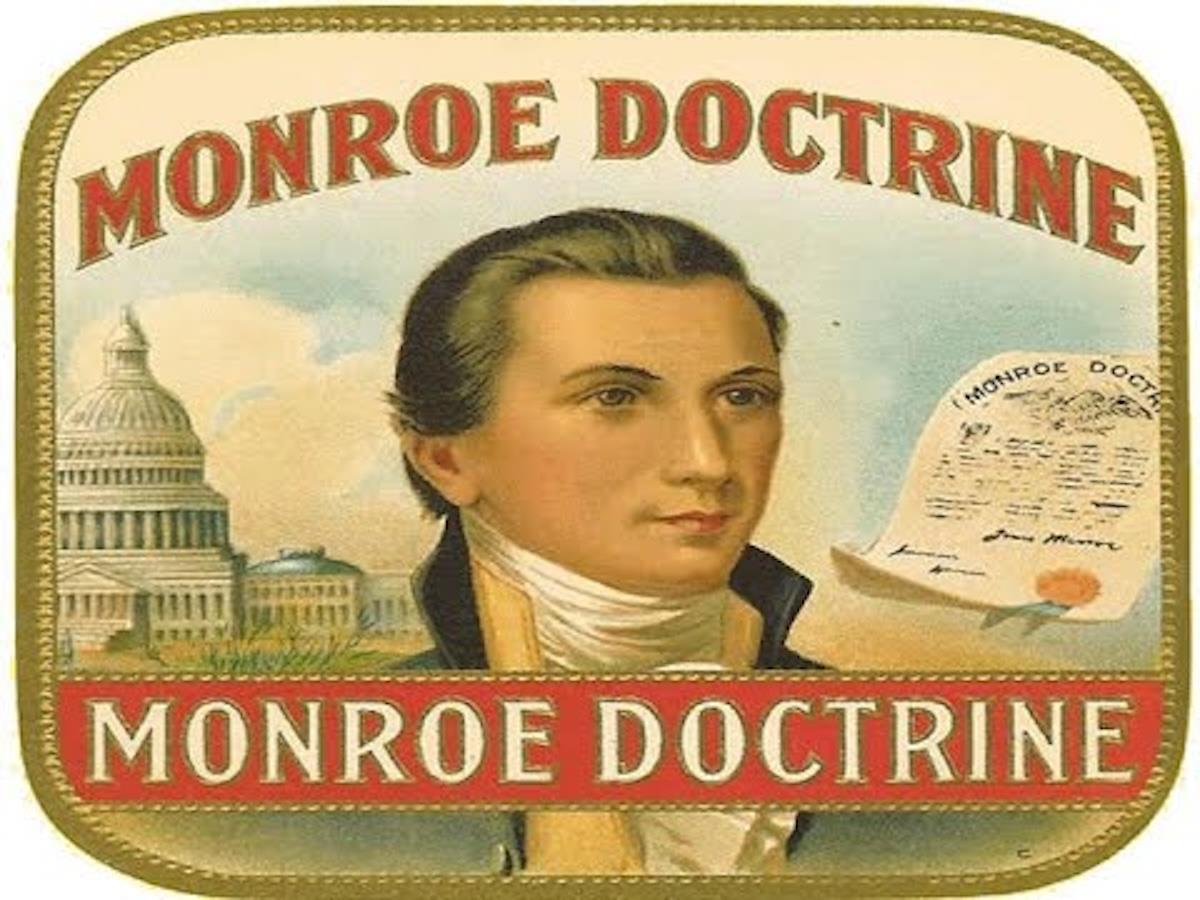
I have been arguing since 2014 that China is planned to establish its own version of the Monroe Doctrine. The argument was based primarily on the Chinese claim to more than 80% of the South China Sea (SCS) and the ongoing militarization of these waters.
Other commentators have characterized this view as misreading China's intentions, referring to Deng Xiaoping's final strategic guiding principle, which is generally translated into English as“Hide your strength and bide your time.”
According to that interpretation China aspires to be a benign world power, as indicated by the early manifestations of President Xi Jinping's One Belt and One Road initiative. But Belt and Road has now evolved from an economic initiative into a strategic tool that significantly enhances China's ability to project power, positioning it as a peer challenger to US military supremacy.
That China really does desire its own version of the Monroe Doctrine has become ever clearer in the context of the economic and military chaos that US President Donald Trump has inflicted on the world since being reelected 18 months ago. The limits of US military power to effect geopolitical change have been starkly exposed by Trump's half-baked Iranian adventure – and China is the principal beneficiary.
President Trump's administration, in its 2026 National Defense Strategy, has effectively acknowledged China's regional influence as far as the First Island Chain, and is seeking a stable,“decent peace” with China. Following Trump's attacks on Venezuela and Iran, which are widely held to be illegal, the US will find it much harder to resist the logic of a Chinese“sphere of influence.” Surely China will now exploit the faltering situation of the US to expand its military power out to the Second Island Chain.
Beginning in the 18th century, Great Britain established absolute naval supremacy and controlled the world's sea lines of Communication. Pax Britannica was at its apex between 1815 and 1914, when Britain had no serious international rivals – but this role was ultimately relinquished to the United States, whose power was demonstrated in two world wars.
Latest stories Trump Justice Department subpoenas news outlets over war coverage India-Vietnam BrahMos missile deal a hot shot at China Gwadar's moment has finally arrived for PakistanWho can doubt that the United States is now a great power in decline. Many experts, making comparison to the slow descent of the British Empire, argue that the shift away from Pax Americana is a natural, long-term trajectory rather than a sudden event. In any case, I believe that Trump's presidency has has significantly accelerated the rate of decline.
President Trump is a reality TV star and real estate investor. He lacks the abilities required to successfully lead the world's largest economy and most powerful military. The problem is compounded by his narcissistic personality. During his first term there were some members of his cabinet who could restrain his vindictive and vainglorious impulses, but in his second term these“adults in the room” have been replaced by sycophants as unqualified and unsuitable as Trump himself.
Among the incompetents surrounding President Trump, many of them formerly hosts on his favorite TV channel, self-styled Secretary of War Pete Hegseth deserves special mention. He gleefully gloats over death and destruction and hectors US allies for refusing to do his master's bidding.
Trump's administration has ignored the importance of the shipping system and the sea lines of communication that are essential to global logistics. Shockingly, Trump and his acolytes appear to have been surprised that Iran has turned the Strait of Hormuz into its most powerful weapon, humbling the US and crippling the global economy. Perhaps the most farcical aspect of the situation is the“Project Freedom” that Trump declared on May 4, apparently to fix this problem, only to“pause” this operation less than two days later, with no explanation and even less success.
Trump's war of choice against Iran is a quagmire from which he cannot escape without humiliating both himself and the US His rapidly eroding poll numbers show that even some of his most fervent supporters are now realizing that their man has made a serious mistake. Defying all evidence to the contrary, Trump has repeatedly claimed that his war against Iran has been won, that the fighting is over, that the Strait of Hormuz is open, and that the Iranians are desperate to make a deal. Trump's leadership has utterly lost all credibility.
The personal failures of President Trump are echoed in the waning of the US ability to define and determine the world order. Trump has complained bitterly that major NATO nations did not cooperate in his war against Iran, but he did not consult them before attacking Iran, and in any case NATO is a defensive alliance. The international order has been greatly perturbed by Trump's ill-informed blundering, and many have compared the situation to the instabilities that preceded the two world wars. Indeed, some commentators believe that World War III is already underway.
President Trump's historically significant impotence will be glaringly obvious during his imminent visit to Beijing for a summit meeting with President Xi. Clearly he has abandoned the“pivot to Asia” strategy initiated by the Obama administration. But is he going farther by actually giving up the military competition between the US and China?
As of May 4, the US Navy had three carrier strike groups and two expeditionary strike groups deployed to the Middle East, with a drastically reduced presence in the Indo-Pacific. The US has also redeployed key strategic deterrence assets to the Middle East, including THAAD missile defense systems from South Korea and Patriot batteries from around the Indo-Pacific.
Meanwhile, China is continuing its militarization of the SCS, with a rapid, large-scale land reclamation on Antelope Reef in the Paracel Islands. This is 162 miles from Sanya Port in Hainan and 216 miles from Da Nang, Vietnam. It is potentially one of China's largest outposts in the SCS, but President Trump shows little sign that he either knows or cares about this development.
President Trump's irredeemably foolish attack on Iran has overturned the longstanding convention whereby there is freedom of navigation for ships to use the globally significant sea lines of communication essential to world trade. The Strait of Hormuz is now closed, and though Trump is hoping that he can force it open by blockading Iranian vessels, Iran is used to hardship, and well able to withstand it.
Sign up for one of our free newsletters-
The Daily Report
Start your day right with Asia Times' top stories
AT Weekly Report
A weekly roundup of Asia Times' most-read stories
Trump, on the other hand, wanted a victory to show before meeting with President Xi, and he must have something he can at least pretend is a victory before the US midterm elections in November. The diplomatic efforts which are now reputedly underway are clearly going nowhere: time is on the side of the Iranians.
Great powers in dispute with lesser nations generally pursue diplomatic avenues before deploying military force, and recent custom obliges the US to portray any military intervention as a humanitarian initiative. By blatantly ignoring such nuances, President Trump has placed the US on a par with President Putin's Russia, which invaded Ukraine in 2022.
Morally, the US president is now scarcely distinguishable from the dictators whom he so admires, and whose company he obviously enjoys. Practically, he deployed military force preemptively, without an imminent threat from Iran, and now has no idea how to escape from the mess he made by his own actions
During his first term, Trump withdrew from the Iran deal negotiated by the Obama administration, but whenever the current war ends it seems likely to be with an inferior agreement, perhaps even granting Iran some permanent oversight of navigation through the Strait of Hormuz: a double disaster for Trump and the US.
Pax Americana has had a good run, but the world is changing. The decline of US influence is clear to see: an unreliable and sometimes treacherous friend to its allies, and an aggressive potential enemy wielding a very big stick. President Xi must be delighted with the chaos fomented by Trump's volatility, which is helping China to portray itself as the guardian of global stability.
Captain Sukjoon Yoon (ROK Navy, ret.) is a senior fellow of the Korea Institute for Military Affairs and a member of South Korea's Ministry of National Defense policy advisory committee. The views expressed here are his own.
Sign up here to comment on Asia Times stories OrThank you for registering!
-
Share on X (Opens in new window)
Share on LinkedIn (Opens in new window)
LinkedI
Share on Facebook (Opens in new window)
Faceboo
Share on WhatsApp (Opens in new window)
WhatsAp
Share on Reddit (Opens in new window)
Reddi
Email a link to a friend (Opens in new window)
Emai
Print (Opens in new window)
Prin

Legal Disclaimer:
MENAFN provides the
information “as is” without warranty of any kind. We do not accept
any responsibility or liability for the accuracy, content, images,
videos, licenses, completeness, legality, or reliability of the information
contained in this article. If you have any complaints or copyright
issues related to this article, kindly contact the provider above.
Most popular stories
More Story








Comments
No comment