



403
Sorry!!
Error! We're sorry, but the page you were looking for doesn't exist.
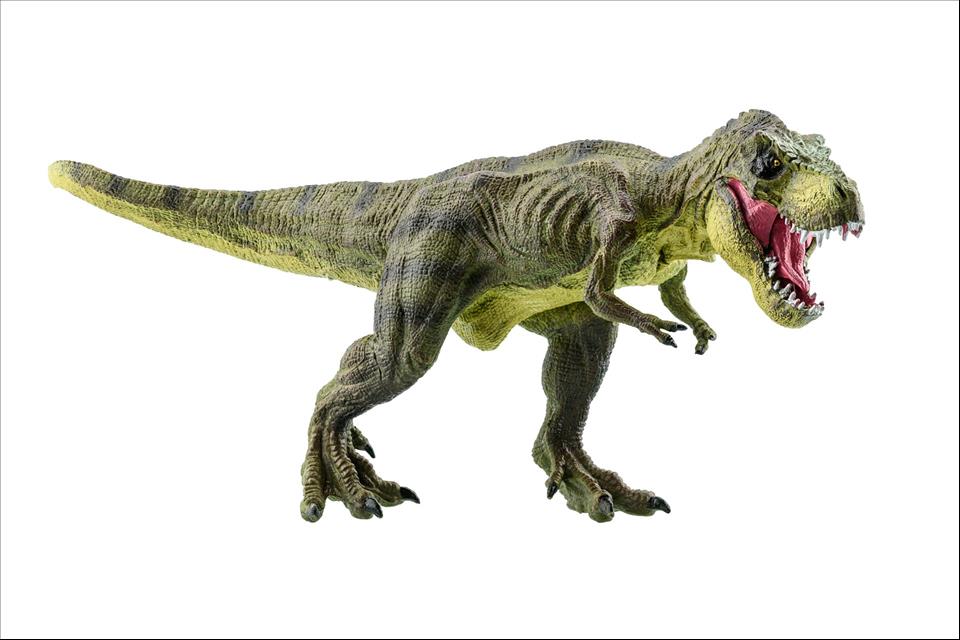
Why Did 'Tyrannosaurus Rex' Have Such Short Arms?
Author: Sarah Sheffield
(MENAFN- The Conversation) Curious Kids is a series for children of all ages. If you have a question you'd like an expert to answer, send it to ....

One of the most famous dinosaurs to ever roam across Earth, Tyrannosaurus rex, has filled people's minds with wonder since the first skeleton was discovered in the early 1900s.
Scientists believe T. rex, or King of the Tyrant Lizards, as its name translates, was a fearsome predator. An adult T. rex was massive in size – approximately 40 feet (12 meters) long and 20 feet (6 meters) tall, weighing as much as an African elephant. Each of its enormous sharp teeth could be near a foot (0.3 meters) in length from the root to the tip.
I'm a paleontologist, and I use fossils to study how animals lived and evolved over long periods of time. One of the coolest things about being a paleontologist is that there are always new questions to ask and new things to learn – even about a super-well-known dino like T, which went extinct just over 65 million years ago.
One T. rex mystery has to do with this giant predator's relatively tiny arms. Why would it have arms so short that it couldn't even reach its own mouth? How did it use them?
How 'short' is short?First, let's define what we mean by“short.”
The biggest T. rex could measure 45 feet (14 meters) from the snout to the tip of the tail, but their arms were only about 3 feet (1 meter) long. On average, a T. rex's arms were just about 30% of the length of its legs.
In comparison, humans have, on average, arms around 66% of the length of their legs. If people had the same arm proportions as a T, a 6-foot (1.8 meters) tall person would have arms only 10 or 12 inches (25 to 30 centimeters) long!
T. rex isn't the only dinosaur with such short arms. The evolutionary trend toward shorter arms in theropods – the larger group of meat-eating, two-legged dinosaurs that T. rex belongs to – happened multiple times. Similar to how wings separately evolved in different animals – like birds and bats – traits can emerge many times in evolutionary history.
You can see the shortening of T. rex arms as a pattern in its family tree, as earlier relatives had proportionally longer arms.
How did they use their mini-arms?Short arms don't seem to have been a problem for these mighty dinosaurs. T. rex was a successful carnivorous species that existed for over a million years. They only went extinct when an asteroid hit the Earth, causing a global mass extinction.
Scientists have suggested a few ideas to possibly explain how T. rex used their arms. Maybe they were used as some kind of social display that could impress other T. rex – kind of like the bright feathers of a peacock that can attract potential mates.
But male and female T. rex skeletons don't show the major differences that paleontologists would take as clues that they relied on social displays to attract mates. And while animal behavior can sometimes be preserved, such as in bite marks or fossilized footprints, it's rare to have enough fossil data to draw clear conclusions.
Maybe T. rex used their arms as weapons to attack or hold down prey. But these options seem unlikely since T. rex's huge jaws would have made contact with an enemy or prey before the short arms would have been able to reach it.
Some scientists have recently hypothesized that T. rex's short arms were an adaptation to competition with other carnivores. If multiple predators were feeding on a carcass, one could get hurt by accidental bites or even intentional warning bites for getting too close. Shorter arms would be less likely to get chomped. Similar things occur today with territorial carnivores, like Komodo dragons.
Maybe the arms didn't have a purposeAnother possibility is that the arms served little or no purpose at all, so over time, they became vestigial. That's the scientific term for body parts that don't have clear purposes anymore, but are still passed down through evolution.
One example is a whale's hindlimbs. Whales evolved from mammals that lived on land that had large legs to move around. The bones are still present in today's whales, but have gotten much smaller over millions of years and have no function.
Some scientists have suggested a different idea: T. rex's arms may have evolved to be smaller as another body part grew larger. The fossil record reveals that arms got shorter as theropod skulls got larger across many different dinosaur groups, including T. rex. Larger skulls likely would have made it easier to hunt and eat larger prey.
Researchers can use mathematical equations to accurately predict theropod arm length if they know the animal's skull size and length of its upper leg bone, the femur. It turns out that larger skulls are strongly linked to shorter arms in theropods.
The reason for the change in arms, however, isn't as clear. Some scientists have argued that the smaller arms could have helped with balance as the head got larger, but others aren't so sure. In evolution, there isn't always a reason why a change occurs – sometimes, changes just happen. In this case, we don't yet know if there was a benefit for the arms to get smaller as heads got larger.
So for now, we don't really know how T. rex used its arms or why they evolved to be so small, proportionally. As scientists find new data, we will continue to test hypotheses to better understand why this tiny-arm trend occurred so many times in theropod evolution. That's what makes science so exciting – a future fossil discovery could be the missing puzzle piece that helps us answer these questions.
Hello, curious kids! Do you have a question you'd like an expert to answer? Ask an adult to send your question to .... Please tell us your name, age and the city where you live.
And since curiosity has no age limit – adults, let us know what you're wondering, too. We won't be able to answer every question, but we will do our best.
Institution:Binghamton University, State University of New York

Legal Disclaimer:
MENAFN provides the
information “as is” without warranty of any kind. We do not accept
any responsibility or liability for the accuracy, content, images,
videos, licenses, completeness, legality, or reliability of the information
contained in this article. If you have any complaints or copyright
issues related to this article, kindly contact the provider above.
Most popular stories
Market Research

More Story








Comments
No comment