



403
Sorry!!
Error! We're sorry, but the page you were looking for doesn't exist.
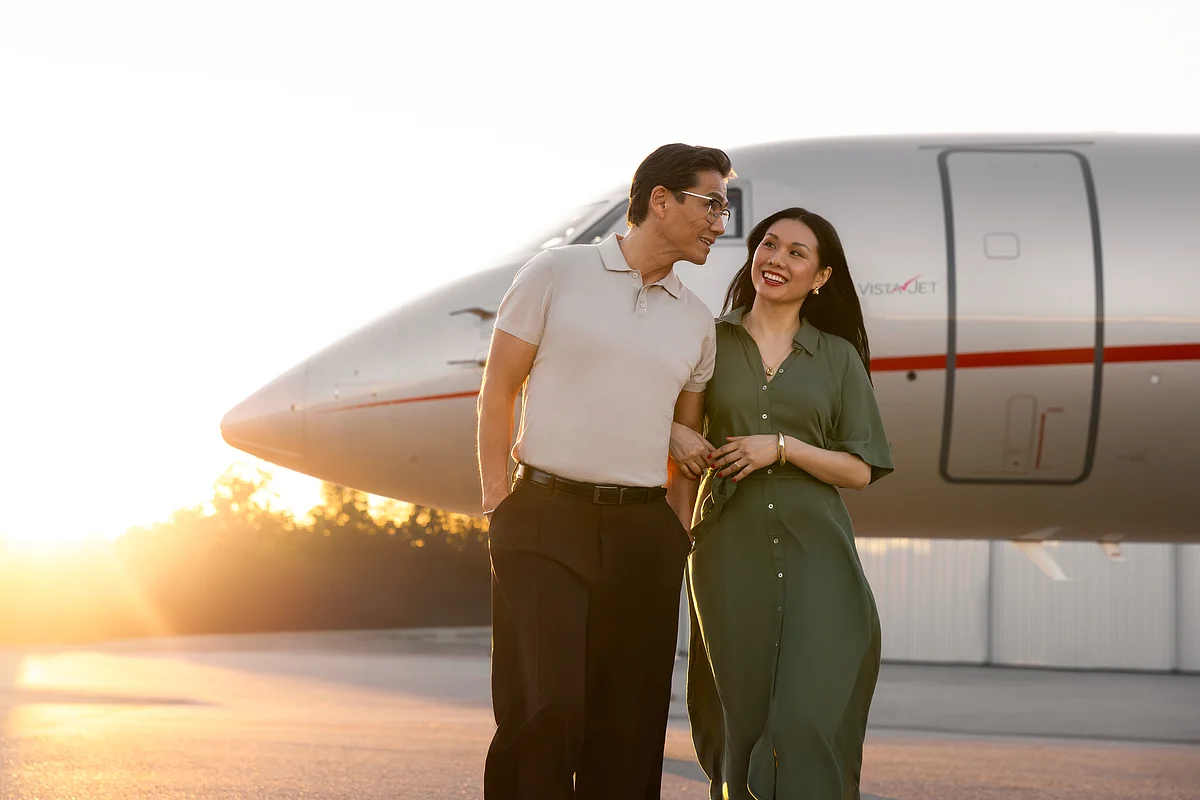
Has Luxury Become Less About Acquisition And More About Protection?
(MENAFN- Khaleej Times) What we're seeing now is not a rejection of luxury, it's a rejection of performance, says Matteo Atti
- By: Khaleej Times Staff
Luxury, once defined by visibility and status, is being quietly re‐examined by high‐end consumers who no longer see value in constant performance. Across fashion, travel and hospitality, there is a growing pivot away from spectacle towards experiences that offer privacy, time and restoration - a shift being accelerated by global uncertainty, digital fatigue and changing ideas of success.
For decades, luxury brands shaped desire by setting the rules: how people dressed, travelled and lived. Today, that authority is being questioned. Affluent consumers are increasingly resistant to being told what to want. Instead, they are seeking environments that adapt to their personal rhythms rather than demand attention or validation.
Recommended For You Iran sends response to US proposal via Pakistan, state media saysThis recalibration is particularly evident among global business leaders and entrepreneurs whose lives are already dominated by schedules, scrutiny and visibility. For them, luxury is less about acquisition and more about protection - of energy, sleep and presence. The emphasis has moved inward, from external markers of achievement to internal states of wellbeing.
Few sectors have felt this shift as acutely as private aviation, where the traditional narrative of opulence is giving way to something more restrained. According to Matteo Atti, global chief marketing officer of VistaJet, the change reflects a broader social exhaustion with performance.
“What we're seeing now is not a rejection of luxury,” Atti says.“It's a rejection of performance.”
Atti argues that modern luxury is increasingly about permission - to slow down, to opt out and to define success on one's own terms. In a world shaped by constant comparison and quantification, the rarest commodity has become the ability to disappear, even temporarily.
“People today are exhausted by being watched, measured and compared,” he says.“True luxury has become the freedom to step outside constant observation and expectation.”
This perspective has informed the way parts of the private aviation industry are repositioning themselves. Rather than selling private flights as symbols of status, some operators are reframing the experience around emotional and physical recovery - an approach that prioritises calm over indulgence.
Sleep, time and privacy have emerged as the new currencies of high‐end travel, particularly for frequent flyers whose outward success often masks exhaustion. The cabin, in this reading, is no longer a showcase but a buffer - a space designed to give something back rather than demand engagement.
“Invisible luxury is the most powerful kind,” Atti says.“When something restores you rather than impresses others, that's when it truly becomes valuable.”
This evolution mirrors wider changes in consumer behaviour across luxury categories. Fashion houses are placing greater emphasis on craftsmanship over logos; hotels are foregrounding intimacy and wellness rather than scale; and destinations are marketing slowness rather than excess. The common thread is restraint - a move away from noise towards meaningful experience.
Atti's thinking is shaped by a career that spans both fashion and technology, sectors that have long grappled with how desire is created and sustained. His early exposure to Italian craftsmanship fostered an appreciation for quality that does not need to announce itself, while later roles in global technology underscored the importance of designing for real, imperfect lives.
“Luxury brands often forget that people don't live in campaigns,” he says.“They live in complexity.”
In private aviation, that complexity shows up in changing schedules, last‐minute decisions and the need for flexibility - all of which have become baseline expectations rather than premium add‐ons. As a result, the experience is being redesigned to feel less theatrical and more human.
For many travellers, silence has become as valuable as service. Privacy is no longer about exclusivity but recovery. The goal is not to be entertained but to arrive less depleted than when the journey began.
“The cabin should be a place where nothing is asked of you,” Atti says.
He notes that this mindset resonates strongly in the Middle East, where concepts of hospitality and time have long been culturally embedded. Well before the arrival of global luxury retail brands, the region placed importance on unhurried conversation, generosity and presence.
“In this part of the world, the most meaningful moments are not rushed,” he says.“They unfold through conversation, presence and shared experience.”
As the Middle East establishes itself as a global hub for business, culture and sport, that grounding is increasingly influencing how luxury is both consumed and interpreted. Rather than adopting Western models wholesale, the region is beginning to assert its own values - ones that privilege depth over display.
“The region isn't trying to copy Western luxury anymore,” Atti says.“It's reminding the world what luxury was always meant to be.”
That reminder comes at a moment when storytelling itself is being re‐evaluated. In uncertain times, Atti argues, audiences gravitate towards narratives that offer reassurance rather than distraction. Empathy and subtlety, he suggests, are becoming more powerful than spectacle.
Looking ahead, he believes the brands most likely to endure will be those that listen rather than instruct - designing experiences that accommodate real lives instead of idealised ones.
“The most confident brands don't need to prove anything,” he says.“They create space.”
Ultimately, the redefinition of luxury reflects a deeper shift in how people want to move through the world. As the boundaries between work, travel and personal life blur, the value of autonomy, clarity and calm continues to rise.
“It's no longer about impressing others,” Atti says.“It's about becoming the author - not the audience - of your own life.”
ALSO READ- Why the UAE's guest experience isn't slowing down Coastal Capital: How waterfront living is repricing Ras Al Khaimah Dubai's hospitality sector goes for the reset button

Legal Disclaimer:
MENAFN provides the
information “as is” without warranty of any kind. We do not accept
any responsibility or liability for the accuracy, content, images,
videos, licenses, completeness, legality, or reliability of the information
contained in this article. If you have any complaints or copyright
issues related to this article, kindly contact the provider above.
Most popular stories
Market Research

More Story






Comments
No comment