




403
Sorry!!
Error! We're sorry, but the page you were looking for doesn't exist.
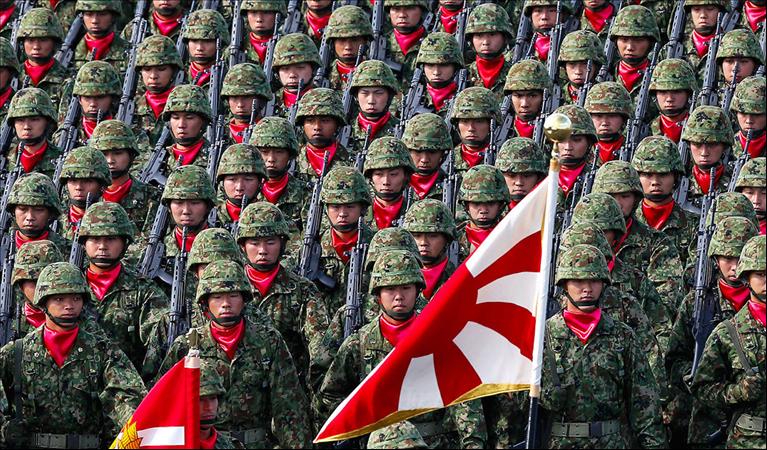
Time To Scrap Constitutional Constraints On Japan's Military
(MENAFN- Asia Times)
Despite constitutional constraints on its armed forces, Japan has continued to move closer toward military normalization this year. Although it is controversial, most countries in the Asia-Pacific region should welcome this trend.
In April, Japan's cabinet approved revisions to its regulations on the export of Japan-made arms to other countries. Previously, exports were limited to non-lethal defense equipment such as rescue, surveillance or minesweeping gear.
Exports of lethal equipment are now allowed, with some restrictions. Japan can sell warplanes, warships, missiles and killer drones. Erstwhile foes, the US and the Philippines, immediately praised the change. The move will strengthen Japan's defense industrial base by providing a larger stream of orders.
Similarly, Japan is moving toward closer cooperation with security partners in developing and manufacturing weapons systems. Japan is contracted to sell Australia up to 11 frigates, some to be built in Japan and some in Australia.
Japanese engineers are jointly developing a new generation of fighter jets with the UK and Italy. Japan already repairs US Navy vessels and may soon start building them also. A Japanese project to build nuclear-powered submarines with US assistance might be in the offing.
Japan's postwar military posture is often misleadingly called“pacifist.” Actual pacifism is a commitment to non-violence out of moral conviction. If they take this principle to its logical extreme, real pacifists will allow an enemy to kill them rather than fight back.
Japan's“peace constitution,” on the other hand, is a product of the postwar US occupation of Japan, Tokyo's recognition that Japan needed reputational rehabilitation, and an alliance that allowed Japan to rely heavily on the US for military protection.
This so-called Japanese pacifism is ending gradually, not suddenly and dramatically. Since the 1950s, Japan has periodically taken important steps in this direction, starting with the establishment of a paramilitary“National Police Reserve” in 1950 in response to the outbreak of the Korean War.
Other steps included the dispatch of Japanese troops overseas as peacekeepers starting in 1992; expansion of Japan's defensive perimeter to“areas surrounding Japan” in 1997; providing logistical support for combat operations in the Middle East in the 2000s; raising the target for defense spending from 1% to 2% of GDP in 2022; and deciding to acquire long-range strike weapons, also in 2022.
Japan's current government wants to go further. In May, Prime Minister Sanae Takaichi said Japan's postwar constitution“should periodically be updated to reflect the demands of the times.” She said she aims for the ruling LDP to put forward a plan to amend the constitution by next year.
Procedurally, actually changing the constitution would not be easy. It would require the approval of two-thirds of the legislators in both houses of the Diet. Takaichi's ruling Liberal Democratic Party could pull that off in the lower house, but not in the upper house as presently constituted. The next upper house election is in 2028.
Constitutional revision would also require a majority of affirmative votes in a national referendum. Currently, a slight majority of the Japanese public opinion favors revising the constitution in principle, but that support ultimately depends on the specific proposed changes.
Latest stories Iran weaponizes petroyuan in war reparations push China, Vietnam share a propaganda playbook for digital control Trump-Xi summit set to weigh Iran oil, Taiwan and US exportsThere are several arguments against Japan revising its constitution to give its armed forces the same legal status as the militaries in other countries. These arguments, however, are unpersuasive.
Argument 1: Japan will fall back into militarism
The Chinese and North Korean governments argue that Japan is eternally“militarist,” ignoring the transformation of Japan's society and political system since the end of the Pacific War 81 years ago. They will play this card until the end of time if they can.
Many Chinese and Koreans have legitimate hard feelings toward Japan, but there are ulterior motives: Beijing wants to suppress competing Japanese regional leadership, and Pyongyang bolsters its domestic political legitimacy by playing up the alleged Japan threat.
A recent example: on May 6, Japanese troops participating in the Balikatan military exercise-the first deployment of Japanese forces to the Philippines since World War II - test-fired an anti-ship missile. Chinese Foreign Ministry spokesperson Lin Jian argued that any military activity by Japan outside its own borders is a threat to the region because Japan is a“former aggressor.”
But Lin also condemned the“collusion” between Japan and the Philippines that“may evolve further toward greater alliance-like” cooperation. This is a contradiction. Tokyo cannot be guilty of aggression if countries in the region are welcoming deeper security cooperation with Japan.
Over half of Japanese believe the international vilification of Japan for its Pacific War crimes has become excessive. (Some even deny that Japan did anything wrong during the war, but this is a fringe position.)
A majority of Japanese want stronger armed forces. These attitudes are similar to the nationalistic beliefs widely held in most countries. They do not, however, necessarily imply“militarism,” which is support for a foreign policy of imperialist conquest. There is no evidence of such support in Japan.
Argument 2: The“peace constitution” gives Japan international credibility and moral authority
Conversely, removing the unique restrictions on Japan's military would destroy the trust Japan has built with neighboring states.
Japan does indeed enjoy a positive reputation. In the most recent survey of elite opinion in Southeast Asia by the ISEAS-Yosof Ishak Institute in Singapore, 65% of respondents said they believe Japan“will do the right thing in contributing to global peace, security and governance,” as opposed to 44% for the US and 40% for China.
Japan's credibility and moral authority stem mainly from two sources. First, Japan is the only country to have suffered a strike by nuclear weapons. Second, Japan has been a model international citizen since the end of the Pacific War. Revising the Japanese constitution would not nullify either of these qualifications.
Increasingly, Japan's neighbors want Tokyo to contribute to regional security not by being“pacifist,” but by helping other states build the capacity to stand up to the shared threat from China. Constitutional revision would facilitate that.
Argument 3: The current restrictions help protect Japan from being dragged by the US into a war that Tokyo would prefer to stay out of.
In March, Takaichi cited Article 9, the peace clause in the Japanese constitution, when she declined a Washington request for Japan to dispatch naval forces to help open the Strait of Hormuz. Article 9 provides a convenient excuse in this kind of situation while minimizing the risk that the US will complain that Japan is a bad ally.
Without Article 9, Japan would need to find another way of navigating this dilemma, as do every one of America's other allies, who never had an Article 9. South Korea's government, for example, responded to a similar US call to send forces to the Persian Gulf request by politely stalling:“We have been paying close attention” and“will carefully review the matter and make a judgment in close coordination with the United States.” Seoul did not send forces.
But more importantly, the alliance would be healthier if Tokyo could say that its decision to join a particular conflict is based on whether participation is in Japan's interest. Moreover, even if Japan decides not to go along in a particular instance, influential members of Congress and senior US policy-makers and practitioners, who clearly see enduring value in the US-Japan alliance, are not likely to cast the relationship away casually.
Argument 4: Japan can be secure without changing its constitution.
It's true that Japan has managed to build a capable military despite having a constitution that says“land, sea, and air forces, as well as other war potential, will never be maintained.”
Japan has acquired long-range strike capabilities, including the US Tomahawk cruise missile, and has an aircraft carrier that operates F-35s. The Japanese government has accepted the principle of collective self-defense and has broken through the self-imposed 1% barrier for defense spending. Potential adversaries China and North Korea are not blinded to Japan's military capabilities by the moniker“Self Defense Forces.”
But Japan still has one hand partly tied behind its back. Constitutional constraints prohibit the use of military power beyond the minimum level necessary to meet a clear and imminent threat to Japan's survival. This limits Japan's options for meeting brewing threats that would make the external environment less safe for Japan.
The Japanese government's interpretation of what is legal under the principle of“collective defense” is narrower than what international law allows. Japan cannot pledge to defend its security partners, since most significant proposed deployments outside Japanese territory require the Diet's specific approval.
Sign up for one of our free newsletters-
The Daily Report
Start your day right with Asia Times' top stories
AT Weekly Report
A weekly roundup of Asia Times' most-read stories
With constitutional revision, Tokyo could enter into stronger security cooperation agreements with regional partners. Japan could support the US or another friendly country in scenarios that don't involve a clear and immediate threat to Japan's survival - for example, shooting down missiles heading for US territory or joining a“coalition of the willing” to combat a security threat in another geographic region.
Constitutional recognition of the Self Defense Forces as a national military force would remove legal obstructions to research and development, budgeting, expansion, and quick decision-making.
Argument 5: Removal of the postwar restrictions on Japan's armed forces would trigger an arms race
China has the largest military in Asia by far, most of it operating modern equipment, as well as a growing nuclear weapons arsenal.
The argument that Japanese military normalization would increase geopolitical tensions in the region would blame Japan for refusing to accept decisive military inferiority to China.
A competitive balance is not worse for the region than unchecked Chinese domination. China started the race, initially running unopposed. Tokyo is reacting to the combination of China's rapid buildup and expansionist intentions, including designs on what Tokyo views as Japanese territory: parts of the East China Sea, the Senkaku Islands, and the Ryukyu Islands.
In any case, even a Japan much better armed than it is today and free of the postwar constraints on its military will not pose a threat to China for the foreseeable future. China enjoys insuperable advantages over Japan in geographic size, population, resources, manufacturing capacity and inventories of both conventional combat platforms and nuclear weapons.
Much of the Japanese public views the Self-Defense Forces as a disaster relief organization rather than a warfighting agency. Forcing the Japanese to confront the issue of whether Japan should have a conventional military without the familiar postwar restraints would make many of them“uncomfortable.”
But for the Japanese public, confronting this reality is needful, if not overdue: Japan's threat environment has worsened, and addressing this situation will have real costs.
With China's expansionism, North Korea's nuclear missile development, Russia's war of aggression in Ukraine and recent doubts about the reliability of the US, Japan can no longer afford self-imposed constraints on its ability to protect itself.
Denny Roy is a senior fellow at the East-West Center in Honolulu
Sign up here to comment on Asia Times stories OrThank you for registering!
-
Share on X (Opens in new window)
Share on LinkedIn (Opens in new window)
LinkedI
Share on Facebook (Opens in new window)
Faceboo
Share on WhatsApp (Opens in new window)
WhatsAp
Share on Reddit (Opens in new window)
Reddi
Email a link to a friend (Opens in new window)
Emai
Print (Opens in new window)
Prin

Legal Disclaimer:
MENAFN provides the
information “as is” without warranty of any kind. We do not accept
any responsibility or liability for the accuracy, content, images,
videos, licenses, completeness, legality, or reliability of the information
contained in this article. If you have any complaints or copyright
issues related to this article, kindly contact the provider above.
Most popular stories
Market Research

More Story







Comments
No comment