




403
Sorry!!
Error! We're sorry, but the page you were looking for doesn't exist.
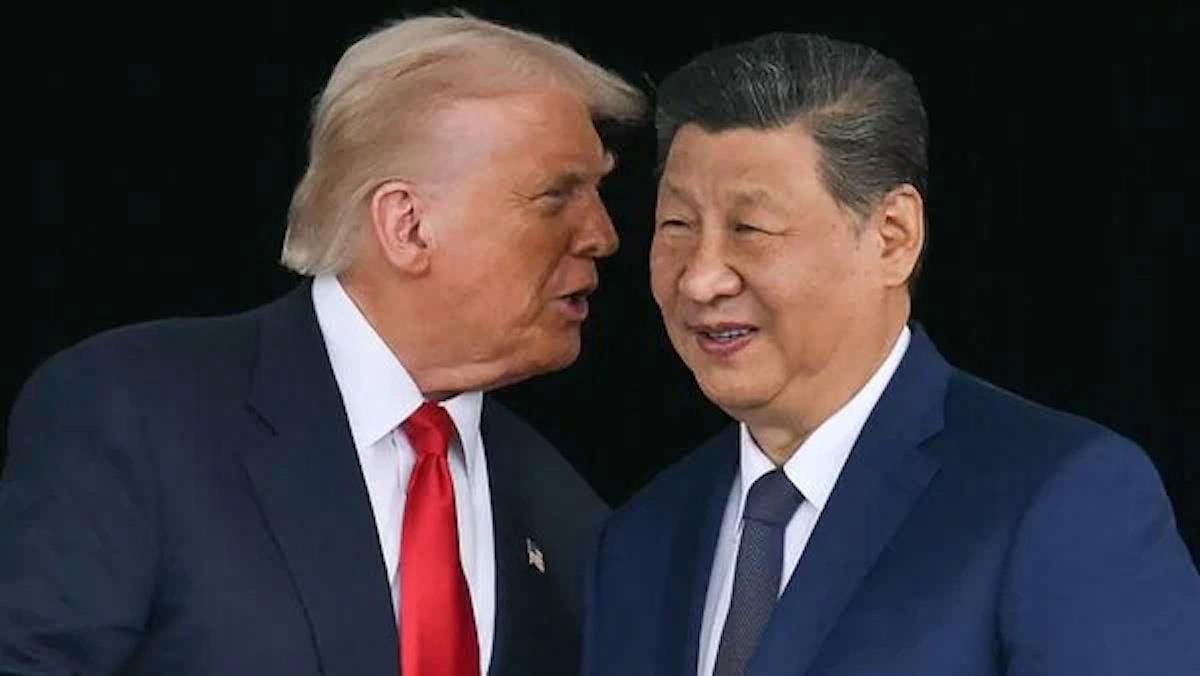
Trump's 'Madness' Masks Calculated Quest For A Bipolar World
(MENAFN- Asia Times)
Since Donald Trump returned to the White House on January 20, 2025, his foreign policy has often appeared chaotic and mercurial.
He has repeatedly insulted longstanding US allies, threatened them with tariffs and pursued aggressive military actions abroad. He has left the European Union, the United Kingdom, Japan, South Korea, India and traditional partners and allies reeling.
Actions such as the US intervention in Venezuela in January 2026 that resulted in the capture of Nicolas Maduro, and the February 2026 US-Israeli strikes on Iran that killed Supreme Leader Ayatollah Ali Khamenei, have fueled accusations of presidential recklessness. Many analysts have dismissed these moves as signs of“Trump's madness.”
Yet beneath the surface bluster lies a more deliberate, if high-risk, strategy: Trump aimed to shape a bipolar world order with the US and China as the main poles. His erratic style -insults, tariff threats and sudden displays of military force - reshapes alliances, contains China and affects global stability.
At the heart of Trump's vision is a hardheaded recognition of today's geopolitical reality. The US can no longer easily confront China through outright military conflict or total economic decoupling.
China's economic might, technological advancements in areas like artificial intelligence, quantum computing, the green energy transition and its growing military capabilities in space, air, naval and land make direct containment extraordinarily difficult - far harder than isolating the Soviet Union during the Cold War, because China combines the USSR's military might with the Japanese manufacturing of the 1980s.
This underscores the complexity and resilience of China's global strategy. Trump's meeting with Chinese President Xi Jinping on the sidelines of the Asia-Pacific Economic Cooperation summit in Busan, South Korea, in October 2025 illustrated this calculus.
Trump described the encounter as an“amazing” G2 moment, signaling a willingness to acknowledge a duopoly of superpowers for the time being. Yet this co-leadership for the US is tactical and temporary.
The deeper aim is to revive a bipolar structure in which the US and China set the global agenda. At the same time, other nations align behind one or the other - ultimately positioning America to undermine China when the moment is ripe, much as the West helped to accelerate the Soviet Union's collapse in the 1980s.

Legal Disclaimer:
MENAFN provides the
information “as is” without warranty of any kind. We do not accept
any responsibility or liability for the accuracy, content, images,
videos, licenses, completeness, legality, or reliability of the information
contained in this article. If you have any complaints or copyright
issues related to this article, kindly contact the provider above.
Most popular stories
Market Research







Comments
No comment