







403
Sorry!!
Error! We're sorry, but the page you were looking for doesn't exist.
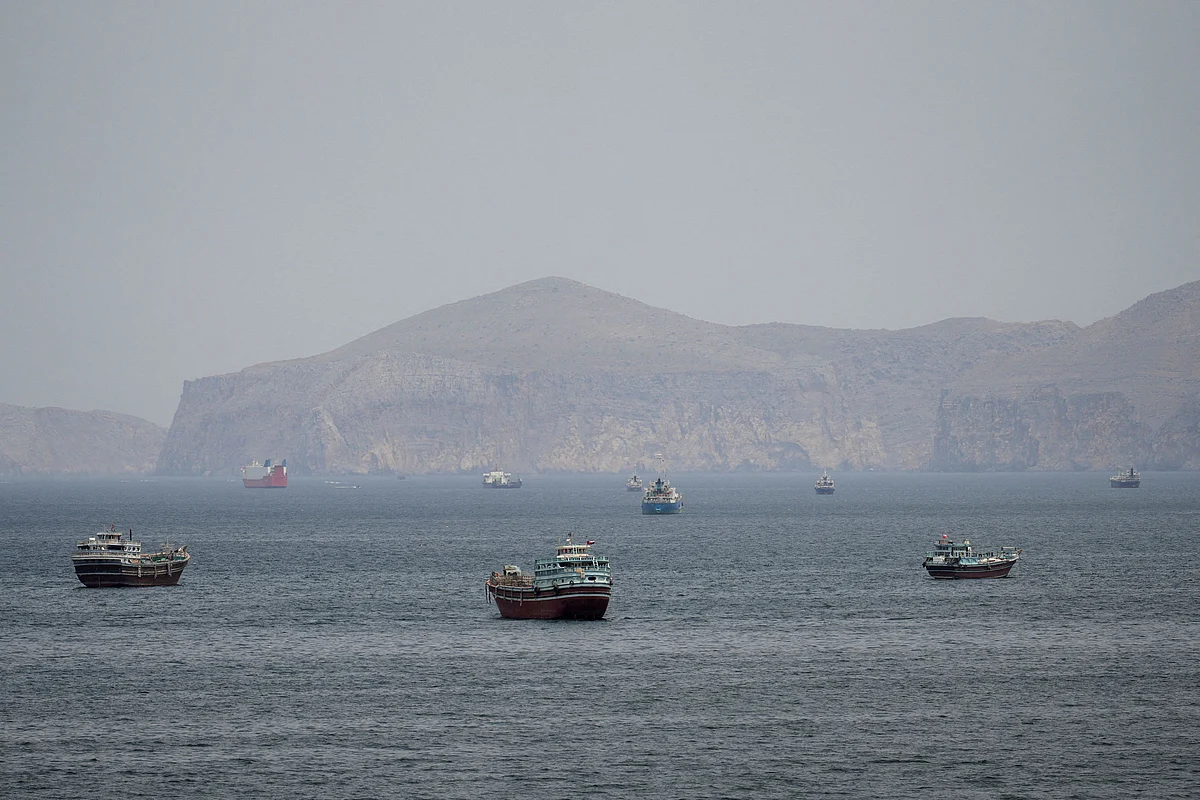
Hormuz Disruption Strains Supply Chains As Iran Conflict Forces Costly Rerouting
(MENAFN- Khaleej Times) Disruptions linked to the Iran conflict and escalating risks around the Strait of Hormuz are emerging as a major pressure point for global and regional supply chains, with shipping constraints feeding into higher costs, delays and greater reliance on alternative trade corridors.
According to industry experts, the sheer scale of the disruption has few modern precedents. Ship transits through the Strait of Hormuz have fallen dramatically, with volumes“declining by over 90%” compared to earlier in the year, creating knock-on effects well beyond the energy sector, said Sercan Alturk, Managing Director, Strategy & Transformation, Transport and Logistics at FTI Middle East.
Recommended For You“Ship transits through the strait declined from around 130 per day in February to just five to 10 in March and April,” Alturk said, noting that while oil markets have drawn most attention, the impact extends to petrochemicals, fertilizers, metals and agricultural commodities. He added that more than 44,000 businesses globally have already had shipments exposed to the disruption, underlining how deeply interconnected supply chains have become.
For businesses moving goods into and out of the Gulf, rising costs have emerged as the most immediate concern. Alturk said higher oil prices, war-risk insurance premiums and maritime disruption are“adding to expenses for cargo movements,” while the risk of a broader capacity crunch remains a systemic threat if the situation persists.
Logistics providers across the region are increasingly turning to land corridors and multimodal solutions to keep cargo moving. Pipelines and overland routes have helped sustain essential flows, but these alternatives come with clear limitations.“Land corridors have provided an alternative channel for essential and high-value shipments, though at a cost premium over conventional sea freight,” Alturk noted.
From an operator's perspective, flexibility has become critical. Abbas Panju, Senior Vice President of GCC and India at Aramex, said recent geopolitical developments have introduced“a degree of uncertainty across global and regional logistics networks,” prompting cargo rerouting to ensure continuity of supply.
“As a result, we are seeing some re-routing of cargo flows, with certain volumes being redirected through alternative ports and corridors,” Panju said, adding that while this can lead to“modest increases in transit times and associated costs,” GCC logistics infrastructure has so far shown strong resilience.
Aramex has leaned heavily on its integrated network to mitigate disruption.“Our global air express capabilities allow us to maintain flexible routing options from key origin markets across Asia and North America,” Panju said, noting that established land freight networks across the GCC now play a central role in sustaining regional trade. The company has also expanded multimodal solutions combining sea, land and air through hubs in Saudi Arabia, Oman and the UAE.
Customer behaviour is also shifting, though cautiously. Panju said many businesses are reviewing supply chain strategies and“enhancing planning cycles to ensure continuity of supply,” including modest inventory adjustments and greater use of flexible routing. However, he added that customers are largely avoiding overcorrection, reflecting a more mature approach to supply chain management.
Looking ahead, Alturk warned that sustained disruption could begin to feed into inflation and growth if elevated oil and petrochemical prices persist. While regional logistics systems continue to adapt, both experts agree that the current crisis is reinforcing, rather than reinventing, the push towards diversification, redundancy and resilience in global supply chains.

Legal Disclaimer:
MENAFN provides the
information “as is” without warranty of any kind. We do not accept
any responsibility or liability for the accuracy, content, images,
videos, licenses, completeness, legality, or reliability of the information
contained in this article. If you have any complaints or copyright
issues related to this article, kindly contact the provider above.
Most popular stories
Market Research

More Story






Comments
No comment