




403
Sorry!!
Error! We're sorry, but the page you were looking for doesn't exist.
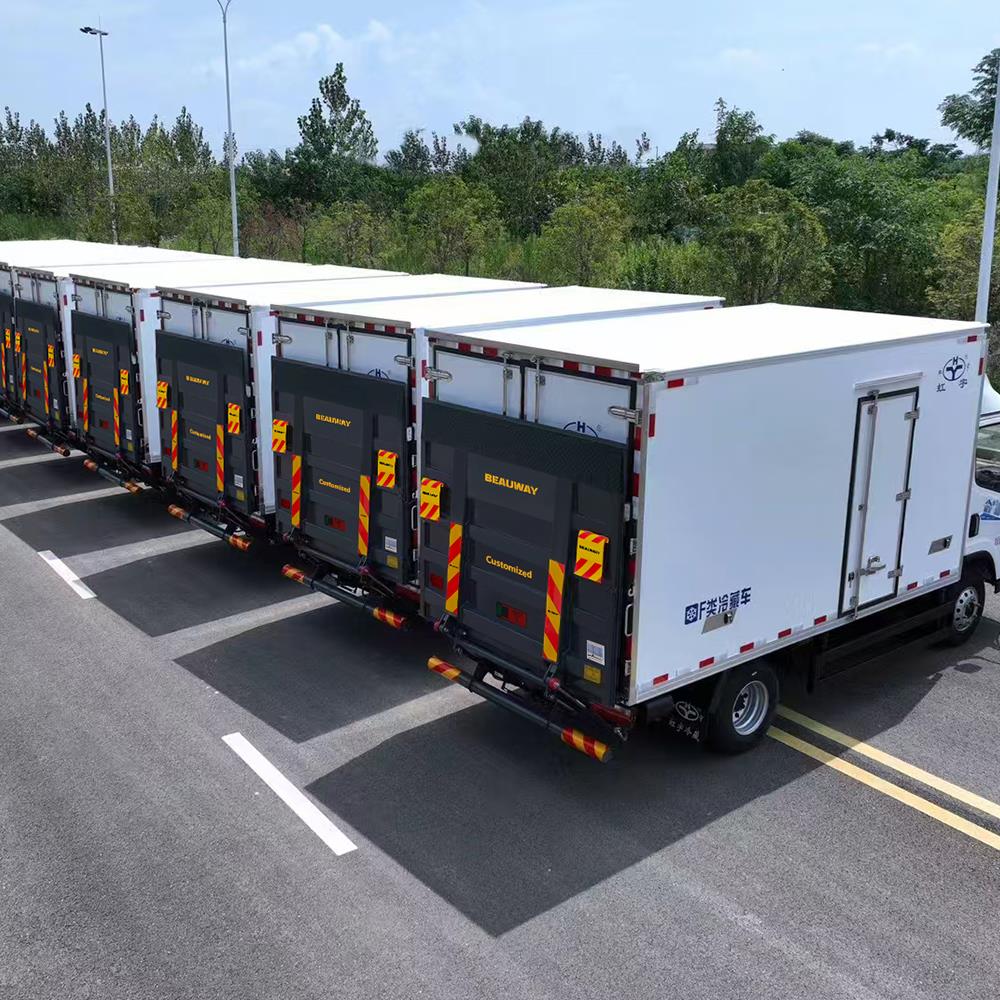
Hydraulic Tail Lift System Reliability Under Extreme Weather Conditions
(MENAFNEditorial) Extreme Weather as a Hidden Failure Driver in Tail Lift Systems
With over a decade of experience in international logistics equipment procurement and more than 200 overseas truck tail lift and hydraulic liftgate projects, one recurring observation has become increasingly clear: extreme weather is often underestimated during early equipment selection.
In many real operating environments overseas, failures are rarely caused by incorrect rated load. Instead, they tend to emerge gradually from environmental stress that was not fully considered in the early design or procurement stage.
For example, in a coastal logistics operation in Southeast Asia, prolonged heavy rainfall did not cause an immediate system failure. The issue appeared much later in the form of slow hydraulic response. After inspection, micro-leakage in the sealing system was identified. It had developed slowly and was not visible during initial commissioning.
A different situation occurred in a cold-chain distribution project in Northern Europe. After overnight exposure to sub-zero temperatures, several hydraulic tail lift systems showed delayed first-cycle lifting. The problem was eventually traced to increased hydraulic oil viscosity and reduced pump efficiency during cold start conditions.
In a Middle Eastern delivery fleet, the challenge was completely different. High ambient temperatures during peak daytime operation caused repeated thermal protection shutdowns in hydraulic pump stations. The system itself was not overloaded; rather, the heat dissipation design was insufficient for sustained high-temperature operation.
Across these cases, one engineering pattern is consistent: environmental stress often becomes the real limiting factor in overseas deployments, not mechanical load rating.
Structural Selection Differences Under Real Overseas Operating Conditions
In tail lift selection, structural configuration defines operational boundaries more than nominal load capacity.
Folding tail lifts are widely used in European urban distribution fleets. However, in colder regions, particularly during winter storage, hinge movement can become noticeably slower due to grease stiffening and partial icing.
Cantilever tail lifts are often selected for Australian construction logistics. They handle heavy-duty cycles well, but long-term fleet feedback shows that insufficient chassis reinforcement can lead to localized fatigue accumulation in converted vehicles.
Tuck away liftgates are common in North American urban delivery fleets where rear clearance is limited. In coastal cities with higher humidity, however, maintenance intervals tend to be shorter due to contamination of hydraulic components.
Hydraulic liftgate systems remain widely adopted in cold-chain and industrial logistics due to relatively stable cycle behavior under continuous operation.
From comparative fleet data, truck tail lift 1500kg hydraulic configurations tend to maintain more stable performance across both hot and cold climates, especially under continuous duty cycles.
Material Performance Variations in International Environments
Material selection often has a longer-term impact on system durability than operating load.
In humid Southeast Asian port environments, standard painted steel structures typically show visible corrosion within 18 to 24 months. By contrast, hot-dip galvanized Q345B structures combined with stainless steel hydraulic piping maintain more stable condition over the same period.
In coastal Australia, salt exposure accelerates coating degradation, especially around weld seams and mounting interfaces.
Aluminum platforms with anodized treatment tend to perform better in colder European regions, where brittleness risk becomes more relevant than corrosion itself.
Hydraulic System Behavior in Extreme Conditions
The hydraulic unit is the core of any liftgate system, and its behavior changes significantly across climates.
Working pressure is usually designed between 160 and 250 bar, but pressure alone does not define reliability in field operations. Flow consistency, valve response speed, and thermal stability are equally important.
In Scandinavian winter logistics, ISO VG32 hydraulic oil generally performs better during startup compared to VG46. However, in Mediterranean summer routes, VG46 provides more stable thermal resistance.
Anti-drop valves are now considered standard safety components in long-distance freight operations, where hydraulic fatigue risk increases over time.
IP65 protection levels show clear advantages in tropical and monsoon regions, especially where frequent wash-down maintenance is required.
For truck tail lift 1000kg and above systems, 24V electrical architecture is increasingly preferred in fleet applications due to better stability under continuous operation.
Safety Engineering and Compliance Considerations
International fleet deployment requires layered safety design rather than single-point protection.
Anti-slip platforms are essential in snowy and rainy regions where cargo shift risk is higher. Emergency stop systems are now standard across most certified installations.
Load sensing systems are widely adopted in European fleets to reduce structural fatigue caused by repeated overload conditions.
In heavy-duty applications, dual-circuit hydraulic systems are often used to provide redundancy. EN 1756-1 compliance further strengthens safety validation through independent anti-fall mechanism requirements.
Installation and Retrofit Challenges
In retrofit projects, installation mismatch remains one of the most common engineering delays.
North American trucks often require reinforcement due to rear overhang variation. In Europe, differences in cargo box height between manufacturers frequently affect stroke alignment.
In Australia, mixed fleet operations sometimes require redesign work when upgrading from truck tail lift 500kg to 2000kg systems due to gross vehicle weight limitations.
Field data suggests that installation mismatch can increase retrofit cost by 18% to 35% in heterogeneous fleet environments.
Maintenance Patterns in Global Operations
Maintenance requirements vary significantly by climate.
In high-humidity regions, hydraulic sealing systems require more frequent inspection due to accelerated wear. In cold regions, lubrication schedules must be adjusted to prevent hinge stiffness.
Standard annual maintenance typically includes hydraulic pressure testing, structural weld inspection, and anti-drop valve verification. In practice, maintenance discipline has a direct impact on fleet downtime.
Lifecycle Cost Structure
Field data from overseas operators indicates that procurement cost usually accounts for only 38% to 45% of total lifecycle cost.
Maintenance contributes around 22%, downtime losses 15%, spare parts 18%, and compliance inspection about 7%.
In long-term operations, low initial-cost systems often generate higher hidden expenses, particularly in extreme climate deployments.
Conclusion
Across different regions and operating conditions, three engineering principles consistently apply:
Structural design carries more weight than nominal load rating, hydraulic stability determines real-world reliability, and environmental conditions should be treated as primary design inputs rather than external assumptions.
Only when these factors are considered together can hydraulic tail lift systems maintain stable performance in extreme weather environments across global fleet operations.
Beauway Engineering Approach to Tail Lift Systems
Beauway follows a structured engineering workflow for hydraulic tail lift and tuck away liftgate systems, especially in overseas fleet applications ranging from 500kg to 2000kg load requirements.
The process typically includes:
Vehicle parameter and chassis compatibility analysis
Structural configuration selection based on operational duty cycles
Hydraulic system solution design and validation
Extreme environment simulation testing (cold, heat, humidity, salt spray)
EN 1756-1 compliance verification before mass production
Rather than relying solely on rated load specifications, Beauway’s engineering approach places stronger emphasis on real operating conditions, especially environmental stress factors that vary significantly across international logistics markets.
This methodology has been applied across multiple overseas fleet deployments, supporting both cantilever tail lift and tuck away liftgate systems in long-term operations.
With over a decade of experience in international logistics equipment procurement and more than 200 overseas truck tail lift and hydraulic liftgate projects, one recurring observation has become increasingly clear: extreme weather is often underestimated during early equipment selection.
In many real operating environments overseas, failures are rarely caused by incorrect rated load. Instead, they tend to emerge gradually from environmental stress that was not fully considered in the early design or procurement stage.
For example, in a coastal logistics operation in Southeast Asia, prolonged heavy rainfall did not cause an immediate system failure. The issue appeared much later in the form of slow hydraulic response. After inspection, micro-leakage in the sealing system was identified. It had developed slowly and was not visible during initial commissioning.
A different situation occurred in a cold-chain distribution project in Northern Europe. After overnight exposure to sub-zero temperatures, several hydraulic tail lift systems showed delayed first-cycle lifting. The problem was eventually traced to increased hydraulic oil viscosity and reduced pump efficiency during cold start conditions.
In a Middle Eastern delivery fleet, the challenge was completely different. High ambient temperatures during peak daytime operation caused repeated thermal protection shutdowns in hydraulic pump stations. The system itself was not overloaded; rather, the heat dissipation design was insufficient for sustained high-temperature operation.
Across these cases, one engineering pattern is consistent: environmental stress often becomes the real limiting factor in overseas deployments, not mechanical load rating.
Structural Selection Differences Under Real Overseas Operating Conditions
In tail lift selection, structural configuration defines operational boundaries more than nominal load capacity.
Folding tail lifts are widely used in European urban distribution fleets. However, in colder regions, particularly during winter storage, hinge movement can become noticeably slower due to grease stiffening and partial icing.
Cantilever tail lifts are often selected for Australian construction logistics. They handle heavy-duty cycles well, but long-term fleet feedback shows that insufficient chassis reinforcement can lead to localized fatigue accumulation in converted vehicles.
Tuck away liftgates are common in North American urban delivery fleets where rear clearance is limited. In coastal cities with higher humidity, however, maintenance intervals tend to be shorter due to contamination of hydraulic components.
Hydraulic liftgate systems remain widely adopted in cold-chain and industrial logistics due to relatively stable cycle behavior under continuous operation.
From comparative fleet data, truck tail lift 1500kg hydraulic configurations tend to maintain more stable performance across both hot and cold climates, especially under continuous duty cycles.
Material Performance Variations in International Environments
Material selection often has a longer-term impact on system durability than operating load.
In humid Southeast Asian port environments, standard painted steel structures typically show visible corrosion within 18 to 24 months. By contrast, hot-dip galvanized Q345B structures combined with stainless steel hydraulic piping maintain more stable condition over the same period.
In coastal Australia, salt exposure accelerates coating degradation, especially around weld seams and mounting interfaces.
Aluminum platforms with anodized treatment tend to perform better in colder European regions, where brittleness risk becomes more relevant than corrosion itself.
Hydraulic System Behavior in Extreme Conditions
The hydraulic unit is the core of any liftgate system, and its behavior changes significantly across climates.
Working pressure is usually designed between 160 and 250 bar, but pressure alone does not define reliability in field operations. Flow consistency, valve response speed, and thermal stability are equally important.
In Scandinavian winter logistics, ISO VG32 hydraulic oil generally performs better during startup compared to VG46. However, in Mediterranean summer routes, VG46 provides more stable thermal resistance.
Anti-drop valves are now considered standard safety components in long-distance freight operations, where hydraulic fatigue risk increases over time.
IP65 protection levels show clear advantages in tropical and monsoon regions, especially where frequent wash-down maintenance is required.
For truck tail lift 1000kg and above systems, 24V electrical architecture is increasingly preferred in fleet applications due to better stability under continuous operation.
Safety Engineering and Compliance Considerations
International fleet deployment requires layered safety design rather than single-point protection.
Anti-slip platforms are essential in snowy and rainy regions where cargo shift risk is higher. Emergency stop systems are now standard across most certified installations.
Load sensing systems are widely adopted in European fleets to reduce structural fatigue caused by repeated overload conditions.
In heavy-duty applications, dual-circuit hydraulic systems are often used to provide redundancy. EN 1756-1 compliance further strengthens safety validation through independent anti-fall mechanism requirements.
Installation and Retrofit Challenges
In retrofit projects, installation mismatch remains one of the most common engineering delays.
North American trucks often require reinforcement due to rear overhang variation. In Europe, differences in cargo box height between manufacturers frequently affect stroke alignment.
In Australia, mixed fleet operations sometimes require redesign work when upgrading from truck tail lift 500kg to 2000kg systems due to gross vehicle weight limitations.
Field data suggests that installation mismatch can increase retrofit cost by 18% to 35% in heterogeneous fleet environments.
Maintenance Patterns in Global Operations
Maintenance requirements vary significantly by climate.
In high-humidity regions, hydraulic sealing systems require more frequent inspection due to accelerated wear. In cold regions, lubrication schedules must be adjusted to prevent hinge stiffness.
Standard annual maintenance typically includes hydraulic pressure testing, structural weld inspection, and anti-drop valve verification. In practice, maintenance discipline has a direct impact on fleet downtime.
Lifecycle Cost Structure
Field data from overseas operators indicates that procurement cost usually accounts for only 38% to 45% of total lifecycle cost.
Maintenance contributes around 22%, downtime losses 15%, spare parts 18%, and compliance inspection about 7%.
In long-term operations, low initial-cost systems often generate higher hidden expenses, particularly in extreme climate deployments.
Conclusion
Across different regions and operating conditions, three engineering principles consistently apply:
Structural design carries more weight than nominal load rating, hydraulic stability determines real-world reliability, and environmental conditions should be treated as primary design inputs rather than external assumptions.
Only when these factors are considered together can hydraulic tail lift systems maintain stable performance in extreme weather environments across global fleet operations.
Beauway Engineering Approach to Tail Lift Systems
Beauway follows a structured engineering workflow for hydraulic tail lift and tuck away liftgate systems, especially in overseas fleet applications ranging from 500kg to 2000kg load requirements.
The process typically includes:
Vehicle parameter and chassis compatibility analysis
Structural configuration selection based on operational duty cycles
Hydraulic system solution design and validation
Extreme environment simulation testing (cold, heat, humidity, salt spray)
EN 1756-1 compliance verification before mass production
Rather than relying solely on rated load specifications, Beauway’s engineering approach places stronger emphasis on real operating conditions, especially environmental stress factors that vary significantly across international logistics markets.
This methodology has been applied across multiple overseas fleet deployments, supporting both cantilever tail lift and tuck away liftgate systems in long-term operations.

Legal Disclaimer:
MENAFN provides the
information “as is” without warranty of any kind. We do not accept
any responsibility or liability for the accuracy, content, images,
videos, licenses, completeness, legality, or reliability of the information
contained in this article. If you have any complaints or copyright
issues related to this article, kindly contact the provider above.
Most popular stories
Market Research

More Story







Comments
No comment