




403
Sorry!!
Error! We're sorry, but the page you were looking for doesn't exist.
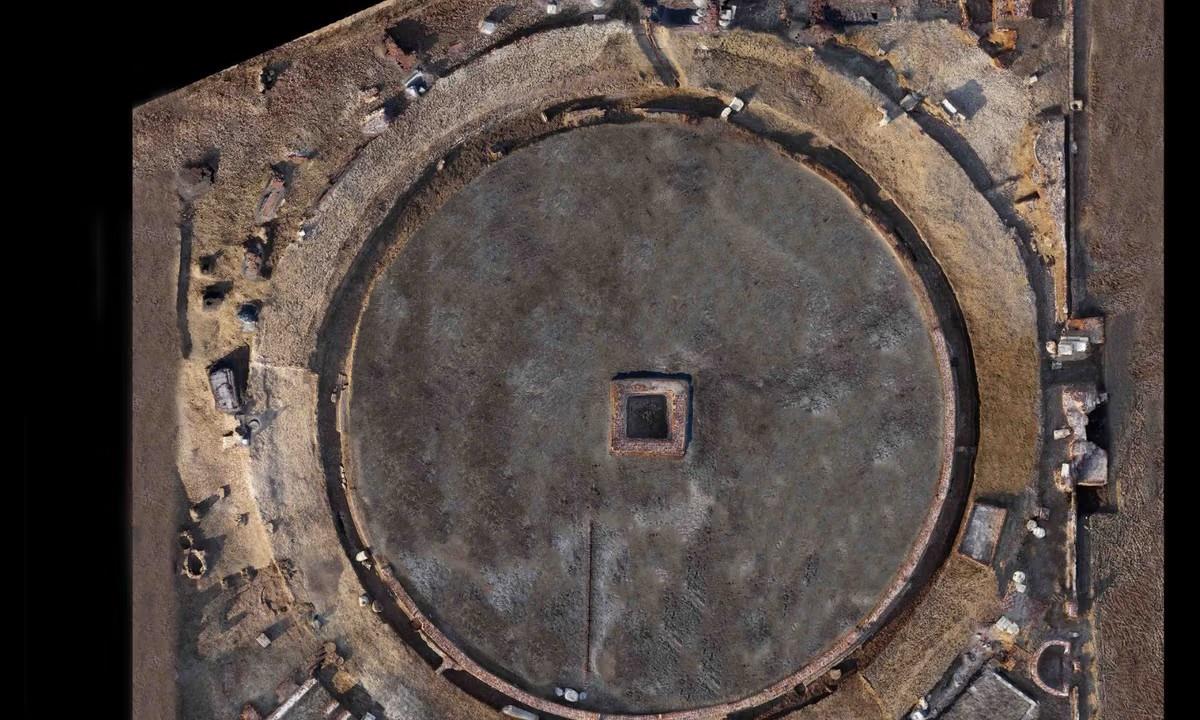
Ruins Of 'Unique', Circular Water Temple Discovered In Egypt The Art Newspaper International Art News And Events
(MENAFN- USA Art News)
Roman-Era Water Temple Unearthed in Northern Sinai Raises New Questions About Pelusium
Archaeologists working in northern Sinai have uncovered a second-century temple complex that may have been built around water, ritual, and a local deity whose identity is still being tested. The discovery at Tell el-Farama, the site of ancient Pelusium, offers a rare look at how Egyptian, Greek, and Roman traditions could overlap in one sacred landscape.
The structure centers on a circular basin about 35 meters in diameter, once linked to a branch of the Pelusiac Nile, the easternmost arm of the ancient Nile Delta. Egyptian antiquities officials say the water feature may have carried symbolic meaning tied to Pelusius, a god whose name derives from the Greek word for clay and who may have been associated with fertility and the forces of the river.
The team first identified the remains in 2019, when it uncovered a Graeco-Roman building with three circular benches, each about 60 centimeters thick. At the time, researchers thought the site might have served as the headquarters of Pelusium's Senate Council. Further excavation, consultation with specialists at Sorbonne University in Paris, and comparison with similar Hellenic and Roman structures outside Egypt led to a different conclusion: the building was likely a sacred water installation used in religious rituals.
Hisham Hussein, who heads Egypt's Central Department for Maritime Antiquities and Sinai and supervised the excavation, said the new evidence had“completely changed our understanding” of the site.“We now know this was a sacred water installation used in religious rituals, not a political structure,” he said.
Officials have described the temple as a Roman construction because of its brick circular walls, even as its design draws on Egyptian, Hellenic, and Roman forms. Hisham Lithi, secretary general of Egypt's Supreme Council of Antiquities, called it“an exceptional embodiment of the civilised interaction between Egypt and the ancient world.”
That language reflects Pelusium's long history as a border city and cultural crossroads. Founded around 800 BC on land between the seaboard and the marshes of the Nile Delta, it later became a fortress, a trading hub, and eventually a Roman provincial capital. Its layered past makes the new discovery especially revealing: the temple does not simply add another monument to the map, but deepens the picture of how religion, politics, and exchange shaped the eastern Mediterranean.
The identification of the deity remains provisional, and scholars say more research is needed. Hector Williams, professor emeritus of Ancient Greek religion at the University of British Columbia, noted that the blending of Greek and Egyptian culture had already been underway since Alexander the Great's conquest of Egypt in the late fourth century BC. Even so, the Tell el-Farama complex stands out for the scale of its circular basin and the unusual way water appears to have structured the sacred space.
For archaeologists, the site is a reminder that ancient temples were not always fixed expressions of one culture alone. In Pelusium, the evidence points instead to a place where forms, beliefs, and political histories met at the edge of the Nile Delta.

Legal Disclaimer:
MENAFN provides the
information “as is” without warranty of any kind. We do not accept
any responsibility or liability for the accuracy, content, images,
videos, licenses, completeness, legality, or reliability of the information
contained in this article. If you have any complaints or copyright
issues related to this article, kindly contact the provider above.
Most popular stories
Market Research

More Story





Comments
No comment