




403
Sorry!!
Error! We're sorry, but the page you were looking for doesn't exist.
Don't Believe Claims Southeast Asia Scam Schemes Were Shut Down
(MENAFN- Asia Times)
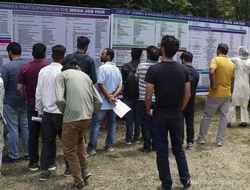
I was recently in Phnom Penh, Cambodia, and approached a group of young men in front of the Indian embassy. I told them I was a University of Toronto researcher.
I asked:“Are you from the scam compounds?” Scam compounds are industrial-scale complexes where trafficked workers are confined and forced to carry out online fraud.
They were. One man in his early 30s named Akshit told me his story.
Akshit was not your typical human trafficking victim. His English is perfect, he is educated, and he has worked in banks and call centers. But he was trafficked. In 2024, a friend told him of a friend who knew about a job in Cambodia paying twice what he earned in India.
After a quick interview, he paid US$500 to fly to Phnom Penh via Kuala Lumpur. The flight and his car ride to Sihanoukville, a coastal city in southwest Cambodia, were comfortable, and on arrival at an apartment block he was given a welcome bag and a nice room. It all seemed above board.
It was anything but. He was in a scam compound where hundreds of workers sat at computers and convinced Asians and westerners to invest in fake schemes or love interests. Workers were arranged in teams of eight, leach ed by a team leader, with a manager overseeing several teams and a Chinese criminal syndicate above them. His recruiter had sold him for US$5,000.
Labor violationsHundreds of thousands of people have been trafficked in Cambodia and Myanmar alone. Media coverage of scam compounds has often focused on the beatings, broken bones and workers screaming as they are tasered. These outrages are real, but they are only the most extreme form of abuse.
At the core of scam compounds is a system of paid but forced labor: 15-hour days, seven days a week, multiple chats open, texting victims in English and workers' native languages.
Akshit worked in English and Hindi, targeting southern Indians. The chats started at 10:30 am - latecomers were fined - and ended at 2 am.
Latest stories Blockade v blockade fallout may be not just a world energy crisis Iran war putting China's economy in a tight spot New resistance alliance built to win Myanmar's civil warThey followed a fluid but predictable script: a“developer” texts multiple clients. When they engage, he passes them on to a“chatter.” The chatter texts with the victim for three to four days, determining whether they're interested in love or financial gain. He then passes them on to the“killer,” who seals the deal, instructing the victim on how to transfer the funds.
Akshit moved between the three roles.
The original investment would be small - around $250 - and would build from there. Once the victim had transferred enough money, it would all go quiet. The amounts varied by victim, but large transfers - hundreds of thousands of dollars or more - were rare; it was usually a few thousand.
The role of the pandemicScam compounds took off in Cambodia during the Covid-19 pandemic, as closed casinos and apartment blocks in cities such as Sihanoukville and the border towns of Bavet (Vietnam), Koh Kong and O'Smach (Thailand) were repurposed to house scam operations. They then spread to Myanmar (clustering along the border with Thailand) and Laos (especially the“Golden Triangle,” where Laos, Myanmar and Thailand meet).
Operations on this scale are recent, but the business model is far older: large gains based on low margins per transaction.
Billions are siphoned from victims - American losses to cryptocurrency scams alone reached US$5.6 billion in 2023 - but, spread across hundreds of compounds and hundreds of thousands of workers, the returns per operation are far less impressive.
In Akshit's team, everyone had a target of US$10,000 per month, for which they received $800; beyond that, there was a gradually increasing cut. But not everyone made the target.
Payroll sheets Akshit showed me recorded a few payouts of more than US$5,000, but many were in the low hundreds, meaning they brought in only a few thousand dollars monthly. Those who failed to make the target got less, or no, pay. Those who refused to work were abused, threatened and, in some cases, tortured.
One night, Akshit was awakened by screams several doors down. A Pakistani national had refused to comply and instead pleaded for help in texts to those he was supposed to scam. A team leader reported him, and his supervisors and security personnel used electroshock batons on him.
Illusion of shutdownsA scam compound's fixed costs are high once housing, food, security, transportation and team leaders' and managers' salaries are factored in. Forced labor makes the operation profitable. In its structural reliance on cheap labor, in fact, human trafficking in illegal scam compounds bears similarities to human trafficking in the legal fish processing or garments sectors.
The fact that so many victims come from wealthy Western and East Asian countries explains the immense pressure on the Cambodian government. Hundreds of scam centers have closed since January 2026, and thousands of Chinese, South Asian, African and Indonesian workers were on the streets of Phnom Penh, struggling to get home.
But appearances deceive. Akshit's compound was raided only after the owners had been tipped off; they moved workers to a hotel. Investigative journalist Danielle Keeton-Olsen told me in an interview that many of those released were low-level workers. Several other sources confirmed this.
What's more, as Nathan Paul Southern from the Eyewitness Project explained to me:
Sign up for one of our free newsletters-
The Daily Report
Start your day right with Asia Times' top stories
AT Weekly Report
A weekly roundup of Asia Times' most-read stories
Much infrastructure remains, he noted, and some compounds are reportedly filling up again. The aggregate profits, generated on the back of cheap labor, are too large.
Lucrative enterpriseThe total annual revenue from scams in Cambodia was US$12.9 billion in 2023, about 40 per cent of the country's GDP. Officials throughout Cambodia - police, border guards and civil servants - receive bribes to look the other way.
Many powerful entities, including criminal organizations, businesses and politicians, have an interest in the system continuing. If scam compounds close in Cambodia, they will open elsewhere.
There is also worker agency. Some do the work voluntarily; Akshit estimates 40 per cent in his compound were willing, earning around US$5,000 per month. The figure may be exaggerated, but some clearly have an interest in the system continuing.
Globally, there are millions desperate enough to take the risk. In one form or another, scam compounds - and the trafficking that sustains them - are here to stay.
Randall Hansen is a professor, the Canada Research chair in global migration and the director of the Global Migration Lab, University of Toronto.
This article is republished from The Conversation under a Creative Commons license. Read the original article.
Sign up here to comment on Asia Times stories OrThank you for registering!
-
Share on X (Opens in new window)
Share on LinkedIn (Opens in new window)
LinkedI
Share on Facebook (Opens in new window)
Faceboo
Share on WhatsApp (Opens in new window)
WhatsAp
Share on Reddit (Opens in new window)
Reddi
Email a link to a friend (Opens in new window)
Emai
Print (Opens in new window)
Prin

Legal Disclaimer:
MENAFN provides the
information “as is” without warranty of any kind. We do not accept
any responsibility or liability for the accuracy, content, images,
videos, licenses, completeness, legality, or reliability of the information
contained in this article. If you have any complaints or copyright
issues related to this article, kindly contact the provider above.
Most popular stories
Market Research

More Story






Comments
No comment