




403
Sorry!!
Error! We're sorry, but the page you were looking for doesn't exist.
Packserv Pty Ltd Announces Comprehensive Guide To Liquid Filling, Helping Manufacturers Scale Production With Confidence
(MENAFN- GetNews)
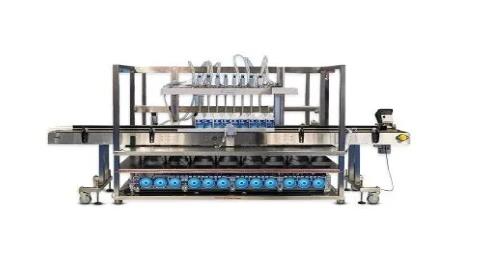
Scaling a manufacturing business is exciting. New orders are coming in, your product is gaining traction, and the demand is there. But somewhere between ambition and execution, one part of the process quietly becomes the bottleneck - your liquid filling process.
It doesn't matter how good your product is or how strong your brand looks on the shelf. If your liquid filling process can't keep up, your growth will stall. This guide covers everything manufacturers need to understand about liquid filling before they take that next step - so you can scale with confidence, not chaos.
What Is Liquid Filling and Why Does It Matter?
Liquid filling is the process of dispensing a measured amount of liquid product into a container - whether that's a bottle, jar, pouch, or canister. It sounds straightforward, but in a manufacturing environment, it is one of the most critical and complex steps in the entire packaging process.
The industries that rely on liquid filling are broad and varied:
Food and Beverage - sauces, oils, juices, condiments, and drinks
Cosmetics and Beauty - serums, lotions, shampoos, and toners
Pharmaceutical and Veterinary - liquid medicines, supplements, and treatments
Cleaning and Detergents - surface cleaners, disinfectants, and concentrates
Industrial and Chemical - lubricants, solvents, and specialty chemicals
Each of these industries has its own requirements when it comes to fill accuracy, hygiene standards, container types, and product viscosity. A one-size-fits-all approach simply doesn't work - and that's exactly why understanding liquid filling properly is so important before you scale.
The Two Types of Liquid Filling: Manual vs Automated
Manual Liquid Filling
Manual filling is where almost every manufacturer begins. It's low cost, flexible, and requires minimal setup. For very small production runs, it can be perfectly adequate.
However, manual filling has serious limitations:
No consistency - Fill volumes vary from container to container, creating quality control issues
Slow output - There is a hard ceiling on how fast a person can fill containers by hand
High wastage - Spills, overfilling, and imprecise pours waste product and money
Labour intensive - It requires dedicated staff for a repetitive, physically demanding task
Not scalable - As volumes increase, manual filling simply cannot keep pace
Automated Liquid Filling
Automated liquid filling is the solution that growing manufacturers move towards when the limitations of manual filling become impossible to ignore. Automatic filling machines use precision-controlled mechanisms to dispense exact fill volumes into containers at high speed, consistently and reliably.
The benefits are significant:
Precision - Every container receives the exact same fill volume, every time
Speed - Output increases dramatically compared to manual filling
Reduced wastage - Accurate fills mean less product lost per production run
Lower labour costs - Automation handles the repetitive work, freeing your team for higher-value tasks
Scalability - Automated systems can be expanded and integrated into full production lines as your business grows
Understanding Liquid Filling Technology
Not all liquid filling machines work the same way. The right technology for your business depends on your product type, viscosity, container format, and production volume.
Overflow Filling
Best suited for thin, free-flowing liquids like water, juices, and light beverages. Overflow fillers fill containers to a consistent level regardless of slight volume differences between containers, giving a visually uniform appearance on the shelf.
Piston Filling
Ideal for thicker products such as creams, pastes, gels, and sauces. Piston fillers use a cylinder and piston mechanism to draw in and dispense a precise volume of product, making them highly accurate for viscous liquids.
Pump Filling
Suited for a wide range of viscosities, pump fillers are versatile and commonly used in cosmetics, pharmaceutical, and cleaning product manufacturing. They work well for both thin liquids and semi-viscous products.
Gravity Filling
Used for thin, non-carbonated liquids, gravity fillers rely on the natural flow of liquid under gravity. They are simple, cost-effective, and well-suited for food and beverage applications.
Understanding which filling technology suits your product is one of the most important decisions you'll make when investing in liquid filling equipment.
Key Factors to Consider Before Scaling Your Liquid Filling Process
1. Product Viscosity
The thickness of your product determines which type of filling machine is appropriate. Thin liquids and thick pastes require completely different mechanisms, and using the wrong machine for your product will result in inaccurate fills, equipment wear, and production issues.
2. Container Type and Size
Different containers - bottles, jars, canisters, pouches - require different filling setups. Consider whether your container range is likely to change as you scale, and choose equipment that can accommodate multiple formats.
3. Production Volume
How many units do you need to fill per hour, per shift, or per day? Your required output should guide your machine selection. A benchtop semi-automatic machine suits lower volumes, while a fully automatic inline system is built for high-volume production.
4. Hygiene and Compliance Requirements
Industries like food and beverage, pharmaceuticals, and cosmetics have strict hygiene and compliance standards. Your liquid filling equipment must meet the relevant food-grade or pharmaceutical-grade material requirements for your industry.
5. Integration with Your Packaging Line
Liquid filling rarely happens in isolation. As you scale, your filling machine needs to integrate with the rest of your packaging line - cappers, labellers, conveyors, and sealers - to create a seamless, efficient production flow.
When Is the Right Time to Upgrade Your Liquid Filling Process?
The answer is simple - before your current process breaks down, not after. The warning signs are usually clear:
You are regularly missing delivery deadlines
Product wastage is cutting into your margins
Your team is overwhelmed by the volume of manual filling required
You are turning down orders because you lack the production capacity
Quality complaints from customers are on the rise
If any of these sound familiar, the time to act is now.
What This Means for Your Business
Liquid filling is not just a step in your production process - it is the foundation of your entire packaging operation. Getting it right means consistent product quality, lower costs, less wastage, and a production line that can genuinely scale with your business.
Whether you are just starting to explore automation or ready to build a fully integrated production line, the right guidance and equipment make all the difference. Packserv brings nearly two decades of manufacturing expertise and a comprehensive range of liquid filling solutions to help manufacturers at every stage of growth - from their first machine to a complete automated line.
The businesses that scale successfully are the ones that invest in the right foundations early. Make liquid filling one of them.

Legal Disclaimer:
MENAFN provides the
information “as is” without warranty of any kind. We do not accept
any responsibility or liability for the accuracy, content, images,
videos, licenses, completeness, legality, or reliability of the information
contained in this article. If you have any complaints or copyright
issues related to this article, kindly contact the provider above.
Most popular stories
Market Research

More Story








Comments
No comment