





403
Sorry!!
Error! We're sorry, but the page you were looking for doesn't exist.
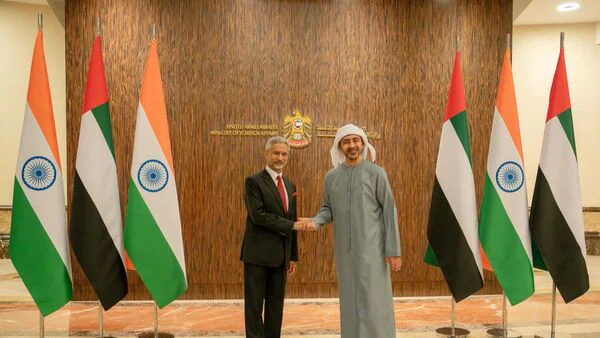
Jaishankar Thanks UAE For Ensuring Well-Being Of Indians Amid Middle East Conflict As US-Iran Talks Fail
(MENAFN- Live Mint) External Affairs Minister Dr S Jaishankar on Saturday held talks on the evolving situation in the Middle East with UAE Deputy Prime Minister and Foreign Minister Sheikh Abdullah bin Zayed Al Nahyan, thanking them for ensuring the well-being of the Indian community in the Gulf nation.
"Conveyed our deep appreciation for ensuring the well-being of the Indian community in the UAE," Jaishankar said of the meeting in a post on X, adding that their conversation "focused on the evolving regional situation and its implications".
"Confident that our Comprehensive Strategic Partnership will advance further," the EAM said.
Earlier in the day, Jaishankar had interacted with members of the Indian community in UAE, and had highlight the Government of India's efforts to ensure their well-being and security amid an unpredictable situation in the Middle East, where Gulf nations have faced repeated drone and missile attacks by Iran or its proxies.
Jaishankar's meeting with his UAE counterpart took place hours before the US and Iran announced that truce talks had ended in failure.
US-Iran talks fail, more fighting ahead?After a meeting that lasted a little less than a day - 21 hours - US President J D Vance left Islamabad, saying that a deal could not be reached with Tehran.
Despite "substantive discussions" between the two sides, Vance said the US had been "very clear" about what its "red lines" were: "...and they have chosen not to accept our terms."
"The simple fact is that we need to see an affirmative commitment that they will not seek a nuclear weapon and they will not seek the tools that would enable them to quickly achieve a nuclear weapon. That is the core goal of the president of the United States. And that's what we've tried to achieve through these negotiations," Vance explained.
"This is bad news for Iran much more than this is bad news for the US," the US Vice President further told reporters outside the Pakistani capital prior to his departure.
Also Read | Trump warns China of 'big problems' over reports of arms supply to IranIran, for its part, said that US demands were "too excessive", and the Tasnim news agency reported that the situation in the Strait of Hormuz would remain unchanged, given that talks had failed.
The Strait of Hormuz has been a major point of contention since the beginning of the US-Israeli war on Iran on 28 February, with its closure upending global energy markets and sending oil prices soaring.
Trump has also repeatedly called for its reopening, from threatening Iran to asking allies for help, but has not been able to alter the situation. Prior to Saturday's talks, the US President had threatened to obliterate Iran, warning that“a whole civilization will die” if his demands are not met.

Legal Disclaimer:
MENAFN provides the
information “as is” without warranty of any kind. We do not accept
any responsibility or liability for the accuracy, content, images,
videos, licenses, completeness, legality, or reliability of the information
contained in this article. If you have any complaints or copyright
issues related to this article, kindly contact the provider above.
Most popular stories
Market Research

More Story






Comments
No comment