



403
Sorry!!
Error! We're sorry, but the page you were looking for doesn't exist.
The Salary Filter: How Kashmir's Marriage Market Is Redefining Brides
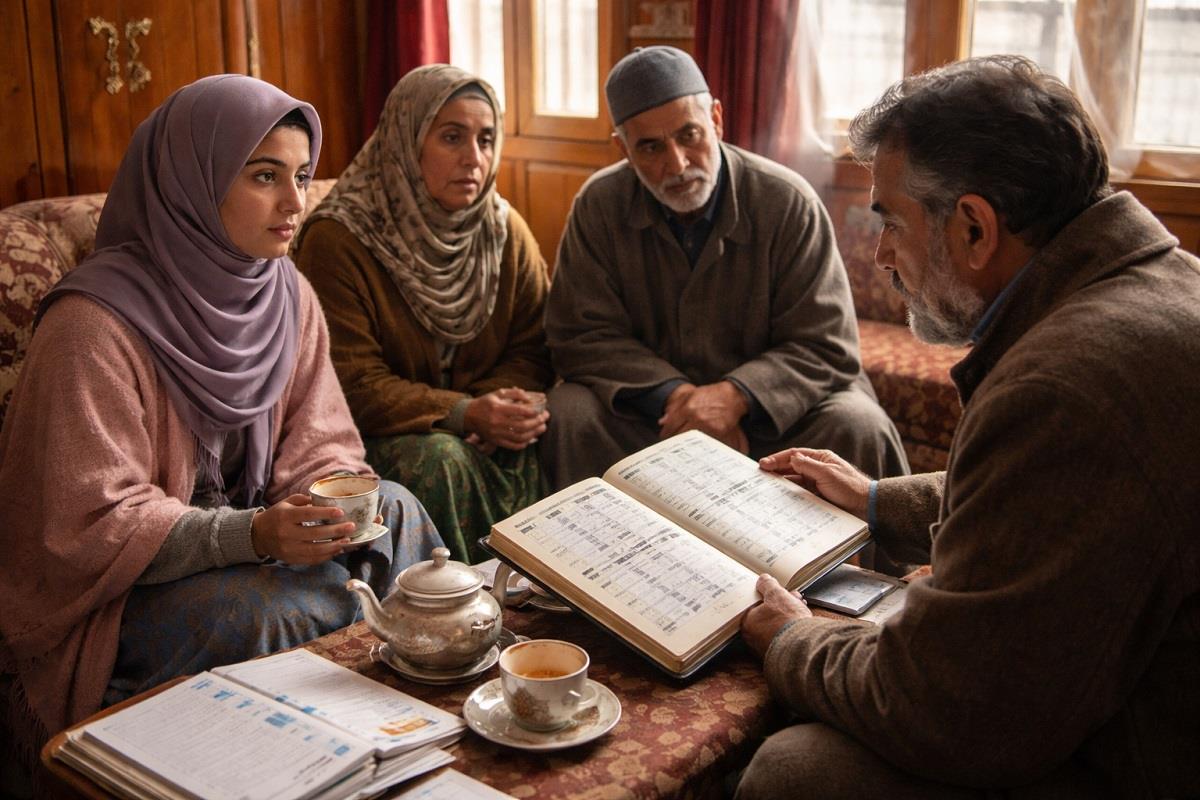
(MENAFN- Kashmir Observer) The old city of Srinagar hums with afternoon activity. Narrow alleys near Khanyar fill with vendors selling boiled beans and fried snacks. Within a wood-paneled office above a fabric shop, Ghulam Hassan sorts through worn dairies.
ADVERTISEMENT
These notebooks contain 15 years of marriage proposals. His fingers trace columns marked with names, ages, and professions.
ADVERTISEMENT
Today, he stops longer at entries listing government salaries or corporate positions. The pages marked“homemaker” gather dust on the shelf.
“Families now open discussions with salary questions,” Hassan explains, stirring tea in a chipped ceramic cup. The spiced drink sends steam into the cold air.“Character and education matter greatly, but the paycheck seals the arrangement every time.”
Sara Bano completed her master's degree in Islamic studies three years ago. She stands twenty-eight years old. Each morning, she tutors neighbourhood children in religious texts at her family home in Sopore.
She prepares lessons on the Quran while wearing the traditional pheran against the spring chill. Her students range from ages six to twelve. They gather in her family's living room, sitting cross-legged on woolen carpets. Sara explains Arabic verses with patience, and translates complex theological concepts into Kashmiri.
Her parents seek a groom who values faith and family devotion. They have approached three matchmakers this year alone. Each closed her file after the initial consultation.
“One told my father directly: return after securing employment,” she recounts, sitting in her family orchard behind her house.“My education holds weight only when paired with a monthly wage.”
She adjusts her headscarf, and her hands show ink stains from morning lessons.“I chose this path to serve the community. Now society punishes that choice.”
Her situation mirrors a broader transformation throughout the valley. Matchmakers increasingly filter candidates by income brackets. Professional women receive priority placement. Those dedicated to domestic management largely face dismissal.
ADVERTISEMENTThe criteria shifted gradually over the past decade.
Older ledgers in Hassan's one-room office show different priorities. Some years ago, families asked about ancestry first. They inquired about domestic skills, and sought religious compatibility. Economic questions ranked lower on the list.
Kashmir's economic reality drives this shift. Labour surveys indicate twenty-five percent of young men remain outside formal employment. The cost of living continues rising. Wedding expenses now average three lakh rupees. Housing prices in Srinagar have doubled since twenty nineteen. Education costs for future children burden young couples.
Families view working wives as economic assets, and seek dual-income households out of necessity.
Amina Shah practices law at the Srinagar High Court. She earns average seventy thousand rupees monthly, handling divorce cases and property disputes. Her engagement last month brought celebration followed by household tension.
Her future husband works as an engineer. His brother married a woman who manages their joint household. The sister-in-law holds a bachelor's degree in literature. She volunteers at local schools, and cares for elderly relatives in the afternoons.
Read Also Doodh Mouj in a Changing Kashmir Time to Expose Male Gold-Diggers in KashmirThe elders urged this sister-in-law to seek employment before Amina's wedding. They feared she would feel diminished standing beside a professional lawyer, worrying about status differences within the family.
The sister-in-law now spends evenings searching job portals. She applies for positions she lacks interest in. Her previous satisfaction with household management has diminished. She now feels anxiety about her worth.
Dr. Farhana Qayoom studies gender dynamics at a Delhi-based university. She interviewed fifty families last year regarding matrimonial preferences in Kashmir. Her research reveals stark changes in spousal expectations.
“The matchmaking ecosystem now operates like a job market,” she observes, sitting in a popular city cafe. Books line the walls behind her.“Economic utility outweighs traditional compatibility markers. Families treat marriage as a financial merger rather than a spiritual partnership.”
She notes complications arising from this approach.“Women report increased stress,” Dr Farhana continues over a sip of coffee.“They feel pressure to maintain careers while managing households, and receive little credit for domestic labour. The society values their bank balance above their character.”
Previous generations emphasized lineage, ethical conduct, and family skills. Brides brought knowledge of cuisine, embroidery, and household management. They prepared feast for dozens of guests and preserved cultural traditions. Grooms handled financial support alone.
These roles provided clear, respected boundaries. Each partner contributed distinct value. But contemporary demands erase these distinctions.
Families now expect dual-income households as standard. Religious scholars express concern about this shift.
Imam Mohsin Kirmani leads Friday prayers at a Srinagar mosque. He counsels couples preparing for marriage.
“Islam teaches that marriage completes half the faith,” he explains, sitting in his study near the mosque.“This completion comes through mercy, compassion, and shared spiritual goals. When we prioritize paychecks over piety, we corrupt the foundation.”
Another candidate, who requested anonymity, describes similar frustration.
She lives in Baramulla, working as a private teacher. A matchmaker visited her home three times. Her family served him with warmth and multiple ₹500 notes. They showed him her certificates, and explained her dedication to education. On the final visit, he abandoned his search.
“He stated I should generate income before expecting proposals,” she recalls, serving tea in her drawing room. The walls display her students' artwork.“He treated my preference for home life as a deficiency. He saw my care for children as idle time.”
She holds a bachelor's degree in education, and speaks three languages. Her contributions lack enough monetary value. The matchmaker dismissed her marriage profile entirely.
The trend places Kashmiri women under conflicting pressures.
Education and employment become mandatory, and marriage depends upon both. Personal calling receives little accommodation.
“Women who embrace careers face judgment for neglecting home duties,” says Shazia Rasool, a working young mother in Pulwama.“Women who choose domestic life find doors closed to them. Society celebrates professional women, but simultaneously, it stigmatizes those who choose traditional roles.”
This creates punishing standards: women are expected to earn high salaries while also maintaining perfect households, raising children, and caring for elders.
At the same time, men face renewed pressure as providers, expected to match their wives' incomes while maintaining status.
Back at his office, Hassan receives a call. A mother describes her daughter: pious, educated, skilled at cooking. She mentions expertise in embroidery, and describes gentle manners. Salary details stay absent from the conversation.
Hassan reviews his files, notes her name in a new diary, and moves it to a secondary list while the primary ledger waits.
The homemaker pages remain untouched on the shelf.
Outside, the call to prayer echoes through Srinagar as the matchmaker closes his books, leaving a city silently weighing worth in rupees against what truly matters.
Legal Disclaimer:
MENAFN provides the
information “as is” without warranty of any kind. We do not accept
any responsibility or liability for the accuracy, content, images,
videos, licenses, completeness, legality, or reliability of the information
contained in this article. If you have any complaints or copyright
issues related to this article, kindly contact the provider above.
Most popular stories
Market Research

More Story








Comments
No comment