





403
Sorry!!
Error! We're sorry, but the page you were looking for doesn't exist.
RBI Proposes New Safeguards To Curb Rising Digital Payment Frauds
(MENAFN- KNN India)
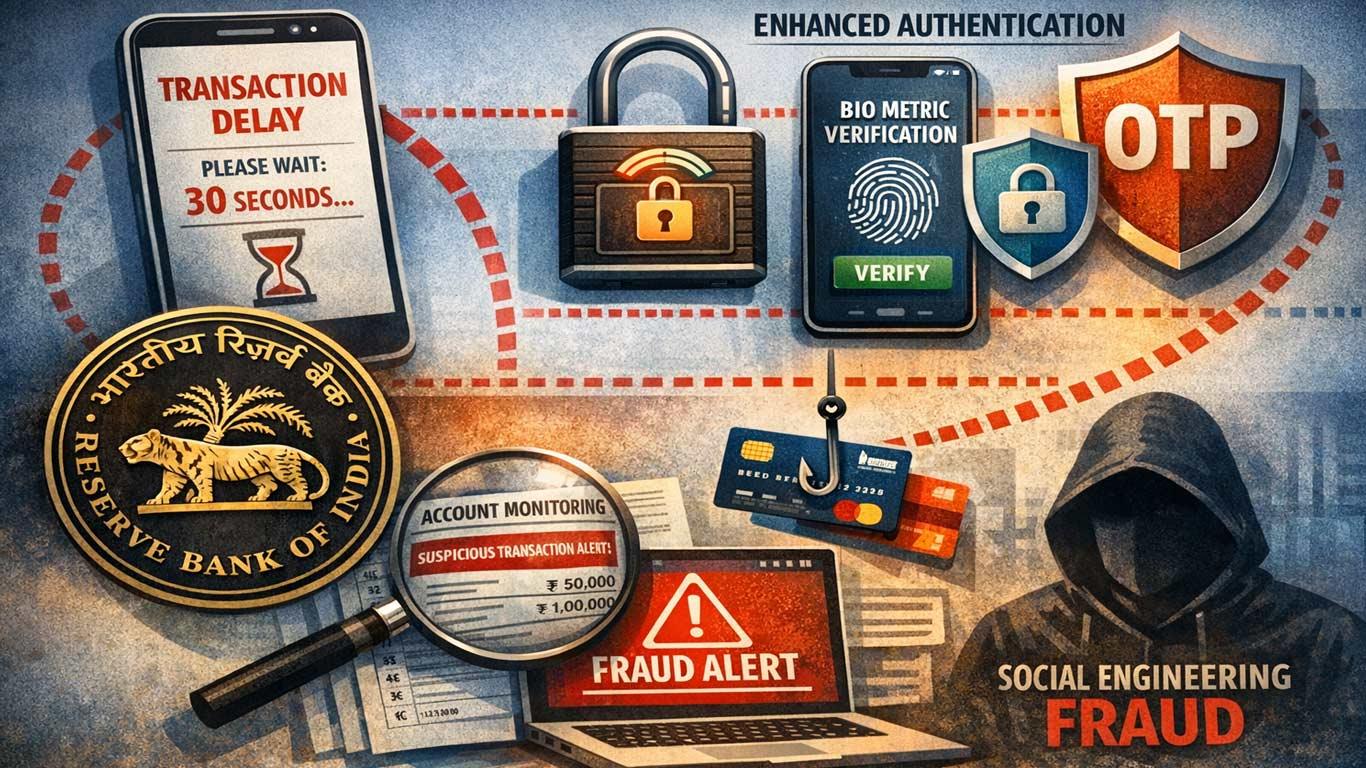
New Delhi, Apr 10 (KNN) The Reserve Bank of India (RBI) has proposed a set of additional safeguards for digital payments, including transaction delays, enhanced authentication, and stricter monitoring of bank accounts, to address a sharp rise in frauds driven largely by social engineering.
In the discussion paper titled 'Exploring safeguards in digital payments to curb frauds', released by its Department of Payment and Settlement Systems, the RBI highlighted that reported fraud cases on the National Cyber Crime Reporting Portal rose from 2.6 lakh in 2021 to 28 lakh in 2025. The value of such frauds increased from Rs 551 crore to over Rs 22,900 crore during the same period.
The RBI has invited public comments on the proposals until May 8, 2026. It will review stakeholder feedback before issuing draft guidelines on additional safeguards.
Rapid Growth, Emerging Risks
The central bank noted that India's digital payments ecosystem has expanded rapidly over the past decade, with transaction volumes increasing 38-fold and values more than tripling. This growth has been supported by platforms such as the Unified Payments Interface, IMPS, NEFT, RTGS, cards, and mobile wallets.
However, most recent frauds are 'authorised push payment' (APP) scams, where users are deceived into initiating transactions themselves, limiting the scope for recovery due to the instant nature of digital payments.
Four Key Safeguard Measures
The RBI has proposed four key safeguard measures to strengthen digital payment security. It has suggested introducing a one-hour delay for certain transactions above Rs 10,000, allowing customers time to cancel payments while enabling banks to flag suspicious activity and seek reconfirmation, thereby disrupting fraud tactics that rely on urgency.
For vulnerable users, including senior citizens aged 70 and above and persons with disabilities, an additional authentication layer has been proposed for transactions above Rs 50,000 through a nominated 'trusted person', though the central bank has noted potential operational and legal challenges.
To curb the misuse of mule accounts, the RBI has proposed capping annual credits at Rs 25 lakh for accounts without enhanced due diligence, with excess amounts treated as 'shadow credits' until verified and subject to reversal after 30 days if found unsubstantiated.
The paper also recommends extending customer-controlled 'switch on/off' features to all digital payment channels and introducing a 'kill switch' to instantly disable transactions in case of suspected fraud, while also examining whether new accounts should have digital payment features disabled by default.
Balancing Speed and Safety
The RBI said the proposed framework seeks to introduce targeted friction in high-risk transactions while preserving the efficiency of low-value payments.
It noted that earlier measures such as two-factor authentication, tokenisation, and transaction controls have reduced system-level breaches, but user-driven frauds continue to rise.
(KNN Bureau)

Legal Disclaimer:
MENAFN provides the
information “as is” without warranty of any kind. We do not accept
any responsibility or liability for the accuracy, content, images,
videos, licenses, completeness, legality, or reliability of the information
contained in this article. If you have any complaints or copyright
issues related to this article, kindly contact the provider above.
Most popular stories
Market Research

More Story








Comments
No comment