



403
Sorry!!
Error! We're sorry, but the page you were looking for doesn't exist.
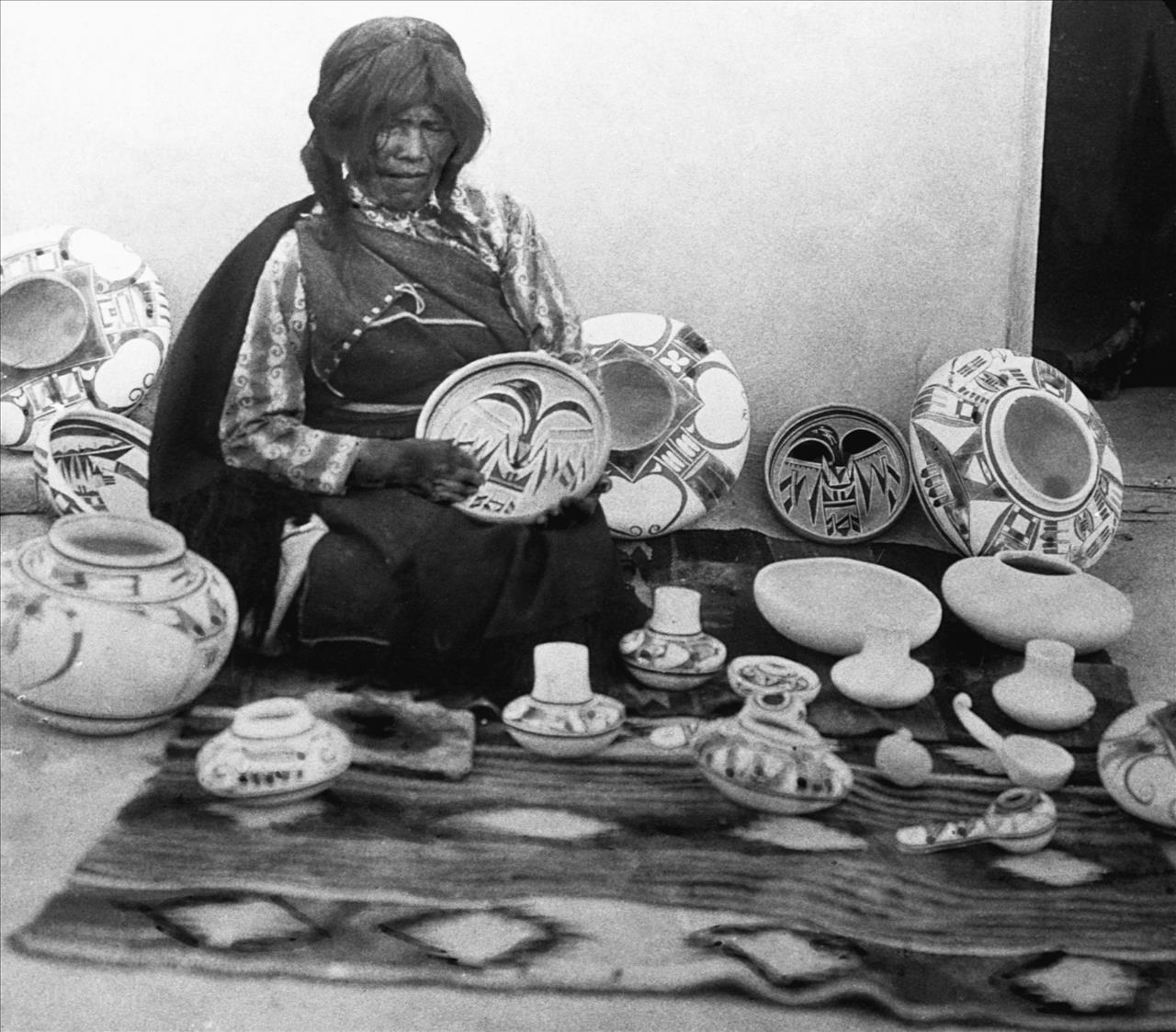
How A Hopi Potter Named Nampeyo Became A 19Th-Century Art Star
(MENAFN- USA Art News)
Nampeyo and the Sikyátki Revival: How a Hopi Potter Recast Modern Ceramics
A single excavation in 1895 helped redirect the course of Native American ceramics, but the artist who translated that discovery into a living visual language had already been working for decades. Nampeyo (1859–1942), born in Hano on First Mesa in modern-day Arizona, emerged as one of the major forces behind the Sikyátki Revival, a style that linked contemporary Hopi pottery to ancient forms unearthed at a prehistoric village in Arizona.
Nampeyo learned pottery making from her paternal grandmother and was already selling her work at trading posts throughout the region by the 1870s. William Henry Jackson photographed her in 1875, when she was 15. Over time, she became widely known for making pottery before audiences at the Grand Canyon and at fairs in Chicago, a rare public visibility for a Native artist of her era. She even appeared on postcards, a sign of how recognizable her image had become.
Her early ceramics, known as Polacca Ware, were shaped by Zuni-influenced methods and often featured a white slip and a craquelure surface. The decisive shift came after excavations began at Sikyátki under archaeologist and anthropologist Jesse Walter Fewkes of the Smithsonian Institute. Nampeyo's husband, Lesso, worked at the site, and she encountered fragments of Hopi pottery dating to the 15th century. Those remains became a source of formal and symbolic renewal.
From there, Nampeyo moved away from tall, narrow vessels and toward low, wide jars that echoed the ancient shards she had seen. She also adapted motifs such as eagle tails and became known for vessels with a broad,“flying saucer” profile. As Diane Dittemore of the Arizona State Museum noted, she was able to hand-build difficult forms and execute highly complex designs with precision.
Her reputation has continued to expand beyond specialist circles. In 2010, one of her polychrome jars sold at Bonham's San Francisco for $350,000, according to the Artnet Price Database. In 2019, her work appeared in Hearts of Our People: Native Women Artists, and more recently the De Young Museum in San Francisco presented Nampeyo and the Sikyátki Revival, co-organized by Bobby Silas and Hillary C. Olcott. The record-setting jar is now in the collection of the Metropolitan Museum of Art, a reminder that Nampeyo's influence now sits firmly within the broader history of modern ceramics.

Legal Disclaimer:
MENAFN provides the
information “as is” without warranty of any kind. We do not accept
any responsibility or liability for the accuracy, content, images,
videos, licenses, completeness, legality, or reliability of the information
contained in this article. If you have any complaints or copyright
issues related to this article, kindly contact the provider above.
Most popular stories
Market Research

More Story








Comments
No comment