





403
Sorry!!
Error! We're sorry, but the page you were looking for doesn't exist.
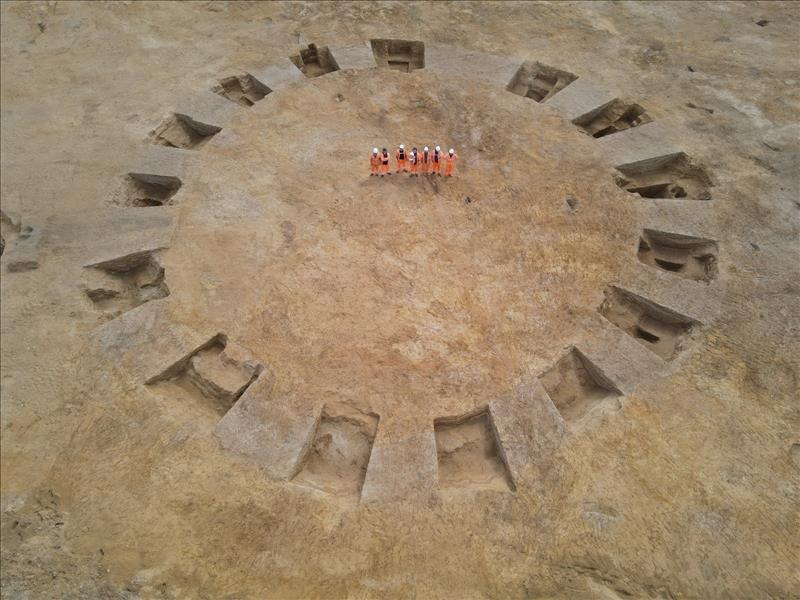
Large Roman Villa Uncovered In The U.K. During Wind Farm Survey
(MENAFN- USA Art News)
Roman Villa Found in Norfolk During Offshore Wind Farm Survey
A routine infrastructure survey in Norfolk has revealed a previously unknown Roman villa estate, offering a layered view of occupation on England's east coast from prehistory through the medieval period. Archaeologists working along a 40-mile cable route for offshore wind farms uncovered the villa, which measures more than 100 feet in length and includes a covered porch and a bathhouse.
The site appears to have developed in phases between the 1st and 3rd centuries C.E., when Roman Britain was at its height. Initial magnetometer readings suggested only modern disturbance, but trenching in 2021 exposed roof tiles and flint walls. Ground penetrating radar then outlined a substantial, carefully planned complex that changed over time.
The villa was not an isolated find. Researchers identified a Roman road leading to the estate and evidence of crop growing and food processing on the property. They also recovered a brooch, copper hair pins, nail cleaners, an inscribed silver ring, imported pottery, painted plaster, window glass, and two bronze furniture fittings, including a lion's head chair leg base and an ornate door handle.
The broader survey covered more than 1,850 acres and involved more than 500 trenches. Alongside the Roman remains, archaeologists documented a barrow mound, a 4,000 B.C.E. Neolithic pit containing more than two pounds of pottery and stone tools, and the lost medieval villages of Whimpwell and Stinton, both recorded in the Domesday Book.
Many of the discoveries were presented in late March at Gressenhall Farm and Workhouse, a museum near the villa site. After GPS mapping and 3D photogrammetry, the Roman villa and the Neolithic remains were left in situ. Analysis of the excavation continues, but the project already underscores how renewable energy development can open an unexpected archive of the past.
“The archaeological campaign has revealed a remarkable story about how this landscape has changed over time, from prehistoric activity through to a Roman villa estate,” Job Darling, project director for RWE, said in a statement.“Careful archaeological work sits alongside responsible infrastructure development, helping to protect and record Norfolk's heritage while supporting the transition to renewable energy.”

Legal Disclaimer:
MENAFN provides the
information “as is” without warranty of any kind. We do not accept
any responsibility or liability for the accuracy, content, images,
videos, licenses, completeness, legality, or reliability of the information
contained in this article. If you have any complaints or copyright
issues related to this article, kindly contact the provider above.
Most popular stories
Market Research

More Story






Comments
No comment