


![SANS Institute, Cloud Security Alliance, [Un]Prompted, And OWASP Genai...](/Updates/index/HTML_Images/NewsEN_MostPopular_img_4.png?1110991251)




403
Sorry!!
Error! We're sorry, but the page you were looking for doesn't exist.
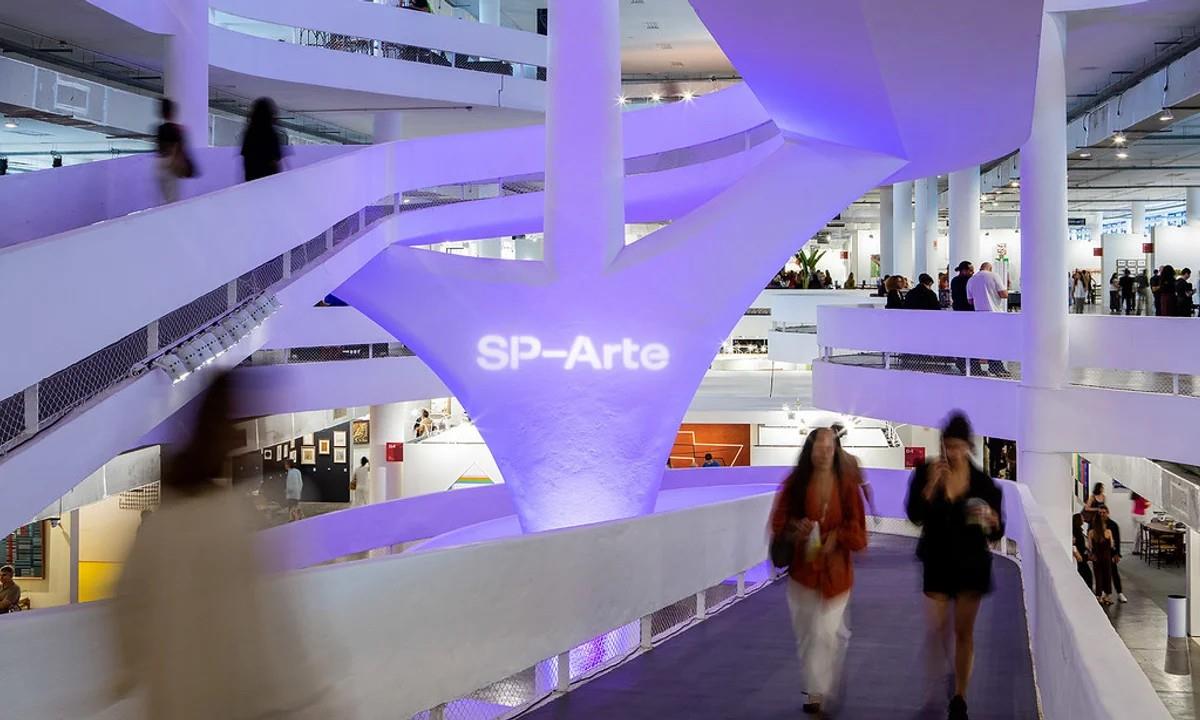
SP-Arte Underscores Latin America's Resilient Rise Amid Global Market Recalibration The Art Newspaper International Art News And Events
(MENAFN- USA Art News)
SP-Arte's 22nd Edition Shows Why Brazilian Art Has Become Harder to Ignore
At a moment when many art fairs are trying to look more global, SP-Arte is leaning into something more specific: its Brazilian center of gravity. The 22nd edition of the São Paulo fair opens at Ibirapuera Park from April 8–12, 2026, with more than 180 galleries, design studios, and cultural institutions participating. International exhibitors are present, but the fair remains overwhelmingly Brazilian, and most of the work on view is by Brazilian artists.
That local emphasis is increasingly being read as an asset. Juan Luis Balarezo, director of Crisis Galeria in Lima, Peru, said the resilience of Latin American galleries is tied in part to their structure. Smaller operations, he argued, carry lower costs than many galleries in the United States or Europe. He also pointed to a broader correction in the market, where Latin American work is receiving more serious valuation. The old hierarchy, in his view, is losing force.
The numbers suggest that shift is not merely rhetorical. The Art Basel and UBS Global Art Market Report said South American dealers reported strong sales over 2025, with Brazilian galleries up 21% year-on-year. For SP-Arte, that momentum reinforces a long-standing proposition: a fair does not need to mimic Basel or Frieze to matter internationally. It can instead become a destination precisely because it is rooted in place.
Fernanda Feitosa, the fair's founder, has framed SP-Arte as a Brazilian platform first, even as it welcomes outside participants. She has argued that large international fairs can feel stripped of local character, while cities such as São Paulo, Mexico City, Bogotá, and Buenos Aires have the conditions to become major art hubs if political and structural barriers ease. In her view, Brazil is well positioned for the current moment, especially as the global conversation broadens to include women, Indigenous artists, Black artists, and street artists.
That broader attention is also drawing museum curators. Jennifer Inacio, associate curator at Pérez Art Museum Miami (PAMM), said there is strong interest among American and European institutions in exhibitions of Latin American and Brazilian artists. She added that museums seeking a truly global conversation need to include more artists from Latin America and the Global South in their collections.
SP-Arte's design section has become another sign of the fair's expanding reach. Since its introduction in 2016, the section has grown from 23 stands to 64, and this year adds DesignNOW, a new area devoted to ten independent contemporary Brazilian designers. Feitosa said Brazilian design had long lacked an event equal to its ambition, and that once a calendar exists for a sector, it tends to thrive.
The fair's appeal to international visitors may be best captured by Australian art advisor Fiona McIntosh, who is traveling through São Paulo, Rio de Janeiro, and the Inhotim Institute with a group of collectors. She said what makes SP-Arte compelling is precisely its local focus. Unlike Basel or Frieze, she noted, the fair is centered on Brazil - and that specificity is what makes it feel fresh.
As SP-Arte expands, it is doing so without diluting its identity. In the current market, that may be its most persuasive argument.

Legal Disclaimer:
MENAFN provides the
information “as is” without warranty of any kind. We do not accept
any responsibility or liability for the accuracy, content, images,
videos, licenses, completeness, legality, or reliability of the information
contained in this article. If you have any complaints or copyright
issues related to this article, kindly contact the provider above.
Most popular stories
Market Research

More Story






Comments
No comment