




403
Sorry!!
Error! We're sorry, but the page you were looking for doesn't exist.
FX Daily: First Inflation Test
(MENAFN- ING)
USD: Can inflation lead to a faster peace deal?
Markets aren't being provided with clear direction at the moment. There is a strong sense that the ceasefire is fragile, with ongoing Israeli attacks in Lebanon proving a key friction in US-Iran negotiations. However, investors aren't ready to price in a re-escalation, and some optimism is being placed on announced Israel-Lebanon talks next week.
DXY keeps hovering just below 99.0. These levels clearly embed plenty of optimism, but another leg lower for USD is on the cards once, or if, a permanent peace deal is agreed and Strait of Hormuz flows resume. High‐beta currencies stayed in favour yesterday, with Antipodeans and Scandies leading the G10. The Australian dollar and Norwegian krone look particularly well-placed if de‐escalation supports risk sentiment, while energy supply recovers only gradually and prices prove sticky on the downside. Both currencies should also benefit from at least one domestic rate hike over the coming months.
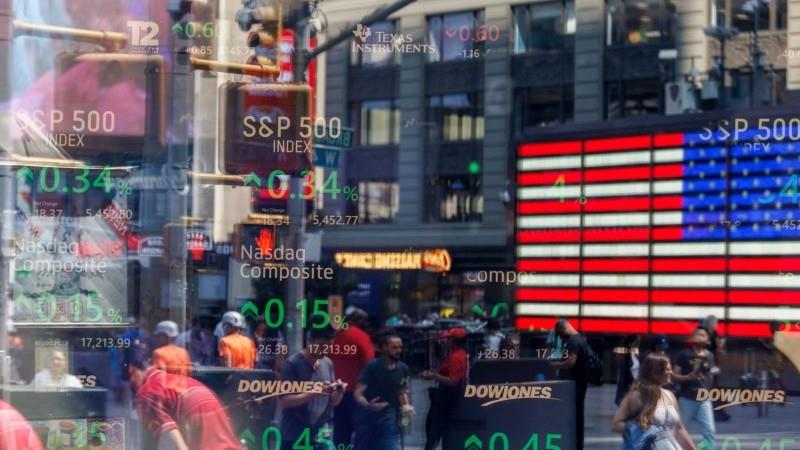
Today's key area worth watching outside of Middle East headlines will be the US CPI report for March. We are aligned with consensus in expecting a 0.9ppt monthly jump in headline CPI to 3.4% year-on-year, while core CPI should accelerate only modestly from 0.2% to 0.3% month-on-month. What matters for the Federal Reserve are second-round effects, visible – if anything – in core inflation after a few months from the initial energy shock. As such, today's release should not be a game‐changer for Fed pricing unless inflation surprises meaningfully on the upside.
It is also worth watching the domestic political backlash from higher inflation. Some Republicans have voiced discontent over the war and rising gasoline prices, which could increase pressure on President Donald Trump to push for a peace deal. Anyway, with hot inflation grabbing headlines, the bar for another dollar drop should be a bit higher today, even if Middle East developments remain the primary driver.
Francesco Pesole
EUR: Ruling out an April hikePricing for a 30 April hike from the European Central Bank is now only 6bp. That mirrors not just the de-escalation (55bp remains priced in by year-end), but probably the view that the ECB won't have enough evidence to act, and the energy price outlook may still be uncertain in three weeks' time.
June and September look like the market's preferred windows for rate hikes, although a follow‐up move in July after a June hike is around 50% priced.
What matters most at this stage is the stickiness of tightening expectations. As discussed on several occasions, we expect pricing to remain above 50bp unless the ECB delivers explicit dovish signals, even if oil prices ease somewhat further.
That backdrop leaves the euro well-placed, in our view, to outperform other low‐yielders such as the Japanese yen and the Swiss franc. For EUR/USD, we look for some stabilisation around or slightly below 1.170 for now, with a good deal of positives already in the price.
Francesco Pesole
CAD: Jobs data in focus todayCanada releases jobs data for March today. Consensus is for a +15k payroll change after the very soft -83k February print. But the bigger signal for the Bank of Canada tends to come from the unemployment rate rather than the quite volatile monthly jobs swings. The BoC's pain threshold appears close to 7% unemployment – levels at which it was previously cutting and maintaining a dovish stance. The recent decline to 6.7% has given the Bank scope to turn slightly more hawkish, even before the war, so accelerations from here could offer a reason to cautiously unwind hike bets.
In our view, risks for CAD front-end rates are skewed to the dovish side in the coming weeks. Markets are pricing around 40bp of tightening by December, which looks too aggressive considering the BoC has not signalled much appetite for hikes, and attention may soon shift to USMCA renegotiations – a major downside risk for Canada's activity and jobs.
USD/CAD remains dominated by war headlines for now, and continued de‐escalation should allow a move to 1.370. We retain a moderate bearish bias on USD/CAD, but expect CAD to be outpaced by the likes of AUD and NOK.
Francesco Pesole
CEE: The market maintains a hawkish viewYesterday's National Bank of Poland meeting confirmed previous communication that the MPC is in no hurry to take further steps. According to Governor Adam Glapinski, the situation in Poland is different from 2019-2022, and the central bank does not face the same inflation problem as in the past. The energy shock increases the inflation profile and pushes down GDP growth, but there is no reason to raise rates now, according to the Governor. Still, he mentioned that the central bank will react quickly if necessary. For us, no change in rates remains the baseline for a longer period. The market is still pricing in almost one rate hike in the one-year horizon, which is unlikely to go away until we see more inflation figures and further calming of the geopolitical situation.
We also heard more from the Czech National Bank this week. Bank Board member Jakub Seidler reiterated in a newspaper interview that he still sees the central bank in a relatively good position, with a slightly restrictive monetary policy before the Middle East conflict erupted and a cushion absorbing some of the inflationary factors. After Tuesday's lower-than-expected March inflation figure (1.9% YoY), it seems that headline inflation, similar to Poland's, should remain within the tolerance band. In our forecast, the CNB should therefore not react, and rates will remain unchanged. However, the market is pricing in almost two rate hikes in the one-year horizon – the most within the CEE region. In our view, this is mainly due to hawkish market pricing for the ECB and market expectations that the CNB will follow.
In Hungary, the election campaign is culminating ahead of Sunday's elections, and we are observing a disconnection of HUF assets from the rest of the region and the geopolitical situation. Market positioning before the general election is pushing EUR/HUF and bond yields significantly down, with roughly two rate hikes being priced in the one-year horizon. The National Bank of Hungary was muted this week, but apparently, the future direction of monetary policy will be determined by conditions after the elections and the market reaction to the result. For now, we also assume rates will remain unchanged; however, the situation may change quickly depending on the direction of fiscal policy, EU funds and EUR/HUF after the elections. Polls indicate a victory for the opposition, although we expect a close race.
Frantisek Taborsky

Legal Disclaimer:
MENAFN provides the
information “as is” without warranty of any kind. We do not accept
any responsibility or liability for the accuracy, content, images,
videos, licenses, completeness, legality, or reliability of the information
contained in this article. If you have any complaints or copyright
issues related to this article, kindly contact the provider above.
Most popular stories
Market Research

More Story






Comments
No comment