


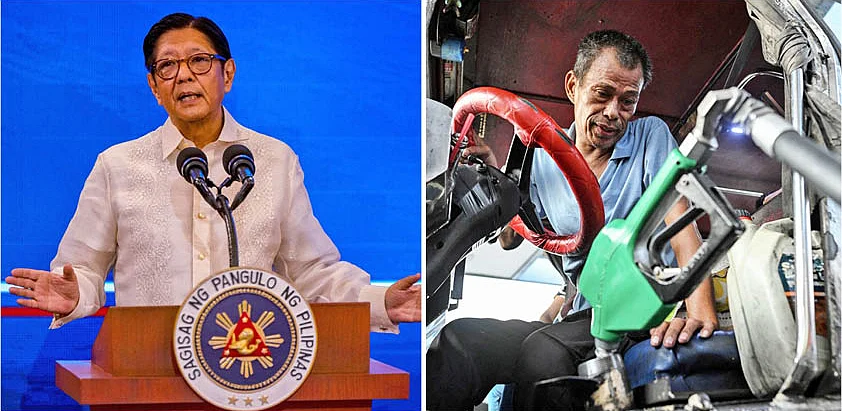
Philippines Marcos Govt Earns Billions From Fuel Taxes While Drivers Struggle With High Prices


- By: Raymund Villanueva
[Editor's Note: Follow Khaleej Times live blog amid US-Israel-Iran ceasefire for the latest regional developments.]
Fuel prices have uncontrollably surged across the world because of the Middle East war. Some countries were able to mitigate the impact by cutting oil taxes, which did not happen in the Philippines.
Recommended For YouIn the five weeks since shooting started on February 28, the Philippine government is set to collect P47.6 billion (Dh2.97 billion) in fuel taxes. Even if it fulfills its promise to give public transportation drivers cash aids worth P33.77 billion (Dh2.1 billion), it would still benefit from a P13.85 billion (Dh865 million) windfall.
Unlike neighbouring countries such as Indonesia and Vietnam that cut back on taxes to protect their citizens from runaway inflation brought by the war, Philippine President Ferdinand Marcos Jr. refused to suspend excise and value added taxes on fuel despite the Philippine Congress giving him emergency powers to do so.
Stay up to date with the latest news. Follow KT on WhatsApp Channels
What Marcos did was to give P5,000 (Dh312) cash assistance to tricycle, jeepney, delivery and bus drivers numbering to over 200,000. It had begun a partial roll out in major cities in the country, forcing several local governments to declare a state of emergency to hasten the distribution of cash assistance using their own emergency funds.
The supposed beneficiaries, however, unanimously pointed out that the amount was insufficient and palliative as it was only worth two days of fuel expenses.“Marcos was obviously thinking only of lost revenue if fuel taxes were suspended,” they noted.
Transport organisations like Piston and Manibela, along with a wide net of citizens said a more inclusive government response should have been the suspension of taxes on fuel, one that would benefit every Filipino by ensuring lower prices across the board.
Removing both taxes could reduce diesel prices by over P24 per litre and gasoline by over P10 per litre, they said, underscoring:“Policies to be effective should be grounded on reality.”
Because of high fuel cost, George, a tricycle driver, had stopped plying his route since petrol in his home province of Isabela hit P102 per litre (Dh6.35). His vehicle consumes one litre from his village to the town market 12 kilometres away.
“Loaded with three passengers I could only charge P50 each, I would get P150 to pay for petrol and parts. Even if I'm lucky to get four full trips per day, I often come home with just P100 per day,” the young father of two told Khaleej Times.
For George, what President Marcos said means nothing. He even did not receive the promised cash aid. He was left fending for himself and his family.
George is now selling watermelons by the side of the road, hoping to bring home a bit more cash while the government continues to earn billions from taxes.
ALSO READ- Philippines hit by accelerated inflation, no immediate relief from Iran-US ceasefire How Marcos-Duterte feud, political patronage derail Philippine solar energy push Filipino jeepney drivers demand action as fuel crisis halts public transport

Legal Disclaimer:
MENAFN provides the
information “as is” without warranty of any kind. We do not accept
any responsibility or liability for the accuracy, content, images,
videos, licenses, completeness, legality, or reliability of the information
contained in this article. If you have any complaints or copyright
issues related to this article, kindly contact the provider above.


Comments
No comment