


![SANS Institute, Cloud Security Alliance, [Un]Prompted, And OWASP Genai...](/Updates/index/HTML_Images/NewsEN_MostPopular_img_4.png?1110991251)




403
Sorry!!
Error! We're sorry, but the page you were looking for doesn't exist.
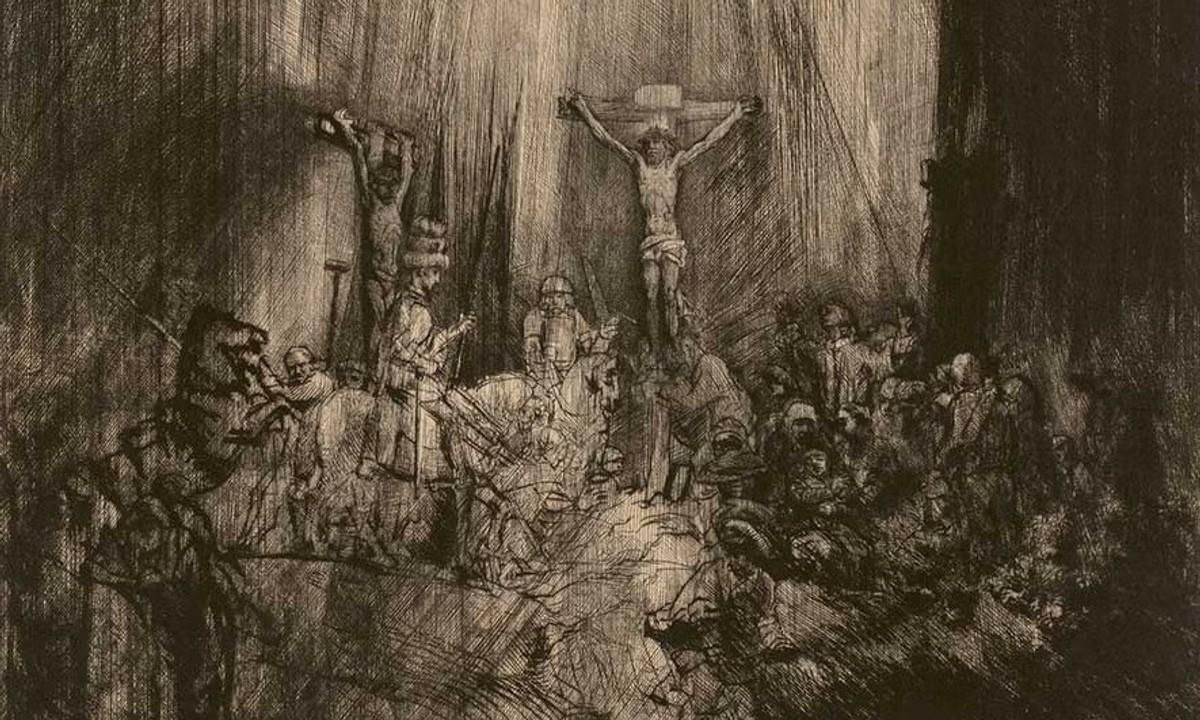
Pressing Issues: The Vital Role Of Printmaking In The History Of Art The Art Newspaper International Art News And Events
(MENAFN- USA Art News)
Holly Black Rewrites the History of Printmaking From East Asia to the Digital Age
Printmaking has often been treated as a specialist field, admired by insiders and overlooked by everyone else. Holly Black's new book, The Story of Printmaking: A Global History of Art, pushes back against that assumption by tracing the medium from ninth-century East Asia to 21st-century digital developments, while also explaining the technical processes that give prints their physical force.
Black, who studied at the London College of Printing and made prints as part of her research, says that practical knowledge was essential to the book's structure. She wanted readers to understand not only what a print is, but how it is made - from monotypes to mezzotint and intaglio, the family of processes that inscribe into a plate rather than carve or paint on a surface. That emphasis on making, rather than simply looking, gives the book a tactile clarity.
The narrative begins with an image Black encountered in a college library: St John the Evangelist watching a man in overalls at a printing press. The image was credited to Jean Chièze, the 20th-century French printmaker, but Black discovered that the reproduction she saw was not a woodblock print at all. It was a facsimile downloaded from the internet and printed on an inkjet machine. That small reversal captures one of the book's central concerns: print history is full of assumptions that need to be examined closely.
From there, Black moves through the canonical figures. Albrecht Dürer is presented as a transformative force in 16th-century Europe, an artist who created compositions designed specifically for print. Pablo Picasso, whose print archive includes more than 2,400 unique designs, receives equally serious attention. Black stresses that Picasso's achievements were shaped by master printers, including the French etcher Auguste Delâtre, whose influence can be seen in works such as The Frugal Repast (1904).
The book is especially strong when it turns to figures who have been pushed to the margins of the standard story. Robert Blackburn's workshop in Chelsea, New York, founded in the late 1940s, is shown as a vital site of artistic exchange; it continues today through the Elizabeth Foundation for the Arts, whose artists have included Faith Ringgold and Romare Bearden. Black also restores women to the center of the medium's history, from Wu Zetian, the only Empress in Chinese history and a significant patron of printing during the Tang Dynasty, to Volcxken Diericx, who helped build the Antwerp publishing house Aux Quatre Vents and later ran the business after Hieronymus Cock's death.
Tatyana Grosman, the Siberian refugee who founded Universal Limited Art Editions (ULAE) on Long Island in 1957, is another crucial presence. Black notes that ULAE helped redirect Robert Rauschenberg's printmaking through Accident (1963), an abstract work produced when a broken stone gave way under the pressure of the press. Taken together, these examples make Black's larger point plain: print studios, and the people who run them, have shaped art history far more than they are usually credited for.

Legal Disclaimer:
MENAFN provides the
information “as is” without warranty of any kind. We do not accept
any responsibility or liability for the accuracy, content, images,
videos, licenses, completeness, legality, or reliability of the information
contained in this article. If you have any complaints or copyright
issues related to this article, kindly contact the provider above.
Most popular stories
Market Research

More Story






Comments
No comment