




403
Sorry!!
Error! We're sorry, but the page you were looking for doesn't exist.
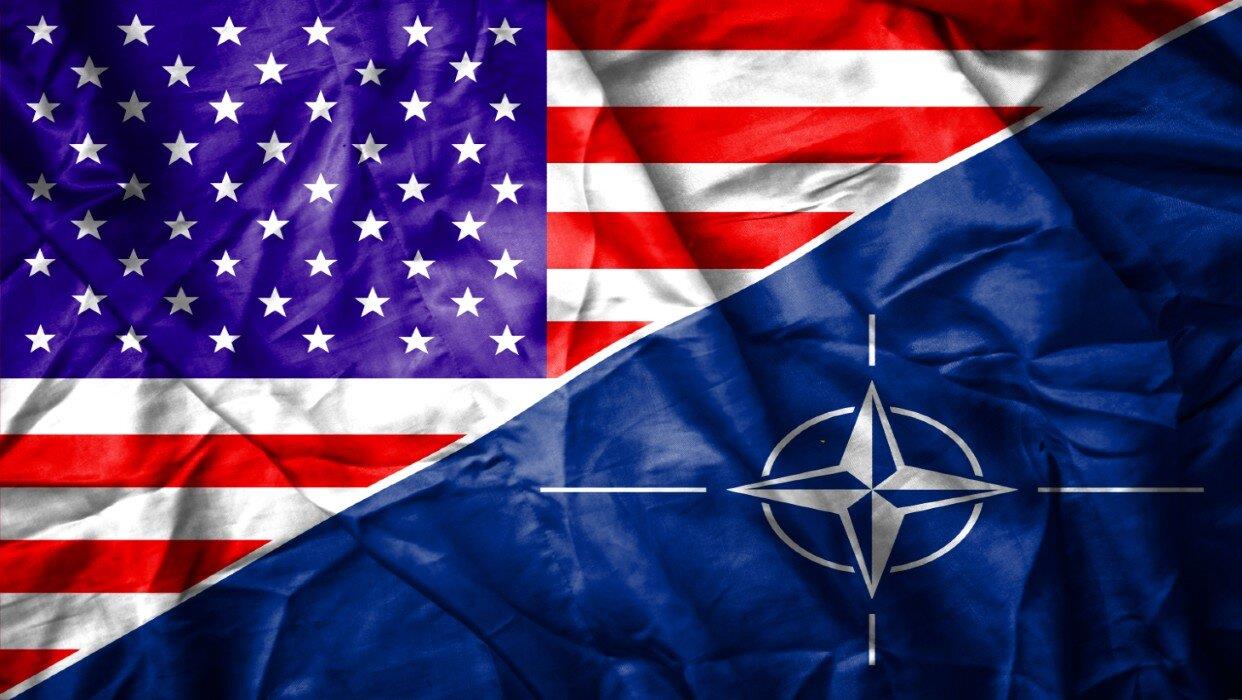
Opinion The US-European Rift: How The Iran War Has Exposed The Atlantic Divide
(MENAFN- Daily News Egypt) The war on Iran has emerged as one of the key catalysts for deepening tensions between the United States and the European Union, tensions long described as an iceberg, with only the tip visible above the surface. What we are witnessing today, however, suggests that the entire iceberg has surfaced, spiralling out of control, as if both sides have grown weary of patchwork attempts to mend a post-World War II relationship. More alarmingly, no one seems willing-or even interested-to salvage what remains of cooperation or understanding.
From the moment President Donald Trump assumed office, European anxieties intensified. His vision for Greenland and his provocative suggestion to purchase or occupy the Danish territory marked the first domino in a sequence of escalating frictions. These tensions were compounded by US tariffs on European exports, such as cars and steel, justified under the banner of“protecting American jobs”, which triggered retaliatory measures and transformed political allies into trade adversaries. Trump's demands for NATO member states to contribute an additional 5% of their GDP further strained transatlantic relations. The pressure did not end there: he urged EU nations to sever technological and commercial ties with China entirely, deepening geopolitical rifts given Europe's economic reliance on the Chinese market.
The most consequential blow came with the US's partial withdrawal of financial and military support for Ukraine in early 2025, shifting the burden largely onto European budgets. Europeans increasingly perceived the US as leveraging conflicts to serve domestic agendas, only to withdraw and leave Europe to shoulder the security and economic consequences-a realisation that, under Trump's leadership, rendered the transatlantic relationship increasingly unsustainable.
European retaliation was swift. Trump's war on Iran provided a strategic opportunity to leave the US entangled in a quagmire. European opposition escalated not only to the war itself but also manifested in direct defiance of the American administration and Trump personally. In response to US pressure to participate, Spain officially restricted US access to its Rota and Morón military bases, declaring that no attacks on Iran would originate from Spanish soil. Germany and France echoed this stance, asserting that any American commercial threat to Madrid would constitute a threat to the EU as a whole, while Italy closed its airspace to US military aircraft targeting Iran, effectively undermining Trump's strategy of isolating European nations.
The crisis over securing the Strait of Hormuz, triggered by the Iran conflict, marked yet another setback-not only across the Atlantic but also with the United Kingdom, traditionally America's steadfast ally in Middle Eastern conflicts, which refused to participate under a US-led framework.
European responses extended beyond retaliation. Growing divergences over economic interests and regional risk management prompted the EU to pursue a policy of“strategic autonomy”, aimed at reducing reliance on American dominance. Under Trump's second term, key European powers-especially France, Germany, and Italy-became increasingly convinced that total dependence on US security guarantees posed an unacceptable risk, fuelling concerns that Washington might abandon NATO's Article 5 commitments.
Since 2025, the EU has implemented unprecedented sovereign measures to reduce dependence on the US military umbrella. These measures include leveraging the French nuclear deterrent across EU member states in exchange for contributions to its maintenance and development, and establishing a coordination mechanism among France, Germany, Poland, and Italy for nuclear deterrence strategy-effectively a first institutional alternative to NATO's Nuclear Planning Group. The“Rearm Europe” initiative, with an initial €1.5bn budget, supports joint European military manufacturing, stipulates that all weapons be European-made, and includes plans to develop a sixth-generation fighter jet as a potential replacement for US-made F-35s.
Military spending has been exempted from EU deficit constraints, while a 5,000-strong European rapid-response force capable of immediate intervention without US logistical support has been formed. The European Union Military Staff (EUMS) has also been strengthened, as evidenced by its coordination in rejecting US operations against Iran. Decisively, countries such as Italy and Spain have revisited bilateral defence agreements with Washington to enforce conditions preventing the use of bases for missions not approved by the EU or not aligned with European security interests.
Even the United Kingdom, a self-proclaimed strategic US ally that exited the EU voluntarily, signed the Franco-British“Nuclear and Strategic Cooperation Charter” in July 2025, ensuring coordination between British and French nuclear submarines to safeguard European airspace should the US withdraw from NATO.
It is clear that transatlantic relations will not return to their previous state, at least under Trump's tenure, whose actions have both reflected and accelerated a rift threatening to fracture the alliance. The conclusion of the Iran war may well serve as a symbolic“divorce” between the US and Europe-a prelude to a new relationship defined not by hierarchical dependency, as shaped since World War II, but by mutual parity.
Prof. Hatem Sadek – Helwan University

Legal Disclaimer:
MENAFN provides the
information “as is” without warranty of any kind. We do not accept
any responsibility or liability for the accuracy, content, images,
videos, licenses, completeness, legality, or reliability of the information
contained in this article. If you have any complaints or copyright
issues related to this article, kindly contact the provider above.
Most popular stories
Market Research

More Story








Comments
No comment