


![SANS Institute, Cloud Security Alliance, [Un]Prompted, And OWASP Genai...](/Updates/index/HTML_Images/NewsEN_MostPopular_img_4.png?1110991251)




403
Sorry!!
Error! We're sorry, but the page you were looking for doesn't exist.
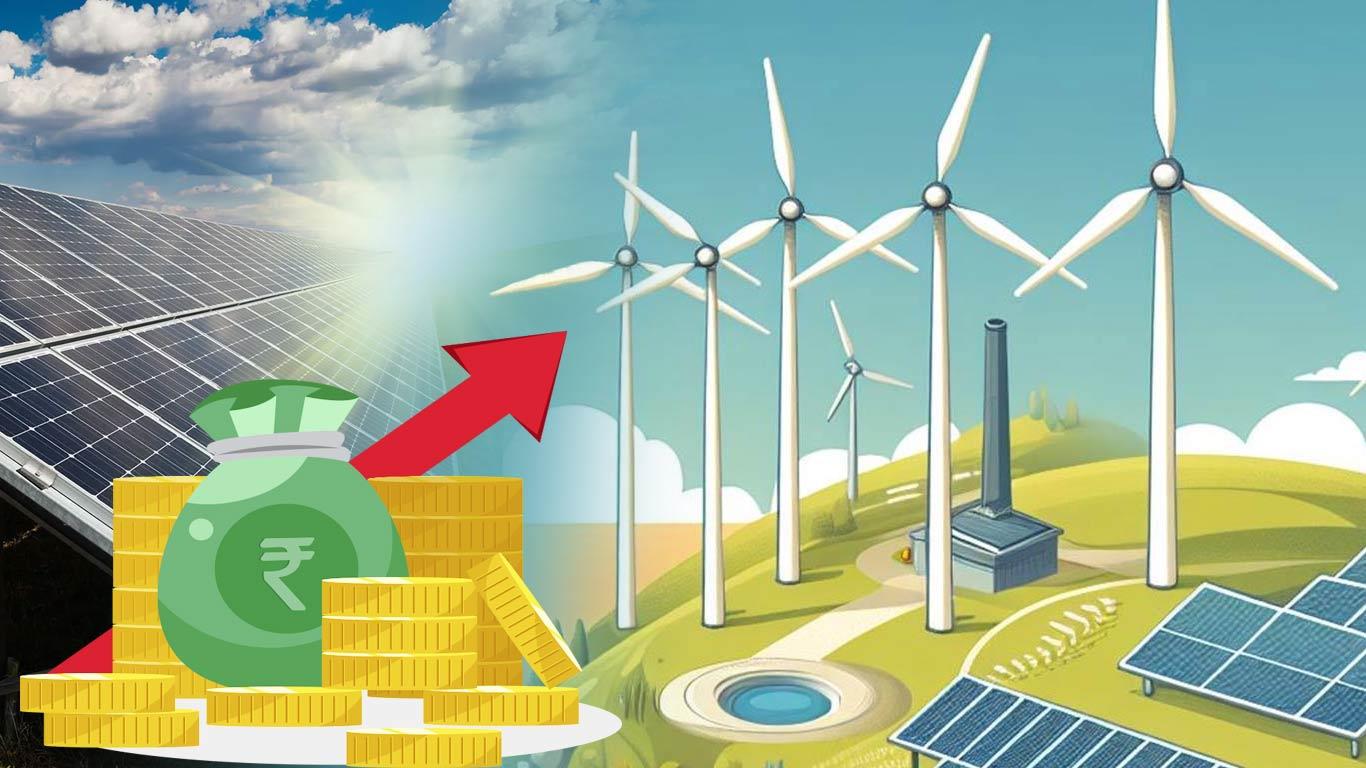
India's Clean Energy Transition Hinges On Debt Financing: IEEFA Report
(MENAFN- KNN India)
New Delhi, Apr 7 (KNN) India's ambition to achieve 500 GW of renewable energy capacity by 2030 and 60 per cent non-fossil fuel share by 2035 will depend not just on policy and technology, but critically on the structure of debt financing, according to a report by Institute for Energy Economics and Financial Analysis (IEEFA).
The 'Financing the Energy Transition: A Credit Perspective on India's Power Sector' report highlights that India's credit markets are already distinguishing between renewable and thermal power assets, with growing implications for corporate balance sheets and investment flows.
The report analyses financial indicators for eight key power generators-Adani Green Energy Limited (AGEL), Adani Power, JSW Energy Limited (JSWEL), ReNew Power, NLC India Limited (NLCIL), NTPC Limited, SJVN Limited and Tata Power-which together account for roughly one-third of India's installed capacity.
Rising Investment Needs
Annual investments in renewables, storage and transmission are projected to rise sharply-from about USD 68 billion by 2032 to nearly USD 145 billion by 2035.
Given the capital-intensive and long-term nature of renewable projects, access to long-tenor, low-cost debt will be critical in determining the pace of capacity addition.
Kevin Leung, Sustainable Finance Analyst, Debt Markets, IEEFA – Europe, and a Co-author of the report said,“The power sector is already among the largest borrowers in India's domestic debt markets, and this role is likely to expand as investments accelerate. In this context, transition planning is, fundamentally, a question of debt market planning.”
“The availability, tenor and cost of debt will decide how fast capacity can be added - and who gets left behind,” Leung added.
Shift in Credit Dynamics
The study finds a widening credit gap between clean and thermal energy assets. Renewable-focused companies benefit from stronger margins due to zero fuel costs and enjoy better access to global financing and institutional investors.
In contrast, thermal power assets are increasingly being excluded from international capital markets. Notably, USD-denominated bonds from Indian utilities are now largely tied to renewable or hydro assets, reflecting a structural shift in investor preference.
For instance, AGEL has consistently outperformed Adani Power in profitability metrics, while renewable arms of utilities are showing stronger financial performance compared to legacy thermal operations.
Co-author Soni Tiwari, Energy Finance Analyst (India), IEEFA, noted, AGEL consistently outperforms Adani Power in EBITDA margins, while NTPC Green surpasses NTPC's thermal operations, reflecting a structural shift in power generation economics that will strengthen as renewable portfolios mature and deliver stable, contracted cash flows.
Funding Constraints and Risks
The report notes that financially weaker companies may face dual challenges-limited ability to fund transition strategies and shrinking access to capital. While state-backed entities like NTPC Limited and SJVN Limited benefit from implicit government support, private players could face tighter financing conditions.
India's corporate bond market, despite large issuance volumes, remains underdeveloped. Power utilities rely on loans for nearly 80 per cent of their debt, indicating significant untapped potential for bond-based financing.
Need for Domestic Capital Base
The report cautions against over-reliance on international capital, which can be volatile during geopolitical stress. It underscores the importance of building a stable domestic funding ecosystem led by long-term institutional investors such as pension and insurance funds.
NTPC's Strategic Role
NTPC Limited is seen as central to mobilising large-scale transition finance. With a planned capital expenditure of around Rs 7 trillion (USD 80 billion) through FY2032 and a sovereign-aligned credit rating, it is well-positioned to anchor low-cost funding and catalyse broader investment across the sector.
“If NTPC can demonstrate credible transition to a clean energy company, it would facilitate broader capital flows via a coherent transition finance agenda alongside other catalytic efforts,” said Co-author Saurabh Trivedi, Lead Specialist, Sustainable Finance & Carbon Markets, IEEFA - South Asia.
(KNN Bureau)

Legal Disclaimer:
MENAFN provides the
information “as is” without warranty of any kind. We do not accept
any responsibility or liability for the accuracy, content, images,
videos, licenses, completeness, legality, or reliability of the information
contained in this article. If you have any complaints or copyright
issues related to this article, kindly contact the provider above.
Most popular stories
Market Research

More Story








Comments
No comment