




403
Sorry!!
Error! We're sorry, but the page you were looking for doesn't exist.
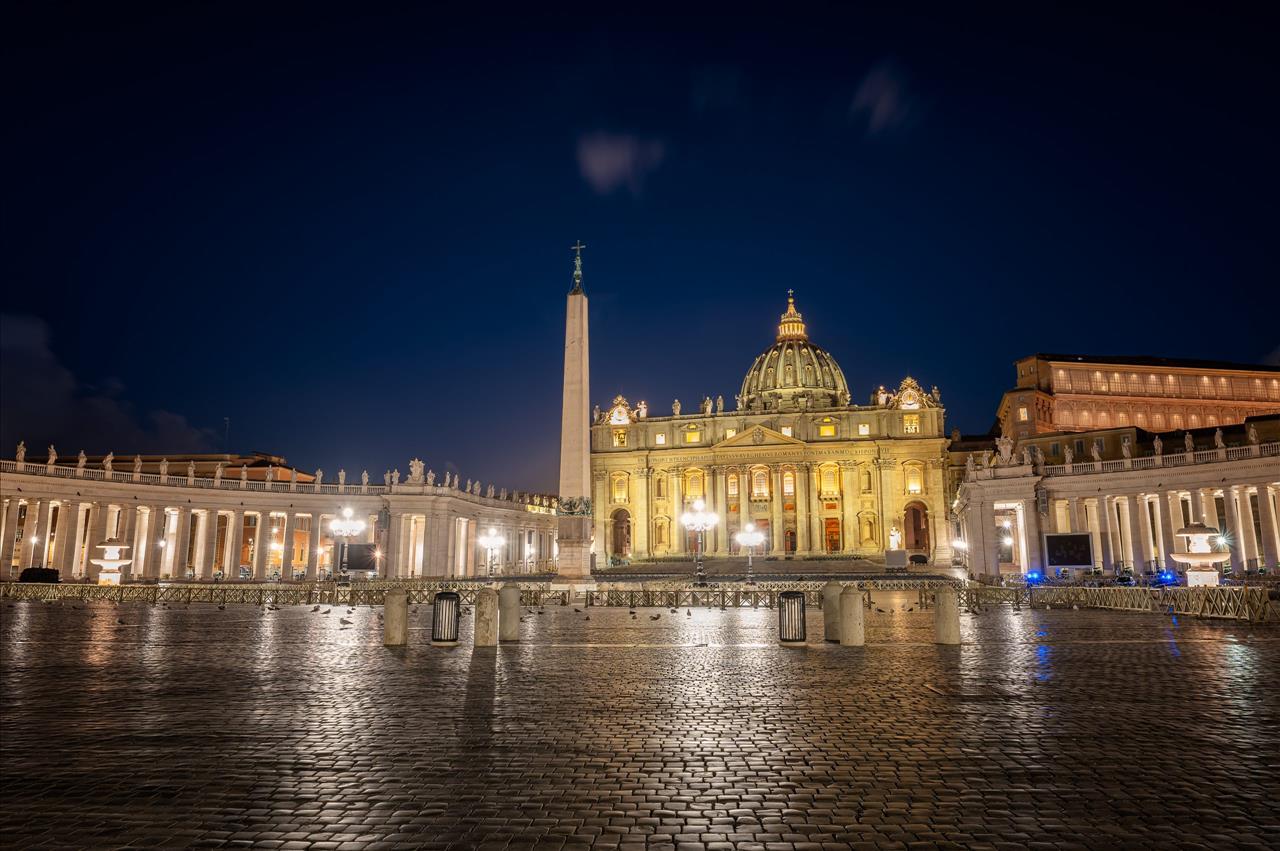
Were The Popes Art History's Ultimate Collectors?
(MENAFN- USA Art News)
Bernini and Pope Urban VIII: A Rome Exhibition Reconsiders Patronage as Power
In 1623, shortly after his election, Pope Urban VIII called in a 25-year-old sculptor whose talent was already turning heads in Rome. Addressing Gian Lorenzo Bernini (Italian, 1598–1680), the new pontiff reportedly framed the moment as mutual destiny: good fortune for the artist to see Cardinal Maffeo Barberini become pope, and an even greater fortune for the papacy to have Bernini working under his reign.
That charged encounter sits at the center of“Bernini i Barberini,” a new exhibition at the Gallerie Nazionali di Arte Antica at the Palazzo Barberini in Rome. The show examines one of the most consequential alliances in early modern art: an artist whose imagination could give stone and bronze the pulse of flesh, and a patron determined to project the authority of the Roman Catholic Church through spectacle, architecture, and urban theater.
Over the next two decades, Bernini's career expanded dramatically in Urban's service. Already celebrated as a sculptor, he moved decisively into architecture and city-making, helping to shape the visual language of the Baroque in ways that still define Rome's public face. After Urban's death, Bernini continued producing major works for other 17th-century popes, extending his influence across successive pontificates.
The exhibition's premise is straightforward but potent: in Baroque Rome, patronage was not merely support for the arts, but a governing strategy. Co-curator Andrea Bacchi describes the ambition of the period in blunt terms, calling it“sort of megalomaniacal.” Rome, he notes, was not a vast metropolis, yet its leaders commissioned outsized buildings and monumental projects to make power visible.
That logic remains legible to anyone walking the city today. The palazzos and piazzas, the choreographed vistas, the bridges and fountains animated by sculpture, and the chapels that shift from quiet intimacy to sudden radiance all speak to a Rome designed as an experience. Francesca Cappelletti, director of Galleria Borghese in Rome, puts it succinctly:“Rome was a great theater to stage art by the popes.” The city, she adds, was continually modeled and remodeled through papal commissions.
Among Bernini's most emblematic achievements is the towering baldacchino in St. Peter's Basilica, a roughly 100-foot-tall structure that anchors the church's interior. Bernini was still in his 20s when Urban VIII entrusted him with the commission, a reminder of how quickly the sculptor became indispensable to the papal image-making machine.
“Bernini i Barberini” also opens onto a larger question that has long hovered over Rome's cultural history: should the popes be considered among the greatest art patrons of all time? Bacchi argues that pontiffs were exceptionally effective in using art as“visual propaganda,” spending heavily to make Rome“the most splendid city in Europe.”
The comparison is tempting. Monarchs such as Russia's Catherine the Great, France's Louis XIV, and England's Charles I are routinely cited as titanic collectors who shaped taste and amassed extraordinary holdings. Yet the papacy's influence unfolded across centuries, with successive popes commissioning, collecting, and institutionalizing art in ways that fused devotion, politics, and public display.
The exhibition's historical frame reaches back to earlier precedents. The Sistine Chapel, now the Vatican Museums' most famous destination, began as a private chapel for Pope Sixtus IV (r. 1471–1484), often described as the first“collector-pope.” He invited artists including Botticelli and Perugino to paint its walls and helped seed Rome's civic collections by donating an ancient bronze she-wolf, a symbol of the city, to what would become the Capitoline Museum, widely regarded as Europe's first national public institution.
Pope Julius II pushed the scale further, initiating construction of St. Peter's Basilica in 1506 and commissioning Michelangelo to paint the Sistine Chapel ceiling in 1508, a project completed over the next four years. Julius II also enlisted an emerging artist, Raffaello, to redecorate his private suite with immersive fresco cycles - a vast undertaking that unfolded over 16 years.
Under Pope Leo X (r. 1513–1521), a Medici, the building campaign at St. Peter's accelerated, and Raphael was appointed Rome's first curator of antiquities, charged with safeguarding archeological materials, according to Bacchi.
Seen against that longer arc, the Bernini-Barberini partnership reads less like an exception than a peak moment in a sustained papal tradition: art deployed as theology, persuasion, and civic identity.“Bernini i Barberini” invites visitors to look past the familiar grandeur and ask what, precisely, these commissions were built to do - and why they still work.

Legal Disclaimer:
MENAFN provides the
information “as is” without warranty of any kind. We do not accept
any responsibility or liability for the accuracy, content, images,
videos, licenses, completeness, legality, or reliability of the information
contained in this article. If you have any complaints or copyright
issues related to this article, kindly contact the provider above.
Most popular stories
Market Research

More Story






Comments
No comment