







403
Sorry!!
Error! We're sorry, but the page you were looking for doesn't exist.
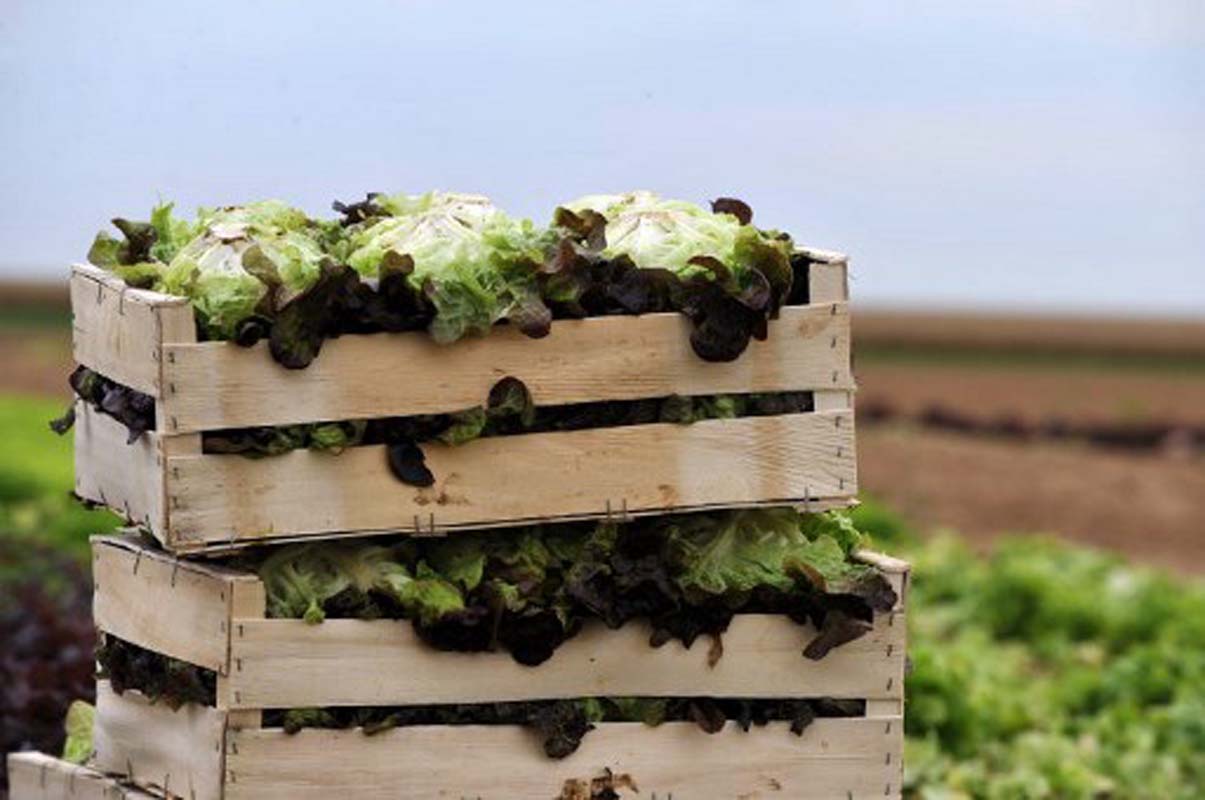
Middle East Conflict Imperils Global Food Supply Chain
(MENAFN) Global agricultural markets are buckling under the weight of escalating Middle East hostilities, as soaring energy costs and severe disruptions to tanker traffic through the Strait of Hormuz drive commodity prices sharply higher — raising alarm over the stability of the world's food supply.
Since U.S. and Israeli forces launched strikes on Iran on Feb. 28, prompting a series of retaliations from Tehran, the ripple effects across global energy, food, and commodity markets have intensified. The conflict has fractured supply chains and set off a cascading wave of price increases across the agricultural sector, spanning energy, fertilizer, and freight costs.
The pressure has grown severe enough to alter farming decisions on the ground. Producers are reconfiguring crop rotations in response to surging input costs — a structural shift that analysts warn could reshape global agricultural output for seasons to come. With nitrogen-based fertilizer prices climbing steeply, farmers are increasingly expected to pivot toward less fertilizer-intensive crops such as soybeans, while corn and wheat planting areas — particularly in the United States — are forecast to contract.
The S&P GSCI Agriculture global benchmark index (SPGSAG) has climbed approximately 4.1% since hostilities began, rising from 345.47 on Feb. 27 to 368.83 on March 27. Over the same period, wheat gained 2.3%, corn 4.1%, and rice 3.2% per bushel, while soybeans slipped 0.3%. Among softer commodities, sugar surged 13.7%, cotton 7.3%, and coffee 6% per pound, while cocoa bucked the trend, tumbling 11.9% per ton.
Rahmi Incekara, a macroeconomics expert at Istanbul-based Bahcesehir University, told media that the effective chokehold on the Strait of Hormuz poses a grave threat to agricultural output worldwide.
"Around 39% of the world's fertilizers transit via the strait, while countries in the region, namely Qatar, Iran, the United Arab Emirates, Saudi Arabia, and Bahrain, make up nearly half of the world's urea exports," he said. "Some 20% of diammonium phosphate, 10% of monoammonium phosphate, 25% of ammonia, and 30% of sulfur are shipped via this route, so a complete closure of the strait would seriously disrupt the global supply chain."
Incekara further warned that the current disruption already exceeds the scale of previous crises.
"Disruptions in fertilizers, urea, and energy supply chains created a food crisis risk deeper than the one that began with the Russia-Ukraine crisis in 2022," he said.
He stressed that the halt in strait shipments has already impacted 38% of the world's nitrate-based fertilizer supply and 20% of phosphate-based supplies, cautioning that even minor additional disruptions to nitrogen, phosphorus, and potassium flows could trigger irreversible damage to global crop yield projections. He also flagged Australia as particularly exposed, noting that with over 60% of its urea sourced from the Middle East, current national stockpiles risk depletion as early as mid-April.
Zeki Bayramoglu, a professor at Türkiye's Selcuk University, cautioned media that official food indexes have yet to capture the full force of the war's economic fallout.
"We can't really interpret the current situation as a direct 'food prices have surged' scenario but rather as the foundation for a 'second-round shock in food prices,'" he said, noting that the sharpest price reaction in the first month of the war has been in the fertilizer market.
He painted a stark picture of what prolonged disruption could mean for global markets: "If no alternative trade routes are found, we won't be dealing with just more expensive energy prices — the entire chain of fertilizers, feed, grains, vegetable oils, and animal proteins will be under pressure, and if tensions persist and no alternative route is implemented, the world will suffer from supply shock on top of inflation and on top of weakening growth," he added.
Since U.S. and Israeli forces launched strikes on Iran on Feb. 28, prompting a series of retaliations from Tehran, the ripple effects across global energy, food, and commodity markets have intensified. The conflict has fractured supply chains and set off a cascading wave of price increases across the agricultural sector, spanning energy, fertilizer, and freight costs.
The pressure has grown severe enough to alter farming decisions on the ground. Producers are reconfiguring crop rotations in response to surging input costs — a structural shift that analysts warn could reshape global agricultural output for seasons to come. With nitrogen-based fertilizer prices climbing steeply, farmers are increasingly expected to pivot toward less fertilizer-intensive crops such as soybeans, while corn and wheat planting areas — particularly in the United States — are forecast to contract.
The S&P GSCI Agriculture global benchmark index (SPGSAG) has climbed approximately 4.1% since hostilities began, rising from 345.47 on Feb. 27 to 368.83 on March 27. Over the same period, wheat gained 2.3%, corn 4.1%, and rice 3.2% per bushel, while soybeans slipped 0.3%. Among softer commodities, sugar surged 13.7%, cotton 7.3%, and coffee 6% per pound, while cocoa bucked the trend, tumbling 11.9% per ton.
Rahmi Incekara, a macroeconomics expert at Istanbul-based Bahcesehir University, told media that the effective chokehold on the Strait of Hormuz poses a grave threat to agricultural output worldwide.
"Around 39% of the world's fertilizers transit via the strait, while countries in the region, namely Qatar, Iran, the United Arab Emirates, Saudi Arabia, and Bahrain, make up nearly half of the world's urea exports," he said. "Some 20% of diammonium phosphate, 10% of monoammonium phosphate, 25% of ammonia, and 30% of sulfur are shipped via this route, so a complete closure of the strait would seriously disrupt the global supply chain."
Incekara further warned that the current disruption already exceeds the scale of previous crises.
"Disruptions in fertilizers, urea, and energy supply chains created a food crisis risk deeper than the one that began with the Russia-Ukraine crisis in 2022," he said.
He stressed that the halt in strait shipments has already impacted 38% of the world's nitrate-based fertilizer supply and 20% of phosphate-based supplies, cautioning that even minor additional disruptions to nitrogen, phosphorus, and potassium flows could trigger irreversible damage to global crop yield projections. He also flagged Australia as particularly exposed, noting that with over 60% of its urea sourced from the Middle East, current national stockpiles risk depletion as early as mid-April.
Zeki Bayramoglu, a professor at Türkiye's Selcuk University, cautioned media that official food indexes have yet to capture the full force of the war's economic fallout.
"We can't really interpret the current situation as a direct 'food prices have surged' scenario but rather as the foundation for a 'second-round shock in food prices,'" he said, noting that the sharpest price reaction in the first month of the war has been in the fertilizer market.
He painted a stark picture of what prolonged disruption could mean for global markets: "If no alternative trade routes are found, we won't be dealing with just more expensive energy prices — the entire chain of fertilizers, feed, grains, vegetable oils, and animal proteins will be under pressure, and if tensions persist and no alternative route is implemented, the world will suffer from supply shock on top of inflation and on top of weakening growth," he added.

Legal Disclaimer:
MENAFN provides the
information “as is” without warranty of any kind. We do not accept
any responsibility or liability for the accuracy, content, images,
videos, licenses, completeness, legality, or reliability of the information
contained in this article. If you have any complaints or copyright
issues related to this article, kindly contact the provider above.
Most popular stories
Market Research

More Story






Comments
No comment