




403
Sorry!!
Error! We're sorry, but the page you were looking for doesn't exist.
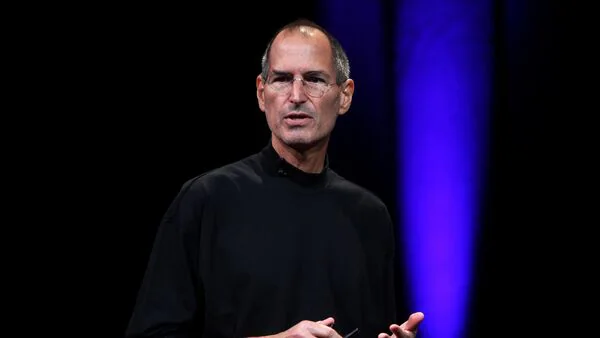
Quote Of The Day By Steve Jobs: 'Your Work Is Going To Fill A Large Part Of Your Life...'
(MENAFN- Live Mint) US-based technology giant and iPhone maker, Apple's co-founder and former Chief Executive Officer (CEO), Steve Job, delivered his commencement address and his famous words of wisdom to the college students at Stanford University more than 20 years ago.
Steve Jobs' quote comes to mind, and can be utilised by professionals, especially at a time of when work culture environments around the world is undergoing a shift. More and more people are prioritising work-life balance and resigning from what they perceive as“stressful work culture" to get away from the constant pressure of delivering results.
However, only a few people are aware that this widely shared quote was part of a much larger message delivered by Steve Jobs during the Stanford University Commencement Address. The line about loving your work was not just motivational advice; it formed part of a broader reflection on life, purpose, and the courage to follow one's intuition.
Quote of the day by Steve Jobs“Your work is going to fill a large part of your life, and the only way to be truly satisfied is to do what you believe is great work.”
What does the quote mean?The quote comes from a famous part of the Stanford University Commencement Address delivered by Steve Jobs in 2005, where he spoke about passion, purpose, and finding meaning in work.
During the address, Jobs emphasised that work occupies a significant portion of a person's life, so choosing something meaningful as a profession is crucial. If someone spends decades doing work they do not believe in, it can lead to frustration and dissatisfaction.
According to Jobs, genuine fulfillment comes from pursuing work that feels important and meaningful rather than simply chasing money or status.
Second, he explains that believing your work is“great work” requires passion and conviction. When people care deeply about what they do, they are more likely to push their boundaries, innovate, and sail through challenges. This passion often separates ordinary work from impactful work.
Finally, Jobs also stresses that the only way to produce great work is to love what you do. If someone has not yet found work they truly care about, he advises them to keep searching and not settle. In his view, personal satisfaction and professional excellence are closely connected, and discovering that purpose is key to a fulfilling career.
HDFC Bank executive resigns over differencesThe corporate world is increasingly placing a strong emphasis on work ethics. In one such instance, HDFC Bank part-time chairman Atanu Chakraborty resigned from his post at the second-largest bank of India this month, citing differences over“values and ethics”.
In his resignation letter, shared by HDFC Bank with the stock exchanges on late Wednesday, Chakraborty did not specify exactly what made him resign from the role. His letter was addressed to HDFC Bank's Chairman of Governance, Nomination, Remuneration Committee H K Bhanwala.
Similarly, Anthropic's head of the safeguards research team, Mrinank Sharma, on 9 February 2026, announced his resignation through a cryptic social media post, fueling mass speculation over the reasons for his sudden exit from the company.
Although Sharma did not give any specific reason for his decision, he said that the constant pressure forced him to set aside what mattered the most to him, indicating that he may be referring to his values.
Steve Jobs' early life and careerSteve Jobs was born on February 24, 1955 in San Francisco, California, and passed away on October 5, 2011. The former tech executive was known as a charismatic pioneer of the personal computer era.
Jobs was raised by adoptive parents in Cupertino, California, located in what is now known as Silicon Valley. He dropped out of Reed College, in Portland, Oregon, and took a job at Atari Corporation as a video game designer in early 1974, according to Britannica.
Steve Jobs started his business with another Steve, Steve Wozniak, building the blue boxes phone phreakers used to make free calls across the nation. The duo found Apple in 1976. The began their business by selling Apple I, which was a kit for building a PC.
Also Read | Quote of the Day: Albus Dumbledore's word of wisdom on power - 'Those who are...' Also Read | Quote of the Day: Michelle Obama on owning your storyWith Wozniak doing most of the building and Jobs handling the sales, the two made enough money off the hobbyist market to invest in the Apple II. It was the Apple II that made the company, which was incorporated in 1977.
According to Investopedia, Apple was already making over $5 million in net income by 1979, solely on the strength of the Apple II. Then the company went public by 1980. Over the years, Apple's legacy kept on growing.
It was the first company to surpass the $1 trillion market capitalization mark, and later the $2 trillion and $3 trillion marks. The company's success was largely connected to the lessons learned from Steve Jobs.

Legal Disclaimer:
MENAFN provides the
information “as is” without warranty of any kind. We do not accept
any responsibility or liability for the accuracy, content, images,
videos, licenses, completeness, legality, or reliability of the information
contained in this article. If you have any complaints or copyright
issues related to this article, kindly contact the provider above.
Most popular stories
Market Research

More Story








Comments
No comment