




403
Sorry!!
Error! We're sorry, but the page you were looking for doesn't exist.
ING's Updated Forecasts Amid Energy Disruption
(MENAFN- ING)
Interim forecast update
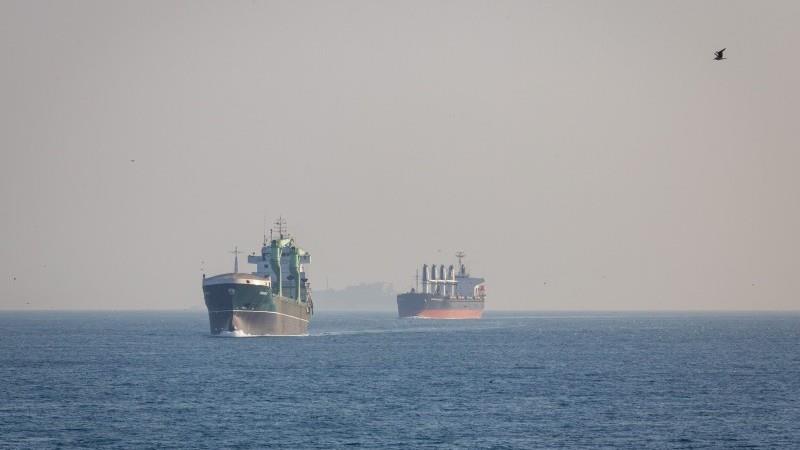
The war in the Middle East continues, and the Strait of Hormuz is practically blocked. Our initial base case assumptions from our March Monthly regarding the war have become outdated. We are normally not in the business of permanently changing our forecasts, but given that our next Monthly Update is only due in April, and we think that these times currently require some guidance, we have updated our full set of forecasts.
Three new scenariosWe have developed three new scenarios to guide our thinking and macro and market forecasts. In summary:
-
Scenario 1 (our new base case): Intensive combat will end within the next two weeks, but will be followed by lower intensity strikes that linger for several months. It's a scenario in which the opening of the Strait of Hormuz will take much longer than initially anticipated. The 'end game' in this scenario could be a temporary ceasefire or tacit stand‐down with maritime escorts and exploratory talks on sanctions. Regime change over time is still possible, driven from the inside, as in East Germany in the late 1980s.
Scenario 2 (optimistic alternative): War ends surprisingly earlier than in our new base case scenario and the Strait of Hormuz opens up within a short period.
Scenario 3 (longer war): Longer combat action followed by protracted, lower-grade, impulsive confrontation. That would imply a much more uncertain situation in the Strait. In this scenario, the 'end game' could be a hard‐won ceasefire with third‐party guarantees (likely involving Russia or China), the possibility of sequenced sanctions relief, and a maritime security regime for Hormuz. However, even then, a durable peace could remain elusive, and the region might settle into a fragile, flare‐up‐prone equilibrium.
In short, our base case scenario does not foresee structural damage to an oil or gas production facility. We are facing a delay in energy and other shipments, but not (yet) a structural reduction. Needless to say, if a delay lasts long enough, it can still lead to these structural reductions. Generally speaking and for the time being, this is still mainly a supply-side shock, pushing up inflation and posing new challenges for central banks. As a result, the upward revision to our inflation forecasts is clearly larger than the downward revisions of growth, and they also differ across regions. What these new scenarios mean for our market forecasts can also be found here.
Contact us directly to discuss more details of the underlying scenarios and their implications.
ING Global Forecasts GDP Forecasts CPI Forecasts Oil and Natural Gas Forecasts (avg)
Legal Disclaimer:
MENAFN provides the
information “as is” without warranty of any kind. We do not accept
any responsibility or liability for the accuracy, content, images,
videos, licenses, completeness, legality, or reliability of the information
contained in this article. If you have any complaints or copyright
issues related to this article, kindly contact the provider above.
Most popular stories
Market Research

More Story







Comments
No comment