



403
Sorry!!
Error! We're sorry, but the page you were looking for doesn't exist.
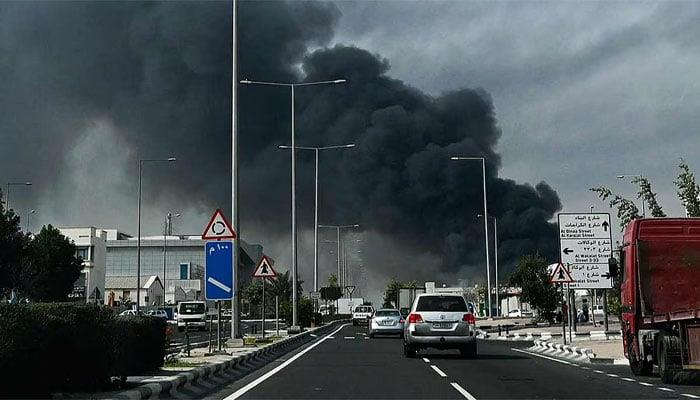
War Smoke, Toxic Skies: How Middle East Conflict Is Polluting The Planet
(MENAFN- Tribal News Network) -->
Since February 28, the ongoing war between Iran, Israel, and the United States has claimed thousands of lives, while thousands more have been injured. The conflict is also causing severe economic damage, particularly leading to rising petroleum prices across the world.
The use of various types of missiles, advanced drones, and other explosive materials in the war is not only causing loss of life and property but is also polluting the atmosphere, increasing the risk of various diseases.
On March 9, after the bombing of oil facilities in Iran, thick black clouds reportedly covered the sky and black rain fell from the atmosphere, prompting authorities to warn citizens.
Meanwhile, clashes are also continuing in the border areas between Pakistan and Afghanistan, with both sides carrying out attacks.
Artillery, modern drones, and other weapons are being used in these operations. This raises an important question: how does explosive material affect the environment? Let's find out.
What toxic gases are present in the smoke from explosions?
According to climate change expert Humaira Qasim, chemical reactions during explosions release various gases and particles into the atmosphere that are harmful to both the environment and human health.
Also Read: War on Iran, Pakistan–Afghanistan Cooperation Is More Urgent Than Ever
Gunpowder mainly consists of potassium nitrate, sulfur, and carbon. When it burns during an explosion, it produces gases such as carbon dioxide, carbon monoxide, sulfur dioxide, and nitrogen oxides. Fine solid particles and smoke are also released into the air.
These gases increase air pollution and can lead to acid rain, which can damage soil, aquatic life, and buildings. Carbon dioxide contributes to climate change, while carbon monoxide and fine particles can cause respiratory illnesses, eye irritation, and lung problems.
Oil tank fires: serious impacts on the environment and health
When oil reserves or storage tanks catch fire, large quantities of toxic and polluting gases are released.
Burning oil produces carbon dioxide, carbon monoxide, hydrocarbons, nitrogen oxides, sulfur dioxide, and polycyclic aromatic hydrocarbons. In addition, volatile organic compounds (VOCs) are released, which significantly worsen particulate pollution.
This pollution can cause smog and acid rain, while greenhouse gases accelerate climate change. Fine particles and toxic compounds can lead to respiratory diseases, lung disorders, irritation of the eyes and skin, and even increased cancer risks.
Is Pakistan safe from environmental risks?
Climate change researcher Humaira Qasim says that large-scale use of explosives, bombs, and other weapons during wars in regions such as the Middle East, Pakistan, and Afghanistan can negatively impact the environment.
Military activities and explosions release carbon dioxide, carbon monoxide, volatile organic compounds, sulfur dioxide, and nitrogen oxides into the air. These pollutants increase air pollution, particulate matter, smog, acid rain, and greenhouse gases.
Pakistan may also be affected due to geographical proximity, atmospheric circulation, and cross-border pollution, which can carry polluted particles and gases from one country to another.
If large-scale explosions or oil facility fires occur, smoke clouds can travel with wind currents and reach Pakistan, potentially worsening air quality, increasing health problems, and intensifying climate impacts.
Historical evidence: how wars have affected the environment
According to Professor Dr. Nafees from the Department of Environmental Sciences at the University of Peshawar, history provides several examples of wars severely damaging the environment.
On August 6, 1945, during World War II, the United States dropped the world's first atomic bomb on the Japanese city of Hiroshima, causing massive destruction and spreading radiation. More than 80,000 people were killed instantly, while tens of thousands later died due to radiation exposure.
Similarly, during the 1991 Gulf War between Iraq and Kuwait, attacks on oil refineries created massive clouds of black smoke in the atmosphere, and reports of black rain were recorded in some areas.
Black and acid rain: how dangerous can it be?
Professor Dr. Nafees explains that large-scale burning of oil or war-related attacks release toxic gases into the atmosphere, which can later cause acid rain.
These gases combine with water vapor in the air to form sulfuric acid and nitric acid, leading to black or acidic rainfall.
Such rain can harm humans, animals, trees, and crops, and may also block sunlight from reaching the Earth's surface, disrupting the natural environmental system.

Legal Disclaimer:
MENAFN provides the
information “as is” without warranty of any kind. We do not accept
any responsibility or liability for the accuracy, content, images,
videos, licenses, completeness, legality, or reliability of the information
contained in this article. If you have any complaints or copyright
issues related to this article, kindly contact the provider above.
Most popular stories
Market Research

More Story








Comments
No comment