




403
Sorry!!
Error! We're sorry, but the page you were looking for doesn't exist.
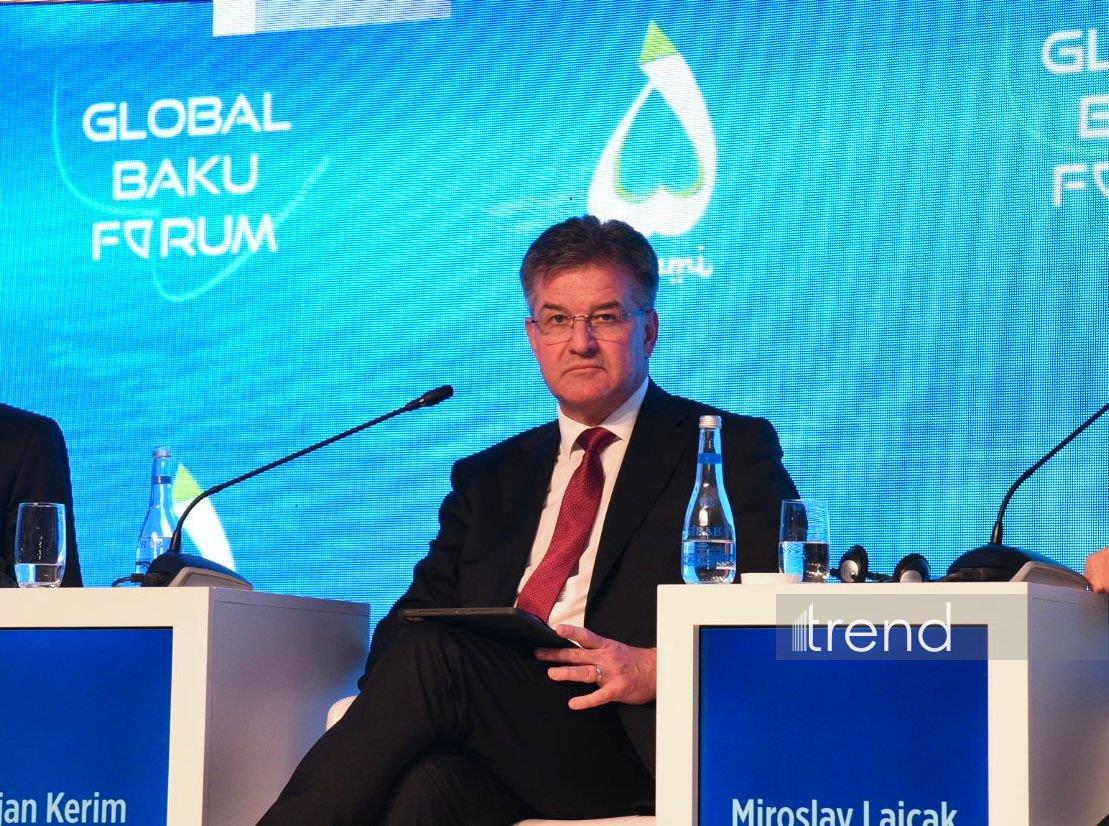
UN Architecture Fails XXI-Century Realities - President Of General Assembly's 72Nd Session
(MENAFN- Trend News Agency)
BAKU, Azerbaijan, March 12. The existing
architecture of the United Nations (UN) doesn't fully meet the
realities of the 21st century, President of the 72nd session of the
UN General Assembly Miroslav Lajcak said at the 13th Global Baku
Forum on "Bridging Divides in a World in Transition," Trend reports.
He asserts that numerous developing nations and whole regions are inadequately represented in the global governance framework and that the veto power of the Security Council is occasionally exploited or wielded for political ends.
"Any reform is contingent upon the actions of the member states
themselves. Transformation cannot occur without their approval. The
United Nations comprises 193 member states, which possess the
mandate to initiate reforms within the current framework," he
remarked.
Lajcak underscored that the pressing issue today is not the
necessity of the UN in the 21st century, but rather the approach to
modernizing the organization to meet present and forthcoming
challenges.
He stated that the initial action is to assess the agenda.
"We know that the UN has traditionally focused on security, development, and human rights. However, today, security is understood much more broadly than just military threats. It encompasses development, climate, health, and economic stability. For effective global governance, the organization must be prepared to address new challenges-such as artificial intelligence, digital governance, cybersecurity, global inequality, climate change, migration, mass displacement, and pandemic preparedness," he said.
He also noted that the second key focus should be reforming the UN's working mechanisms, particularly in terms of representation.
According to him, countries of the Global South must be given a stronger voice, especially in the Security Council.
"An equally important task is to provide the organization with the necessary resources and effective coordination mechanisms. The UN is often expected to deliver additional results without the corresponding financial and political support from the member states. This situation must change," Lajcak concluded.

Legal Disclaimer:
MENAFN provides the
information “as is” without warranty of any kind. We do not accept
any responsibility or liability for the accuracy, content, images,
videos, licenses, completeness, legality, or reliability of the information
contained in this article. If you have any complaints or copyright
issues related to this article, kindly contact the provider above.
Market Research

More Story


Comments
No comment