


![SANS Institute, Cloud Security Alliance, [Un]Prompted, And OWASP Genai...](/Updates/index/HTML_Images/NewsEN_MostPopular_img_4.png?1110991251)




403
Sorry!!
Error! We're sorry, but the page you were looking for doesn't exist.
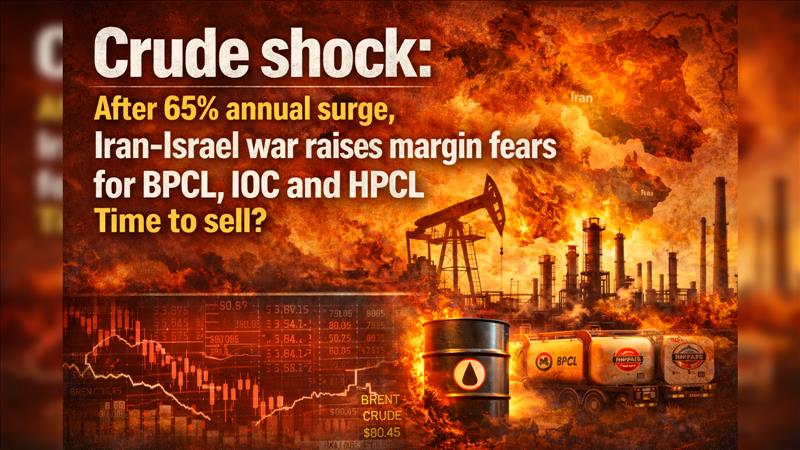
Oil Shock Fears Mount As Gulf Conflict Impact Spreads Far And Wide Arabian Post
(MENAFN- The Arabian Post)
By K Raveendran
Escalating hostilities between the United States, Israel and Iran are rapidly transforming a regional confrontation into a global economic and geopolitical crisis, raising the spectre of what many analysts are beginning to describe as a Third Gulf War. Tehran's early warning that Washington might possess the ability to ignite the conflict but lack the leverage to control its trajectory now appears to be gaining resonance as the conflict ripples across military, economic and strategic domains.
Military exchanges in and around the Persian Gulf have already underscored the asymmetry that has long defined the confrontation between Iran and its adversaries. While the United States and Israel retain overwhelming technological superiority, Iran has spent decades constructing a layered deterrence network built on missiles, drones, proxy forces and maritime disruption capabilities. That strategy has created a battlefield where traditional military victories offer little guarantee of strategic closure.
Washington and Tel Aviv are confronting a conflict landscape in which escalation carries consequences far beyond direct battlefield engagements. Iranian capabilities to target shipping lanes, energy infrastructure and allied bases across the region mean that even limited strikes risk triggering cascading retaliation. Such dynamics reinforce Tehran's long-standing strategic doctrine: if war comes, it will not remain contained.
Economic repercussions are already beginning to mirror that reality. Energy markets, historically sensitive to Gulf instability, are reacting sharply to the growing threat to global supply lines. Crude oil prices have surged toward the psychologically significant threshold of $100 a barrel, reflecting mounting fears that shipping routes through the Strait of Hormuz, the narrow maritime corridor through which roughly a fifth of the world's traded oil passes, could face disruption.
Even the perception of instability around Hormuz is enough to send shockwaves through commodity markets. Tanker insurance costs have risen, shipping companies are recalculating risk premiums, and energy traders are adjusting supply forecasts amid uncertainty about how far the conflict could escalate. The possibility of Iran attempting to disrupt maritime traffic through mines, missile strikes or drone attacks has become a central concern for energy-importing nations.
For the global economy, the timing could scarcely be worse. Many major economies are still navigating fragile recoveries shaped by high interest rates, supply chain adjustments and geopolitical fragmentation. A sustained spike in energy prices would compound inflationary pressures, forcing central banks to confront an unwelcome resurgence of cost-driven price increases.
See also India's Reliance On Imported Arms For Defence Is A ConcernAsia stands particularly exposed to such volatility. Countries such as China, India, Japan and South Korea rely heavily on Gulf energy supplies to power industrial production and transportation networks. Any disruption in shipments from the region would reverberate through manufacturing supply chains that underpin much of the world's trade. For Asian economies already balancing growth concerns against inflation risks, an oil shock could significantly complicate economic policy.
China's dependence on Middle Eastern energy imports makes the stability of Gulf shipping lanes a core strategic interest. Beijing has spent years expanding its diplomatic footprint across the region, positioning itself as a potential mediator while quietly strengthening maritime security arrangements. Yet a prolonged conflict between Iran and the United States would present Beijing with a dilemma: safeguarding energy supplies without becoming entangled in the geopolitical confrontation.
India faces similar vulnerabilities. Rapid economic growth has sharply increased its demand for crude oil, much of which is sourced from the Gulf. A sustained rise in prices would widen trade deficits, strain fiscal balances and potentially trigger domestic inflation pressures. Such outcomes carry political as well as economic implications for governments dependent on stable fuel prices to maintain social and economic stability.
Japan and South Korea, two advanced economies with limited domestic energy resources, also depend heavily on Middle Eastern crude shipments. For them, the Strait of Hormuz represents a strategic lifeline. Even minor disruptions could compel these countries to tap emergency reserves or seek alternative suppliers, actions that would tighten global energy markets further.
Beyond energy, the conflict is threatening to reshape global trade routes. Shipping companies operating between Europe and Asia have already begun factoring in higher security risks for vessels transiting Gulf waters. Insurance costs, rerouting strategies and security protocols are likely to escalate as tensions intensify. These developments add another layer of strain to global supply chains that have struggled to stabilise after years of pandemic-related disruption.
Financial markets are also responding to the growing uncertainty. Investors traditionally view geopolitical conflict in energy-producing regions as a trigger for volatility across currencies, equities and commodities. Energy stocks often surge amid expectations of higher oil prices, while sectors dependent on fuel, such as aviation and transportation, face mounting cost pressures. Currency markets in emerging economies particularly sensitive to oil imports can experience sudden swings as investors reassess risk.
See also Mending Fences With Bangladesh: Modi Has Taken The Right Move But The Task Is Too ToughStrategically, the unfolding confrontation underscores the limits of conventional military power in modern conflict environments. Iran's approach has been shaped by decades of sanctions, isolation and technological asymmetry. Rather than attempting to match the United States militarily, Tehran invested in a strategy designed to impose costs indirectly. Missile arsenals capable of reaching regional bases, alliances with non-state actors across the Middle East and the ability to disrupt maritime trade routes form the backbone of that doctrine.
Israel, for its part, views Iran's regional network as an existential threat that must be contained or dismantled. The strategic rivalry between the two countries has expanded far beyond direct military confrontation, encompassing cyber operations, intelligence campaigns and proxy battles across multiple theatres. Any escalation involving the United States risks drawing this wider network of actors into the conflict.
What makes the present moment particularly volatile is the interconnected nature of these dynamics. Military escalation feeds economic disruption, which in turn shapes political calculations across multiple continents. Governments far removed from the Gulf are already evaluating contingency plans to mitigate the fallout from rising energy costs and trade disruptions.
The prospect of an oil shock carries historical echoes. Past conflicts in the Middle East, from the 1973 oil embargo to the Gulf War of the early 1990s, triggered sharp spikes in crude prices that reverberated through the global economy. Inflation surged, growth slowed and energy security became a central focus of national policy. The current crisis threatens to recreate similar pressures in a world that is even more economically interconnected.
Unlike earlier eras, however, the global economy now operates within a complex web of supply chains, financial markets and digital networks that amplify the speed with which shocks propagate. A disruption in one region can cascade rapidly through production systems and financial institutions worldwide. That reality magnifies the stakes of any prolonged confrontation in the Gulf. (IPA Service)
The article Oil Shock Fears Mount As Gulf Conflict Impact Spreads Far And Wide appeared first on Latest India news, analysis and reports on Newspack by India Press Agency).

Legal Disclaimer:
MENAFN provides the
information “as is” without warranty of any kind. We do not accept
any responsibility or liability for the accuracy, content, images,
videos, licenses, completeness, legality, or reliability of the information
contained in this article. If you have any complaints or copyright
issues related to this article, kindly contact the provider above.
Most popular stories
Market Research

More Story







Comments
No comment