





403
Sorry!!
Error! We're sorry, but the page you were looking for doesn't exist.

Middle East Tensions Surge After Iran Strikes Arabian Post
(MENAFN- The Arabian Post)
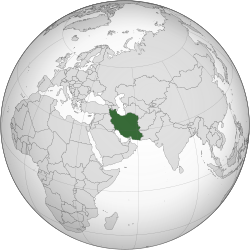
Fears of a widening war gripped capitals across the Middle East after United States and Israeli forces carried out coordinated strikes on Iranian military infrastructure, prompting sharp warnings from Tehran and renewed anxiety over global security and energy markets.
Confusion spread further after unverified claims circulated online about the fate of Iran's Supreme Leader, Ayatollah Ali Khamenei. Authorities in Tehran moved to dismiss speculation about his death, and no credible confirmation has emerged to substantiate those reports. Iranian state media continued to broadcast statements attributed to senior officials, while analysts cautioned against amplifying unverified information in an already volatile environment.
The strikes, described by Washington as targeted actions against facilities linked to missile production and regional proxy coordination, mark one of the most direct confrontations between the adversaries in years. Israeli officials said the operation was aimed at degrading Iran's capacity to arm allied groups across Lebanon, Syria, Iraq and Yemen. Tehran condemned the attacks as an act of aggression and signalled that retaliation would be“measured but firm”.
World leaders responded with guarded language, urging restraint while bracing for possible escalation. European governments called for de-escalation and diplomatic engagement, while Gulf states intensified security consultations amid concerns that energy infrastructure and shipping lanes could become collateral targets. The United Nations Secretary-General appealed for all sides to avoid steps that could spiral into broader conflict.
Markets reacted swiftly. Brent crude prices rose sharply in early trading before moderating, reflecting investor anxiety over potential disruptions to the Strait of Hormuz, through which a significant share of global oil exports passes. Shipping insurers reviewed risk assessments for vessels transiting the Gulf, and several airlines rerouted flights to avoid Iranian and neighbouring airspace.
See also Saudi Arabia advances desert shale pushSecurity experts say the immediate question is whether Tehran opts for direct retaliation or relies on allied non-state actors across the region. Iran maintains close ties with Hezbollah in Lebanon, armed groups in Iraq and Syria, and the Houthi movement in Yemen. Previous confrontations have seen calibrated responses designed to signal resolve without triggering full-scale war. Whether that pattern holds will shape the trajectory of the crisis.
Speculation about the health or status of Ayatollah Khamenei has added another layer of uncertainty. At 85, he has led Iran since 1989 and remains the country's ultimate decision-maker on military and strategic matters. Any confirmed change in his condition would carry profound implications for Iran's internal balance of power. The Assembly of Experts, a clerical body constitutionally tasked with appointing the Supreme Leader, would be central to any succession process. However, analysts stress that succession planning in Iran has long been opaque, and abrupt transitions could intensify factional competition within the political establishment.
Within Iran, state television aired footage of senior commanders visiting military sites, projecting continuity and control. Officials framed the strikes as proof of what they describe as Western hostility, seeking to rally domestic unity. Yet economic pressures, including inflation and currency weakness, complicate Tehran's strategic calculus. Prolonged confrontation risks further sanctions and financial isolation at a time when the leadership is already grappling with social discontent.
For Israel, the operation reflects a long-standing doctrine aimed at preventing Iran from entrenching militarily across the region. Israeli leaders have repeatedly signalled that they will act unilaterally if they perceive existential threats. Washington's involvement underscores the depth of security coordination between the two allies, even as American officials have publicly emphasised that they do not seek regime change in Tehran.
See also Middle East funds tilt further towards private marketsGlobal security analysts warn that miscalculation poses the greatest danger. Direct clashes between state actors carry higher risks than shadow conflicts conducted through proxies. A strike on energy facilities, attacks on shipping, or missile exchanges across borders could draw in additional powers and destabilise already fragile theatres from Lebanon to the Gulf.
Diplomatic channels remain active behind the scenes. Regional intermediaries, including Oman and Qatar, have historically played roles in facilitating indirect communication between Tehran and Washington. Whether those channels can contain the fallout will depend on each side's assessment of costs and red lines.
Questions about how long the crisis will endure and whether it could expand into a broader confrontation dominate policy circles. Much hinges on Tehran's response and Washington's tolerance for escalation. Equally significant is the internal cohesion of Iran's leadership at a moment when rumours and uncertainty amplify strategic risk.
Notice an issue? Arabian Post strives to deliver the most accurate and reliable information to its readers. If you believe you have identified an error or inconsistency in this article, please don't hesitate to contact our editorial team at editor[at]thearabianpost[dot]com. We are committed to promptly addressing any concerns and ensuring the highest level of journalistic integrity.

Legal Disclaimer:
MENAFN provides the
information “as is” without warranty of any kind. We do not accept
any responsibility or liability for the accuracy, content, images,
videos, licenses, completeness, legality, or reliability of the information
contained in this article. If you have any complaints or copyright
issues related to this article, kindly contact the provider above.
Most popular stories
Market Research

More Story





Comments
No comment