




403
Sorry!!
Error! We're sorry, but the page you were looking for doesn't exist.
Mothers Call For Expansion Of Malnutrition Treatment Services
(MENAFN- Pajhwok Afghan News)
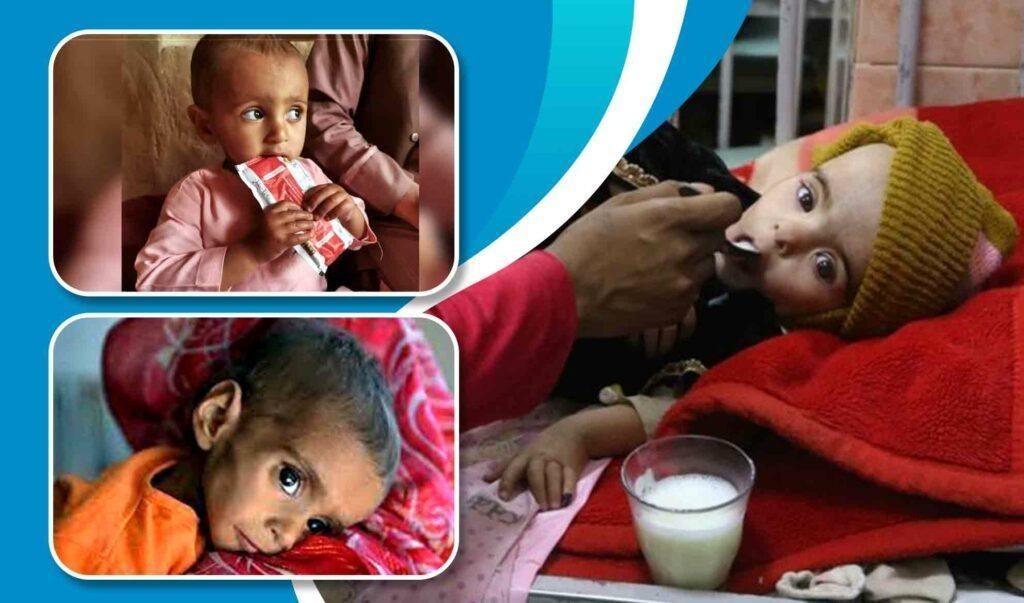
KABUL (Pajhwok): Some mothers of children suffering from malnutrition have welcomed the services currently available at health centres in this area, but are calling for their expansion.
Meanwhile, the spokesman for the Ministry of Public Health (MoPH) says services have increased, adding that nearly three million mothers and children suffering from malnutrition were treated over the past year.
Mothers of children with malnutrition
Gul Chehra (not her real name), the mother of a malnourished child, said while standing in a queue at a centre distributing specialised nutritional supplements for children:“Out of three meals, we eat only one; sometimes bread with sweet tea and sometimes thin soup. Some days even that is not available. I have three children; all of them are like this.”
She said her husband works as a daily labourer and struggles to meet the family's expenses.
Although satisfied with the nutritional services provided, Gul Chehra called for their expansion, adding:“May God reward them; every Saturday I come here for my child's nutritional supplies. Since he started eating them, he has regained strength, thanks be to God.”
Similarly, Afsana Naqibi, a resident of Kabul, whose daughter had suffered from malnutrition, said:“I had a formal job and used to take my daughter to nursery. There she was neglected and gradually lost weight. I was very worried. One day a colleague told me to take her to a malnutrition treatment centre.”
She said she took her daughter to a treatment centre in the Khair Khana area of Kabul, where she received care.
She added:“The malnutrition services for children are good. When I took my daughter there, they measured her weight and height and confirmed she was malnourished. Generally, the services include weighing, measuring height, providing nutritional supplements and giving advice to mothers. I took my daughter for about six sessions, and during those sessions they gave her nutritional supplements called RUTF.”
Naqibi praised the services and urged the MoPH to expand them further.
Khujasta, a resident of the Taimani area of Kabul, said her daughter was weak, underweight and had no appetite and slept poorly. After consulting a doctor, it was confirmed that she was suffering from malnutrition.
She added:“One of my colleagues told me that nutritional supplements are distributed at clinics and that I should take my daughter for treatment. She remained under treatment there for six months.”
She said:“My daughter is four years old. At first she weighed eleven kilograms, which was very low. After we realised the problem and she received nutritional supplements several times and was taken to the doctor, thank God her weight has now reached fourteen and a half kilograms.”
She also asked the Islamic Emirate of Afghanistan (IEA) to pay greater attention to children suffering from malnutrition and to expand treatment programmes.
Zarmina, a resident of Kart-i-Naw in Kabul, who suffers from anaemia, said:“Doctors told me that I am severely anaemic. I have three children and underwent surgery for all three of them; as a result, I became very anaemic.”
She said that during her pregnancies she was under medical supervision and doctors prescribed iron tablets, but she still suffers from anaemia.
She complained about poor economic conditions, saying that during pregnancy she was unable to obtain sufficient iron-rich foods.
Zarmina also called for the expansion of malnutrition treatment centres for women and children.
Causes of malnutrition
According to Professor Mohammad Arif Hassanzai, Head of the Internal Medicine Department at the Indira Gandhi Institute of Child Health in Kabul, malnutrition occurs when the body does not receive adequate and balanced amounts of food, energy, protein, vitamins and minerals, or receives them in excess, in a way that disrupts health, growth and normal bodily functions.
He said severe weight loss, stunted growth for age, extreme thinness, swelling of the hands and feet, lethargy, general weakness, lack of appetite or interest in play, hair loss and thinning, skin lesions and a pale complexion are among the signs of malnutrition in children.
He added that one type of malnutrition is wasting, in which only skin and bones remain and the child's face resembles that of an elderly person.
The second type is oedematous malnutrition, in which the body becomes swollen with fluid. In the third type, the child suffers from severe wasting in the chest area as well as swelling in the hands and feet.
Around 3 million cases of malnutrition recorded last year
Dr Sharafat Zaman, spokesperson for the MoPH, told Pajhwok:“At the beginning of 2025, some foreign agencies estimated the number of children and pregnant women suffering from malnutrition at around 3.7 million. However, data we received at the end of 2025 from 3,200 health sites across the country providing malnutrition services show that the number of pregnant and breastfeeding mothers and children suffering from malnutrition is around three million.”
According to him, of the three million cases, 1.3 million are moderate, 700,000 are severe, and just under one million involve pregnant and breastfeeding mothers suffering from acute and moderate malnutrition.
He spoke of increased service provision in this field, saying that before the IEA came to power, 800 health centres were active in this area, but today that number has reached 3,200.
He said:“Our aim is to ensure that mothers and children currently suffering from malnutrition receive proper care and services. We are striving to produce the necessary nutritional supplements for malnourished mothers and children within the country. Most importantly, with the assistance of health organisations, we seek to provide sustainable services for those affected.”
Zaman described raising public awareness about malnutrition as essential, adding that awareness and prevention programmes in this field will also be expanded.
sa

Legal Disclaimer:
MENAFN provides the
information “as is” without warranty of any kind. We do not accept
any responsibility or liability for the accuracy, content, images,
videos, licenses, completeness, legality, or reliability of the information
contained in this article. If you have any complaints or copyright
issues related to this article, kindly contact the provider above.
Most popular stories
Market Research

More Story



Comments
No comment