




403
Sorry!!
Error! We're sorry, but the page you were looking for doesn't exist.
Beyond The Spreadsheet: Omnicom's PR Agency Mergers Face EMEA Integration Test
(MENAFN- PRovoke)
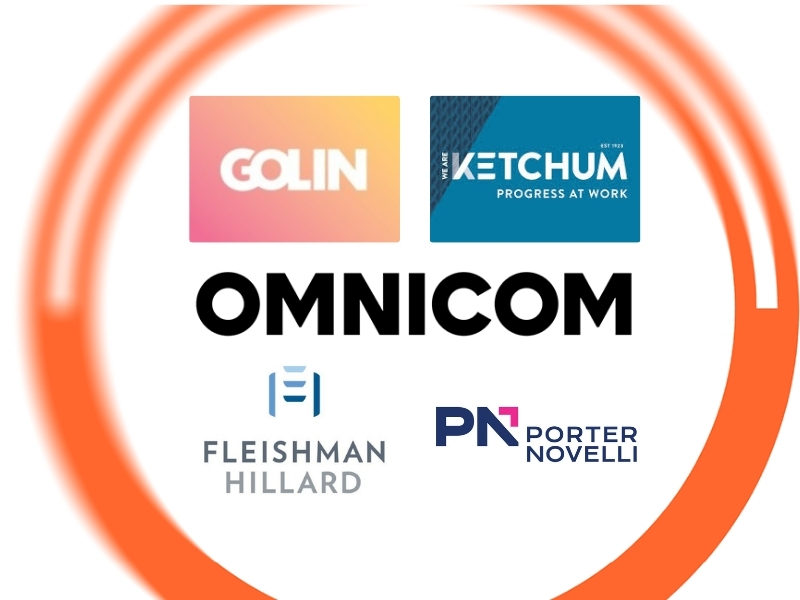
Omnicom's decision to merge Ketchum and Golin while folding Porter Novelli into FleishmanHillard is being framed as a logical next step following its acquisition of IPG. But in EMEA, where agency market positions, regulatory frameworks and ownership structures differ sharply by country, the move looks less like a straightforward consolidation and more like a multi-layered integration exercise that will take years to fully resolve.
In several European markets, the separate Ketchum, FleishmanHillard and Porter Novelli brands don't really exist: Italy, for example, has long functioned under a successful combined OPRG model, raising the question of whether the newly announced structure will materially change day-to-day operations in some markets while triggering far greater disruption in others.
Meanwhile, Ketchum's strong footprint in Germany and Austria contrasts with Golin's historically lighter presence in those markets, suggesting that brand equity and local positioning challenges may play out unevenly across the region. In Brussels, where FleishmanHillard and Weber Shandwick (which is as yet untouched by the consolidation) maintains a particularly strong public affairs operation, the balance of power inside the new structures will also be closely watched.
Middle Eastern markets present additional structural considerations, where legacy ownership arrangements and local holding structures may complicate integration.
Overlaying these structural realities is the broader financial pressure driving holding company consolidation globally. Following the Omnicom/IPG deal, investors expect to see measurable cost savings and operational synergies, but as many industry observers note, the harder question is whether those efficiencies can be achieved without undermining the talent, culture and client continuity that built the agencies being merged in the first place.
Former FleishmanHillard UK and Middle East CEO Jim Donaldson, now an independent consultant, says the mergers are a classic holding company move:“This announcement was overdue and no doubt in the works for some time. Having worked at the holding companies I see the logic. When you exist in the world of spreadsheets and quarterly results, you are rigidly focused on costs and the short term. What clients might want and how your people feel may be important, but it is always secondary.
“But there is also a playbook for how this is going to work and it makes me sad that we will lose these two long standing brands from the industry. The playbook goes as follows: an announcement spun to make it sound like it is good for clients and staff when it is clearly neither of those things; a quiet period of consolidation where support service people and others are made redundant and the agency tries to hold on to clients (often with very mixed results); the departure of the senior leadership after about 18 months and then the disappearance of the subsumed brand within two to three years.
“Just look at the situation with Hill & Knowlton – a brand where I spent over a decade. Their current website still lists a CEO who has left the business and the last piece of 'news' is her appointment two years ago. Clearly WPP and Burson are not spending any time thinking about where that brand is going. I fear the same thing will happen here. The only thing that may affect that is Matt Neale, who is one of the smartest and most astute leaders in our industry. But I won't be holding my breath.”
Ultimately, says Donaldson,“It is all a bit King Canute for me too. The industry is undergoing a fundamental shift across a number of areas and a move to bigger, more financially driven brands will not stop the tide of change. We don't need networks in the same way we used to, clients want people at the end of a screen (mostly) who will solve their problems wherever they are from. A network may have the best operation in a single market for a specific type of client (I give you FleishmanHillard in Brussels for example), but that doesn't mean that the client will then be inclined to use that network elsewhere. It doesn't work like that any longer.”
He also questions the attraction of the networks versus the independents for those looking to build a career in our industry:“I don't see it. Without the best talent, you cannot do the best work and so clients will start to look for new solutions – and so the vicious circle continues. Let's see what happens next but I know where my chips would be placed.”
Independent consultant Rod Cartwright, who was at Ketchum from 2007-2017, including seven years as a global partner and director of the agency's global corporate practice, says the consolidation was widely expected but raises longer-term structural questions:“Following the Burson/H&K integration over at WPP – and given the sheer number of PR brands within the overall post-merger OPRG stable – it was always a question of when, not if, Omnicom would follow suit. After all, in perhaps the most intense wave of marketing services consolidation in living memory, it would have looked odd not to crunch and bunch.
“Faced with an ever-more acute pincer movement of aggressive competitive encroachment by big tech and management consulting – and with all the holding groups' stock price under sustained pressure – these dynamics doubtless make sense on a Madison Avenue spreadsheet. However, investors' non-committal reaction to both the overall OMC/IPG deal and these latest developments may suggest that these moves raise as many questions as they provide answers to them.”
Among these questions, says Cartwright, ishow truly compelling to clients is the 'first do no harm' proposition behind Chris Foster's benchmark for year one success:“no disruption to clients and faster access to the right expertise”?
"When the volume and frequency of global AOR briefs has declined over the years, does scale have real value in and of itself, particularly when MNC clients can potentially take an agentic self-build path themselves? When 100-year-old agency brands are seemingly dispensable, is there much enduring role for brand portfolios or have we entered the era of capability and tech stacks?
“And crucially for any merger integration and communication – at which big agency land rarely excels – can the new entities truly harness and motivate their human talent, once the inevitable wave of job cuts has subsided.”
Even among insiders who broadly support consolidation, execution risk remains a central concern. One alumnus of the agencies involved in the mergers says:“The modernisation of the holding company agency model is long overdue and this move is a step in the right direction, however it does come with significant risk to both clients and talent. In regards specifically to the Golin Ketchum merger, there is a wide acknowledgement in the industry, that for the past few years, in the UK especially, Ketchum has lost its standing as a culture-first, people-first business so this ultimately comes down to strong leadership which Golin has in spades.
“And on that basis, the merger makes total sense. The key will be to land on the right branding fast, harness and keep the best talent, all whilst steadying the ship with clients as quickly as possible.”
Another alumnus is more sceptical about the strategic rationale:“Given a merger between Golin and Ketchum was the worst kept secret in PR, could it have been an any more unimaginative first announcement from OPRG? How two agencies with similar small geographic footprints, almost identical service offers, and major conflicting client relationships, add additional value to clients remains to be seen. Will the chaos of integration reap any benefits? Only time will tell.”
David Gallagher, former Omnicom PR Group president of international growth and now co-founder of Folgate Partners, takes a more optimistic stance:“I think it's a sensible arrangement. The branding comes off as a little unpolished, but that shouldn't diminish an intelligent grouping of people and assets that I think will generally flourish. The discussion around“too big to succeed” on social media is overwrought. Agency success comes down to culture, tools and processes, and these regrouped entities have more than enough leadership expertise to pull that all together, if given just a little time and support from HQ. I can imagine big things coming out of this if they actually lean in to their full collective potential.”
Industry veteran Michael Murphy, who advises communications firms globally, says the integration challenge should not be underestimated:“I do not envy Chris Foster's job. Following the Omnicom takeover of IPG, Wall Street and investors expect to see substantial cost savings and synergies so, make no mistake, this is what is driving the consolidation of brands announced this week.”
Murphy says the Porter move into Fleishmann is logical but should not be underestimated in its complexity, and the merger of Golin and Ketchum is obviously a much bigger deal:“The two firms are very different in size and culturally, but if anyone can make the merger a success it is Matt Neale who is a world class operator. He is the right choice for CEO, but his appointment makes clear that it is the faster-growing Golin culture which will prevail over the larger Ketchum business.”
There is also, by Chris Foster's own admission, much work still to be done in a phased approach re management structure and branding, including that“where we go next on Weber” is also work in progress.“His honesty must be admired and these things take time, says Murphy,“However, I cannot help but worry that for 'client work to continue without interruption' will be a tall order whilst the integration work goes on behind the scenes.
“Time will tell whether bigger is better for clients and staff, but the holding companies have a vital role to play in our sector's ecosystem, so let's hope that Omnicom PR Group, and a revitalised WPP's PR portfolio – in whatever shape that finally takes – succeed.”
Fenella Grey, former PorterNovelli EMEA managing director and chair and now co-founder of Hello Tomorrow, frames the consolidation as part of a broader structural shift:“The question is, does size matter? Simplification feels long overdue, but scale is no longer the differentiator. Fast modernisation built around connected specialisms is - and you no longer need armies for that but experts with AI in the loop. There will be plenty jostling going on right now and challenges of cultural integration ahead, but thriving global players remain critical for the eco system and for nurturing and evolving our industry's talent.”
And let's not forget the merging agencies are made up of a lot of talented and senior people, with hundreds of redundancies predicted globally. Melanie Faithfull Kent, CEO and chair of Team Farner, who left H&K in the wake of the Burson mega-merger after 21 years with the agency and has first-hand experience of this, says success will ultimately depend on how leaders manage the human dimension of change.
“There is an elegant financial logic around efficiency, but agencies are built on people, culture and trust, none of which show up neatly on a spreadsheet. Clients choose agencies for the teams they work with and the confidence those teams bring to the work, so the real risk is disrupting people's sense of safety and belonging – because that is what fuels brave client work.
"No amount of colourful new branding can hide a sense of fear, and clients can smell it. If these mergers are to succeed, leadership will need to move carefully, communicate transparently and demonstrate that the capabilities and talent that made both agencies successful in the past are being strengthened rather than diluted.”
Across EMEA, the early industry reaction reflects a familiar tension: consolidation may be strategically inevitable in a holding-company system under financial pressure, but the long-term outcome will depend on execution at market level: how conflicts are resolved, how leadership structures settle, and whether the networks can retain the talent and culture that originally gave their brands meaning.
In several European markets, the separate Ketchum, FleishmanHillard and Porter Novelli brands don't really exist: Italy, for example, has long functioned under a successful combined OPRG model, raising the question of whether the newly announced structure will materially change day-to-day operations in some markets while triggering far greater disruption in others.
Meanwhile, Ketchum's strong footprint in Germany and Austria contrasts with Golin's historically lighter presence in those markets, suggesting that brand equity and local positioning challenges may play out unevenly across the region. In Brussels, where FleishmanHillard and Weber Shandwick (which is as yet untouched by the consolidation) maintains a particularly strong public affairs operation, the balance of power inside the new structures will also be closely watched.
Middle Eastern markets present additional structural considerations, where legacy ownership arrangements and local holding structures may complicate integration.
Overlaying these structural realities is the broader financial pressure driving holding company consolidation globally. Following the Omnicom/IPG deal, investors expect to see measurable cost savings and operational synergies, but as many industry observers note, the harder question is whether those efficiencies can be achieved without undermining the talent, culture and client continuity that built the agencies being merged in the first place.
Former FleishmanHillard UK and Middle East CEO Jim Donaldson, now an independent consultant, says the mergers are a classic holding company move:“This announcement was overdue and no doubt in the works for some time. Having worked at the holding companies I see the logic. When you exist in the world of spreadsheets and quarterly results, you are rigidly focused on costs and the short term. What clients might want and how your people feel may be important, but it is always secondary.
“But there is also a playbook for how this is going to work and it makes me sad that we will lose these two long standing brands from the industry. The playbook goes as follows: an announcement spun to make it sound like it is good for clients and staff when it is clearly neither of those things; a quiet period of consolidation where support service people and others are made redundant and the agency tries to hold on to clients (often with very mixed results); the departure of the senior leadership after about 18 months and then the disappearance of the subsumed brand within two to three years.
“Just look at the situation with Hill & Knowlton – a brand where I spent over a decade. Their current website still lists a CEO who has left the business and the last piece of 'news' is her appointment two years ago. Clearly WPP and Burson are not spending any time thinking about where that brand is going. I fear the same thing will happen here. The only thing that may affect that is Matt Neale, who is one of the smartest and most astute leaders in our industry. But I won't be holding my breath.”
Ultimately, says Donaldson,“It is all a bit King Canute for me too. The industry is undergoing a fundamental shift across a number of areas and a move to bigger, more financially driven brands will not stop the tide of change. We don't need networks in the same way we used to, clients want people at the end of a screen (mostly) who will solve their problems wherever they are from. A network may have the best operation in a single market for a specific type of client (I give you FleishmanHillard in Brussels for example), but that doesn't mean that the client will then be inclined to use that network elsewhere. It doesn't work like that any longer.”
He also questions the attraction of the networks versus the independents for those looking to build a career in our industry:“I don't see it. Without the best talent, you cannot do the best work and so clients will start to look for new solutions – and so the vicious circle continues. Let's see what happens next but I know where my chips would be placed.”
Independent consultant Rod Cartwright, who was at Ketchum from 2007-2017, including seven years as a global partner and director of the agency's global corporate practice, says the consolidation was widely expected but raises longer-term structural questions:“Following the Burson/H&K integration over at WPP – and given the sheer number of PR brands within the overall post-merger OPRG stable – it was always a question of when, not if, Omnicom would follow suit. After all, in perhaps the most intense wave of marketing services consolidation in living memory, it would have looked odd not to crunch and bunch.
“Faced with an ever-more acute pincer movement of aggressive competitive encroachment by big tech and management consulting – and with all the holding groups' stock price under sustained pressure – these dynamics doubtless make sense on a Madison Avenue spreadsheet. However, investors' non-committal reaction to both the overall OMC/IPG deal and these latest developments may suggest that these moves raise as many questions as they provide answers to them.”
Among these questions, says Cartwright, ishow truly compelling to clients is the 'first do no harm' proposition behind Chris Foster's benchmark for year one success:“no disruption to clients and faster access to the right expertise”?
"When the volume and frequency of global AOR briefs has declined over the years, does scale have real value in and of itself, particularly when MNC clients can potentially take an agentic self-build path themselves? When 100-year-old agency brands are seemingly dispensable, is there much enduring role for brand portfolios or have we entered the era of capability and tech stacks?
“And crucially for any merger integration and communication – at which big agency land rarely excels – can the new entities truly harness and motivate their human talent, once the inevitable wave of job cuts has subsided.”
Even among insiders who broadly support consolidation, execution risk remains a central concern. One alumnus of the agencies involved in the mergers says:“The modernisation of the holding company agency model is long overdue and this move is a step in the right direction, however it does come with significant risk to both clients and talent. In regards specifically to the Golin Ketchum merger, there is a wide acknowledgement in the industry, that for the past few years, in the UK especially, Ketchum has lost its standing as a culture-first, people-first business so this ultimately comes down to strong leadership which Golin has in spades.
“And on that basis, the merger makes total sense. The key will be to land on the right branding fast, harness and keep the best talent, all whilst steadying the ship with clients as quickly as possible.”
Another alumnus is more sceptical about the strategic rationale:“Given a merger between Golin and Ketchum was the worst kept secret in PR, could it have been an any more unimaginative first announcement from OPRG? How two agencies with similar small geographic footprints, almost identical service offers, and major conflicting client relationships, add additional value to clients remains to be seen. Will the chaos of integration reap any benefits? Only time will tell.”
David Gallagher, former Omnicom PR Group president of international growth and now co-founder of Folgate Partners, takes a more optimistic stance:“I think it's a sensible arrangement. The branding comes off as a little unpolished, but that shouldn't diminish an intelligent grouping of people and assets that I think will generally flourish. The discussion around“too big to succeed” on social media is overwrought. Agency success comes down to culture, tools and processes, and these regrouped entities have more than enough leadership expertise to pull that all together, if given just a little time and support from HQ. I can imagine big things coming out of this if they actually lean in to their full collective potential.”
Industry veteran Michael Murphy, who advises communications firms globally, says the integration challenge should not be underestimated:“I do not envy Chris Foster's job. Following the Omnicom takeover of IPG, Wall Street and investors expect to see substantial cost savings and synergies so, make no mistake, this is what is driving the consolidation of brands announced this week.”
Murphy says the Porter move into Fleishmann is logical but should not be underestimated in its complexity, and the merger of Golin and Ketchum is obviously a much bigger deal:“The two firms are very different in size and culturally, but if anyone can make the merger a success it is Matt Neale who is a world class operator. He is the right choice for CEO, but his appointment makes clear that it is the faster-growing Golin culture which will prevail over the larger Ketchum business.”
There is also, by Chris Foster's own admission, much work still to be done in a phased approach re management structure and branding, including that“where we go next on Weber” is also work in progress.“His honesty must be admired and these things take time, says Murphy,“However, I cannot help but worry that for 'client work to continue without interruption' will be a tall order whilst the integration work goes on behind the scenes.
“Time will tell whether bigger is better for clients and staff, but the holding companies have a vital role to play in our sector's ecosystem, so let's hope that Omnicom PR Group, and a revitalised WPP's PR portfolio – in whatever shape that finally takes – succeed.”
Fenella Grey, former PorterNovelli EMEA managing director and chair and now co-founder of Hello Tomorrow, frames the consolidation as part of a broader structural shift:“The question is, does size matter? Simplification feels long overdue, but scale is no longer the differentiator. Fast modernisation built around connected specialisms is - and you no longer need armies for that but experts with AI in the loop. There will be plenty jostling going on right now and challenges of cultural integration ahead, but thriving global players remain critical for the eco system and for nurturing and evolving our industry's talent.”
And let's not forget the merging agencies are made up of a lot of talented and senior people, with hundreds of redundancies predicted globally. Melanie Faithfull Kent, CEO and chair of Team Farner, who left H&K in the wake of the Burson mega-merger after 21 years with the agency and has first-hand experience of this, says success will ultimately depend on how leaders manage the human dimension of change.
“There is an elegant financial logic around efficiency, but agencies are built on people, culture and trust, none of which show up neatly on a spreadsheet. Clients choose agencies for the teams they work with and the confidence those teams bring to the work, so the real risk is disrupting people's sense of safety and belonging – because that is what fuels brave client work.
"No amount of colourful new branding can hide a sense of fear, and clients can smell it. If these mergers are to succeed, leadership will need to move carefully, communicate transparently and demonstrate that the capabilities and talent that made both agencies successful in the past are being strengthened rather than diluted.”
Across EMEA, the early industry reaction reflects a familiar tension: consolidation may be strategically inevitable in a holding-company system under financial pressure, but the long-term outcome will depend on execution at market level: how conflicts are resolved, how leadership structures settle, and whether the networks can retain the talent and culture that originally gave their brands meaning.

Legal Disclaimer:
MENAFN provides the
information “as is” without warranty of any kind. We do not accept
any responsibility or liability for the accuracy, content, images,
videos, licenses, completeness, legality, or reliability of the information
contained in this article. If you have any complaints or copyright
issues related to this article, kindly contact the provider above.
Most popular stories
Market Research

More Story







Comments
No comment