




403
Sorry!!
Error! We're sorry, but the page you were looking for doesn't exist.
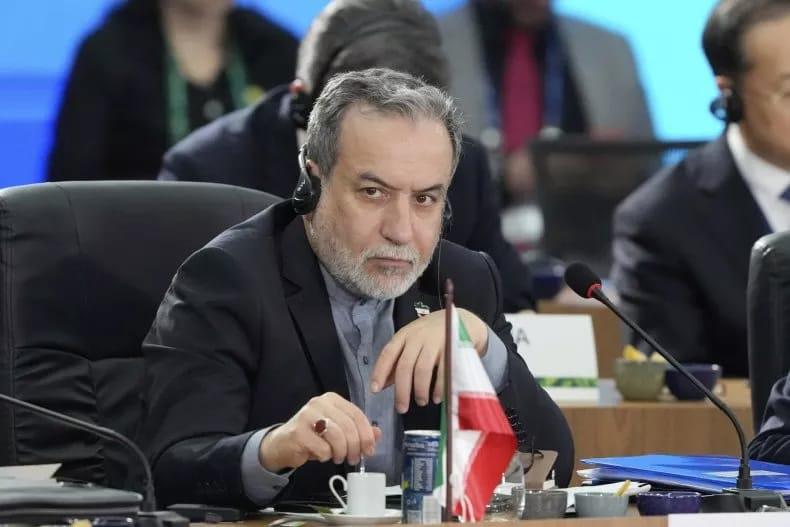
Iran FM Says Tehran's Power Comes From Saying 'No’
(MENAFN- Kashmir Observer)
Dubai- Iran's top diplomat insisted on Sunday that Tehran's strength came from its ability to“say no to the great powers,” striking a maximalist position just after negotiations with the United States over its nuclear program.
ADVERTISEMENT
Foreign Minister Abbas Araghchi, speaking to diplomats at a summit in Tehran, signalled that Iran would stick to its position that it must be able to enrich uranium - a major point of contention with President Donald Trump, who bombed Iranian atomic sites in June during the 12-day Iran-Israel war.
ADVERTISEMENT
While Iranian President Masoud Pezeshkian praised the talks on Friday in Oman with the Americans as“a step forward,” Araghchi's remarks show the challenge ahead. Already, the US moved the aircraft carrier USS Abraham Lincoln, ships and warplanes to the Middle East to pressure Iran into an agreement and have the firepower necessary to strike the Islamic Republic should Trump choose to do so.
“I believe the secret of the Islamic Republic of Iran's power lies in its ability to stand against bullying, domination and pressures from others,” Araghchi said.“They fear our atomic bomb, while we are not pursuing an atomic bomb. Our atomic bomb is the power to say no to the great powers. The secret of the Islamic Republic's power is in the power to say no to the powers.”
The 'atomic bomb' as a rhetorical device
Araghchi's choice to explicitly use an“atomic bomb” as a rhetorical device likely wasn't accidental. While Iran has long maintained its nuclear program is peaceful, the West says Tehran had an organized military program to seek the bomb up until 2003.
Iran had been enriching uranium to 60% purity, a short technical step from the 90% level considered weapons-grade, making it the only non-nuclear-weapons state to reach such enrichment. In recent years, Iranian officials have increasingly suggested the Islamic Republic could build a bomb if it chose to, while simultaneously pointing to Supreme Leader Ayatollah Ali Khamenei's fatwa declaring weapons of mass destruction forbidden under Islam.
Read Also US-Israel Talks Highlight Rift Over Iran Approach Pezeshkian: Iran Won't Yield on Nuclear PressurePezeshkian, who ordered Araghchi to pursue talks with the Americans after likely getting leaders's blessing, also wrote on X on Sunday about the talks.
“The Iran-US talks, held through the follow-up efforts of friendly governments in the region, were a step forward,” the president wrote.“Dialogue has always been our strategy for peaceful resolution.... The Iranian nation has always responded to respect with respect, but it does not tolerate the language of force.”
It remains unclear when and where, or if, there will be a second round of talks. Trump, after the talks on Friday, offered few details but said:“Iran looks like they want to make a deal very badly - as they should.”
ADVERTISEMENTAircraft carrier in the Arabian Sea
During Friday's talks, US Navy Adm. Brad Cooper, the head of the American military's Central Command, was in Oman. Cooper's presence was likely an intentional reminder to Iran about the US military presence in the region. Cooper later accompanied US special envoy Steve Witkoff and Jared Kushner, Trump's son-in-law, to the Lincoln out in the Arabian Sea after the indirect negotiations.
Araghchi appeared to take the threat of a potential American military strike seriously, echoing fears voiced by many Iranians in recent weeks. He noted that after multiple rounds of talks last year, the US had“attacked us in the midst of negotiations.”
“If you take a step back in negotiations, it is not clear where it will end,” Araghchi said, adding:“We are men of diplomacy, but we are also men of war - not in the sense that we seek war, but we are ready to fight so that no one dares to fight us.”
Currently, he added, the foremost principle of Iran's foreign policy is dignity, which means preserving independence, negating domination and defending the country's sovereignty.
Araghchi further emphasized that Iran's response depends on the tone adopted by others toward the country, saying diplomacy will be met with the same language, as it is the case with the use of force and the language of respect.
“The indomitability of the Iranian people had to be proven, and this was proven in the 12-day war. Those who... tweeted“unconditional surrender” on the third day of the war... sent a message of“unconditional ceasefire” on the 12th day. Why? Because we were not afraid of war and resisted,” he pointed out.
'Feels Like You're in Pakistan, Not Dallas', US CongressmanNew York, Feb 8 (PTI) An American lawmaker has voiced concern over the“Islamisation” of areas in certain constituencies in the US state of Texas, saying
Legal Disclaimer:
MENAFN provides the
information “as is” without warranty of any kind. We do not accept
any responsibility or liability for the accuracy, content, images,
videos, licenses, completeness, legality, or reliability of the information
contained in this article. If you have any complaints or copyright
issues related to this article, kindly contact the provider above.
Market Research

More Story






Comments
No comment