






403
Sorry!!
Error! We're sorry, but the page you were looking for doesn't exist.
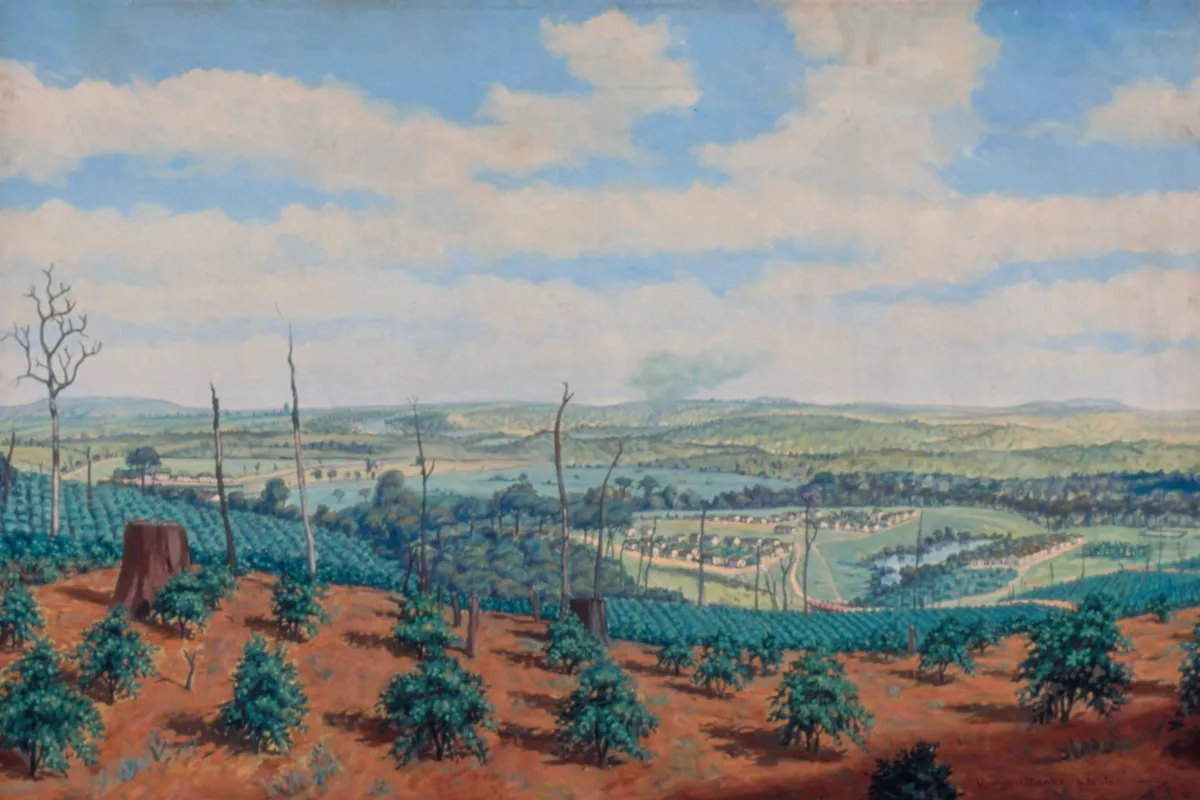
Brazil: European Immigration And Coffee Plantations
(MENAFN- Swissinfo)
Some 170 years ago, a Swiss citizen led a revolt in Brazil which exposed the exploitation of European immigrants to Latin America in the 19th century. The story sheds light on dilemmas still central to today's debates on migration, forced labour and state responsibility.
Select your language
-
Deutsch
de
Wie ein Schweizer im Brasilien des 19. Jahrhunderts für ausgebeutete Auswanderer kämpfte
Read more: Wie ein Schweizer im Brasilien des 19. Jahrhunderts für ausgebeutete Auswanderer kä
Français
fr
Thomas Davatz, le Suisse qui a dénoncé l'exploitation des émigrés au Brésil au 19e siècle
Read more: Thomas Davatz, le Suisse qui a dénoncé l'exploitation des émigrés au Brésil au 19e si
Thomas Davatz left Switzerland for Brazil 170 years ago, in search of opportunity. Brazil, one of the world's largest coffee producers, was coming under pressure from the United Kingdom, which had called into question a business model based on labour enslaved in Africa, approving laws such as the Aberdeen Act, which authorised the British Navy to capture Brazilian slave ships. In 1850, the transatlantic slave trade to Brazil was banned following this pressure.
It was in this context that the first initiatives emerged, led by Brazil, to attract Europeans to replace the dwindling plantation labour force. Brazilian landowners believed that bringing European immigrants to Brazil would lend the country an image of civilisation, while also whitening a population that had been profoundly shaped by enslaved Africans.
In the Alps, Davatz was a teacher at a rural school and was regarded as a highly respected figure in Prättigau, canton Graubünden, where he lived and worked. He had received an intense religious education shaped by the Inner Mission, a 19th-century Protestant movement widespread in Switzerland and other regions of Reformed Europe.
As an influential figure, Davatz led the arrival of one of the groups of emigrants contracted by a Brazilian company that acted as an intermediary between Brazilian landowners and Swiss workers.
“The idea was that, in order to civilise the Brazilian nation, it was necessary to bring Europeans here. There was both a whitening thesis and a civilising one, based on a misguided interpretation of Charles Darwin's evolutionism, which was very influential in the 19th century,” says Victor Missiato, political analyst and history professor at Mackenzie Presbyterian University.
The Brazilian state therefore promoted immigration through official policies such as land grants, the hiring of recruiters in Europe and the dissemination of propaganda to attract workers. In 1848, the first German-speaking families arrived from various German states, including Switzerland. The group to which Davatz belonged reached Brazil in July 1855.
“These European peasants were, in a sense, resistant to industrialisation. They were people who bet on a rural solution to European crises, unlike many others who migrated to cities. They came with the expectation of becoming landowners, however small. That expectation was frustrated by the Brazilian project led by large landowners,” says Alberto Luis Schneider, who holds a PhD in history from the University of Campinas in Brazil.
In other cases, Europeans – and Swiss – in Brazil were not exploited but exploiting:
More More History In the footsteps of Swiss settlers in Brazil and their slavesThis content was published on Jan 31, 2024 In the 19th century, Swiss settlers owned slaves in Bahia, Brazil, a dark chapter which still remains taboo today.
Read more: In the footsteps of Swiss settlers in Brazil and their s
Legal Disclaimer:
MENAFN provides the
information “as is” without warranty of any kind. We do not accept
any responsibility or liability for the accuracy, content, images,
videos, licenses, completeness, legality, or reliability of the information
contained in this article. If you have any complaints or copyright
issues related to this article, kindly contact the provider above.
Most popular stories
Market Research

More Story








Comments
No comment