




403
Sorry!!
Error! We're sorry, but the page you were looking for doesn't exist.
In Kashmir's Twin Villages, Women Are Crafting New Lives
(MENAFN- Kashmir Observer)
By Mehrina Masoodi
ADVERTISEMENT
I grew up hearing the names of those twin villages in the mountains of Kupwara spoken softly, as if people were afraid to say them out loud.
ADVERTISEMENT
That feeling followed me as I grew older, staying somewhere in the back of my mind.
It only began to make sense when I spent time there and understood why the place sits so heavily in Kashmir's collective memory.
Kunan-Poshpora is full of beauty, with open fields, orchards, and homes built by long-held traditions, but a painful event from the past still shadows life, touching women most deeply.
Even after public attention faded, the emotional and social scars remained, and women continued to live with its impact through years of isolation and judgement.
Growing up, many girls in Kunan and Poshpora, and in nearby Awoora, learned early that the past determined how others looked at them.
School often felt out of reach, stepping outside the home drew unwanted attention, and public spaces felt closed to women.
Over time, their dreams grew smaller, shaped by the narrow space they were allowed to move in.
I met young women who spoke about those years with harrowing sense and honesty, talking about homes where pain stayed unspoken and support felt scarce.
ADVERTISEMENTBut within that silence, something else also lived.
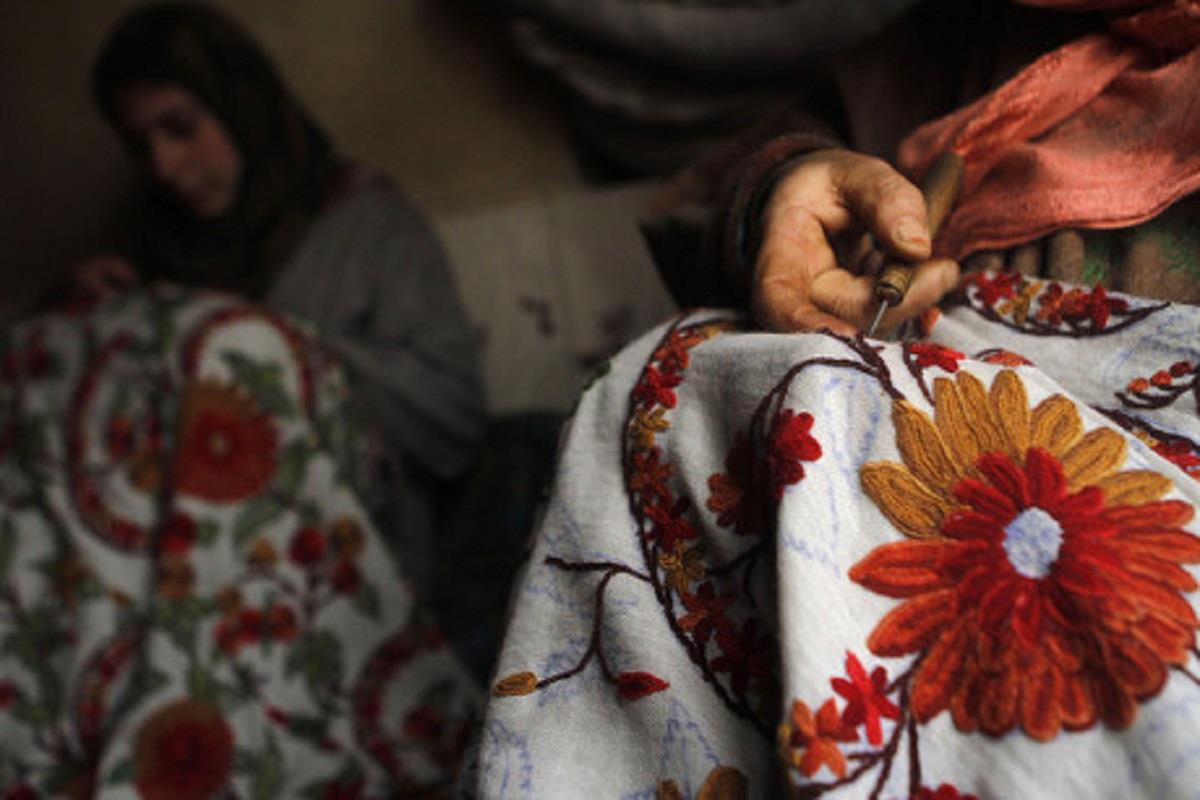
Skills passed from mother to daughter, hands learned patterns and stitches, and crewel embroidery, a centuries-old Kashmiri craft, survived in living rooms and courtyards, even when many other doors remained closed.
Six young women from Kunan, Poshpora, and Awoora decided to bring that skill into the open.
Watching them work felt simple and bold at the same time, like they were doing something natural while also stepping into something new.
They began to treat embroidery as more than decoration, turning it into curtains, tote bags, cushion covers, and bed sheets that bring tradition into everyday modern homes.
Their journey came together through Project Jazba, an initiative of the TYCIA Foundation.
Read Also The Girl from the Chilli Fields of Kashmir Kashmir's Handmade AdvantageThe project focuses on women in post-conflict and marginalised communities, offering training that brings together craft, emotional care, and business learning.
I watched the atmosphere in the room change as skills grew stronger, voices became clearer, and conversations shifted from hesitation to planning, with women gaining an understanding of markets, pricing, and the confidence to speak about their work.
A few years earlier, these kinds of discussions felt far away from village life, so watching them take place now felt deeply personal to me.
Thread and fabric became ways to express feeling and find healing, with every stitch showing patience and pride, and every finished piece standing as proof that creativity could also open doors to income and independence.
Daily life here still comes with challenges, as social attitudes change slowly, economic limits control choices, and memories from the past continue to influence the present, but the women I met choose action over retreat.
Through their work, they invite others to imagine new roles for women in the village, roles rooted in participation, visibility, and shared confidence.
This shift reaches beyond embroidery.
Education programs, vocational training, and community support have begun to change how women see themselves, and I now hear fewer stories driven only by loss and more guided by intention.
The women speak as planners and makers, as people creating their own paths.
In this setting, crewel embroidery means more than keeping a tradition alive.
It brings income, opens space for artistic expression, and supports emotional healing through shared work and goals.
When neighbours see these products travel beyond the village, a belief grows that what is made here holds value far beyond these hills.
As I leave Kunan-Poshpora after each visit, I carry images of women bent over fabric, laughing, discussing designs, and planning the next order.
What they create reaches beyond textile art.
They stitch together heritage and future, care and courage, memory and possibility.
-
The author works with TYCIA Foundation, a non-profit organisation dedicated to empowering rural communities in Kupwara under Project Jazba. She can be reached at [email protected].

Legal Disclaimer:
MENAFN provides the
information “as is” without warranty of any kind. We do not accept
any responsibility or liability for the accuracy, content, images,
videos, licenses, completeness, legality, or reliability of the information
contained in this article. If you have any complaints or copyright
issues related to this article, kindly contact the provider above.
Most popular stories
Market Research

More Story





Comments
No comment