



403
Sorry!!
Error! We're sorry, but the page you were looking for doesn't exist.
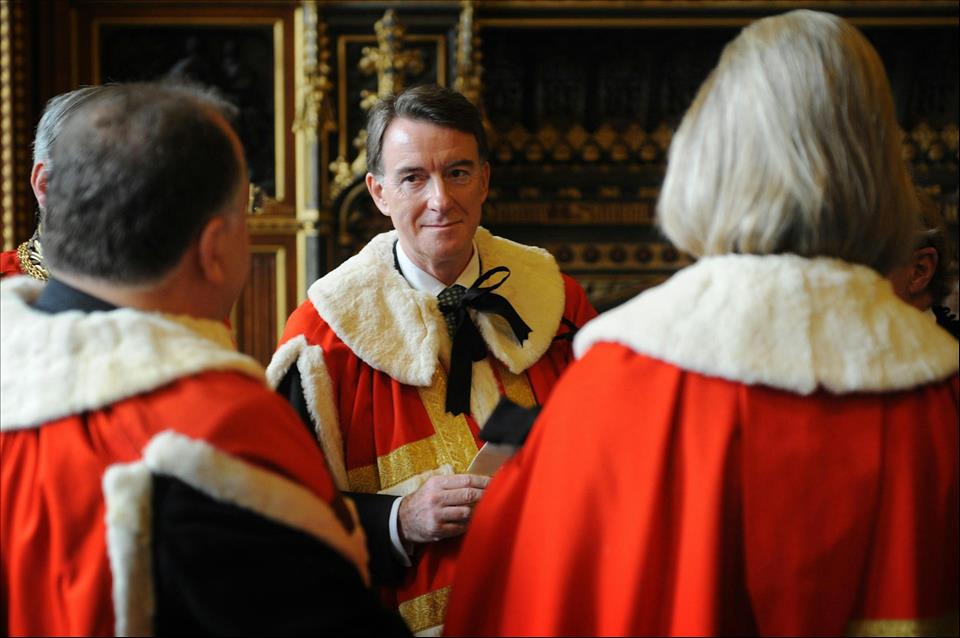
Peter Mandelson Steps Down From The House Of Lords But He Still Has His Title
Author: Stephen Clear
(MENAFN- The Conversation) Peter Mandelson has stepped down from the House of Lords over fresh revelations about his links to deceased sex offender Jeffrey Epstein. These now include emails suggesting thousands of pounds were sent to Mandelson's husband, that Mandelson lobbied against US bank reforms on behalf of Epstein while he was a UK government minister, and that he shared sensitive information with him. The prime minister, Keir Starmer, had signalled that he wanted him out of the Lords“by hook or by crook”.

He is lucky that Mandelson took the hint and resigned because the prime minister doesn't currently have the power to remove members of the Lords. And while Mandelson is leaving the House, he will keep his title. He remains Lord Peter Mandelson of Foy and Hartlepool, even though the prime minister has said he does not think it right that he should use the title.
Prior to reforms brought in by the Conservative and Liberal Democrat coalition government in 2014, removing a member of the House of Lords was virtually impossible. Erskine May (the authoritative guide to parliamentary practice) states that membership of the House was effectively for life.
Prior to the changes, life peers could not resign, and could, in theory, stop attending indefinitely without losing their seat in the Lords. Even imprisonment did not, technically, end their membership of the house. The House of Lords couldn't expel its own members. It could only, temporarily, suspend them.
Death was the only automatic membership termination. Peers who wanted to retire could not, those who never attended remained, and those guilty of serious crimes or misconduct could not be permanently removed.
The 2014 reforms brought in some options, including voluntary resignation or retirement by giving written notice, automatic removal if a peer fails to attend the House at all during an entire parliamentary session (unless they have approved leave of absence) and expulsion if convicted of a serious criminal offence and sentenced to more than one year in prison.
Further reforms in 2015 also made it possible to expel or suspend a peer following a report by the Lords' Conduct Committee for serious misconduct.
But as it stands, removal from the House of Lords cannot be instigated by the prime minister, UK government, or the king.
This was all a grave concern for the government as allegations continued to flow about Mandelson. Had he not stepped aside – or been convinced to step aside behind closed doors – there would have been little Starmer could have done to remove him through government powers alone.
What about the title?The issue surrounding Lord Mandelson's title is more complex. Removal from the chamber does not automatically mean removal of the title. As described in Gadd's Peerage Law, once the Crown has granted a peerage it is “very difficult to deprive the holder of it”.
Unlike membership of the House of Lords, a peerage title cannot be relinquished. Not even the Crown has the power to cancel one once created by“letters patent” – a legal document issued by the sovereign and adorned with the Great Seal.
The government confirmed last year that an act of parliament is required to remove a peerage title once conferred. This has happened before, under the Titles Deprivation Act 1917, which removed the peerages of members who had aided Brtain's enemies during the War. The need for an Act of Parliament has also been reaffirmed recently with the removal of Andrew Mountbatten-Windsor's titles.
Given these complexities, it has been reported that the prime minister's office believes it is “exceptionally constitutionally difficult” to remove Mandelson's title, even with a large Commons majority. Even though Starmer has called for action to be taken, it's not entirely clear how this will happen.
Mandelson's resignation enables the Lords and government to avoid having to take action to expel a peer for now, but it's worth noting that the 2024 Labour manifesto promised to make it easier to remove disgraced members.
That said, this needs to be a matter for the Lords first to consider internally. If the prime minister tries to award himself the power to remove members, this could further weaken constitutional safeguards in the future and jeopardise the system of check and balance that the House of Lords offers against the power of the UK government, albeit in a subordinate way.
Any future reform in this area must be mindful of the precedent it creates, and what that might mean for future governments' decisions surrounding who sits in the House of Lords, and, importantly, who is forced out.
Institution:Bangor University

Legal Disclaimer:
MENAFN provides the
information “as is” without warranty of any kind. We do not accept
any responsibility or liability for the accuracy, content, images,
videos, licenses, completeness, legality, or reliability of the information
contained in this article. If you have any complaints or copyright
issues related to this article, kindly contact the provider above.
Most popular stories
Market Research

More Story



Comments
No comment