








403
Sorry!!
Error! We're sorry, but the page you were looking for doesn't exist.
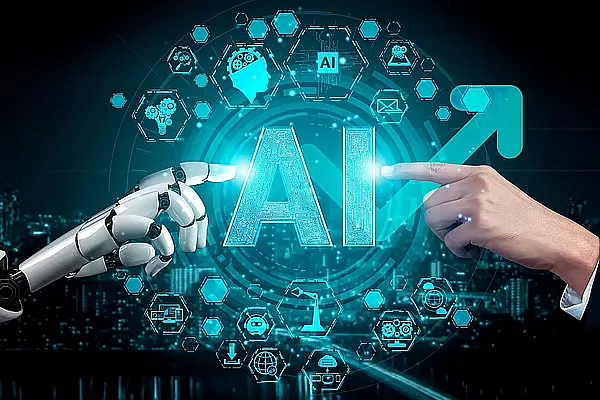
UAE's Distinctive AI Approach: Embedding Policy, Ethics, Infra Into National Vision
(MENAFN- Khaleej Times) As governments and businesses race to adopt artificial intelligence at scale, a central question is emerging: how do humans and AI agents work together without compromising trust, safety, or innovations.
That question sat at the heart of a high-level discussion at the World Government Summit 's AI Forum, where global technology leaders explored how autonomous AI agents are reshaping productivity and why guardrails, sovereignty, and human oversight must evolve just as fast as the technology itself.
Recommended For You Second peak of flu season in UAE? Doctors say never too late to get vaccinatedThe session brought together Simon de Montfort Walker, Executive Vice President of Industry Applications at Oracle, Masood Mohamed Sharif, CEO of e& UAE, and Carl Pei, Co-founder and CEO of Nothing.
From automation to agentic collaborationPanelists agreed that the next phase of AI is no longer about isolated tools, but about teams of intelligent agents working alongside humans.
Simon de Montfort Walker described this shift as the evolution of automation itself, moving clerical and repetitive tasks away from people and placing humans at the centre of decision-making and oversight.
"The goal is to remove the clerical work and let humans manage outcomes," he said, noting that organisations are increasingly deploying specialised AI agents with defined roles, working together like a digital assembly line.
Rather than focusing solely on large language models, Walker stressed the importance of data readiness, saying organisations that invest early in organising and exposing their data are pulling ahead in real-world AI adoption.
Telecoms, infrastructure, and AI at scale
For Masood Mohamed Sharif, the rise of AI agents carries unique implications for telecom operators, which sit at the intersection of connectivity, compute power, and data.
As e& continues its transformation from a traditional telco into a "techco", Sharif explained that AI affects the business on three levels: infrastructure enablement, internal operations, and customer relationships.
AI, he said, demands ultra-low-latency connectivity, massive compute capacity, and efficient routing, positioning telecom providers as critical players in building what he described as an "AI fabric".
At the same time, e& has already rolled out hundreds of AI use cases from back-office automation to visual fault detection in home routers, cutting truck rolls by as much as 40 per cent in some cases.
But Sharif was clear that large enterprises will not build their own AI models from scratch; instead, they will rely on partnerships with global technology providers and agile startups to deliver targeted, scalable solutions.
Collapsing organisations, accelerating creationCarl Pei offered a glimpse into how AI agents are already reshaping product development, particularly in software.
The Nothing CEO revealed that recent advances in AI coding tools now allow even non-technical users to build fully functional applications, a capability he said was not possible just a year ago.
“This collapses the traditional software stack,” Pei explained, predicting a future where a single individual with user insight and design taste can create products that once required entire teams of engineers, designers, and managers.
He also described a future of“always-on” development, where AI agents continue building, testing, and refining software around the clock, turning software creation into something closer to manufacturing.
Guardrails, sovereignty, and the human factorAs the conversation turned to regulation, Amandeep raised concerns about avoiding a“wild west” in AI development, prompting Sharif to stress the need for balance.
“Sovereignty doesn't just mean owning a cloud,” Sharif said.“It means cybersecurity, data privacy, ethical standards, human oversight, and readiness for future technologies like quantum computing.”
He cautioned that while guardrails are essential, over-regulation risks choking innovation, especially during what he described as a global experimentation phase.
Sharif also warned that, even with strong ethical frameworks, human intent remains the weakest link, citing real-world examples of bad actors attempting to manipulate AI systems by bypassing safeguards, step by step.
Continuous monitoring, rapid response, and intense human training, he said, are just as important as technical controls.
Why the UAE stands outIn closing, speakers highlighted what makes the UAE's approach to AI distinctive: its willingness to experiment boldly while embedding policy, ethics, and infrastructure into a single national vision.
Walker noted that few global forums successfully bring together policy ambition and technical execution at such depth, calling the UAE's model both practical and globally relevant.
Sharif ended on a note of optimism, describing AI's impact as a“beautiful disruption,” one that will unlock new sectors, boost productivity, and create opportunities yet to be imagined.
The UAE, he said, is not only building for its own market, but investing in systems and standards that will serve the global AI ecosystem.
ALSO READ- High-level dialogue at World Government Summit calls for AI to boost social impact How UAE's early AI, digital investments turned ideas into real-world impact

Legal Disclaimer:
MENAFN provides the
information “as is” without warranty of any kind. We do not accept
any responsibility or liability for the accuracy, content, images,
videos, licenses, completeness, legality, or reliability of the information
contained in this article. If you have any complaints or copyright
issues related to this article, kindly contact the provider above.
Most popular stories
Market Research

More Story







Comments
No comment